

Philippines Sees Progress, אך Gaps Persist in Maternal and Neonatal Care
MANDALUYONG CITY, Philippines — Maternal health outcomes in the Philippines have improved in recent years, but significant challenges remain as the country works toward its universal health care goals.
Data from the Philippine Statistics Authority show that the maternal mortality ratio declined from 151 deaths per 100,000 live births in 2020 to 119 in 2024. While the improvement signals progress, the country remains well above the Sustainable Development Goal target of fewer than 70 deaths per 100,000 live births by 2030. Neonatal mortality rates have also improved only marginally, underscoring persistent gaps in care during pregnancy, childbirth, and the immediate postnatal period.
Health experts say that despite numerous initiatives across the country, fragmented implementation continues to limit overall impact. As the Philippines moves toward full implementation of Universal Health Care (UHC), stakeholders are calling for stronger coordination across policies, financing, and service delivery systems to ensure equitable access to high-quality care.
National Forum Highlights Need for Coordination
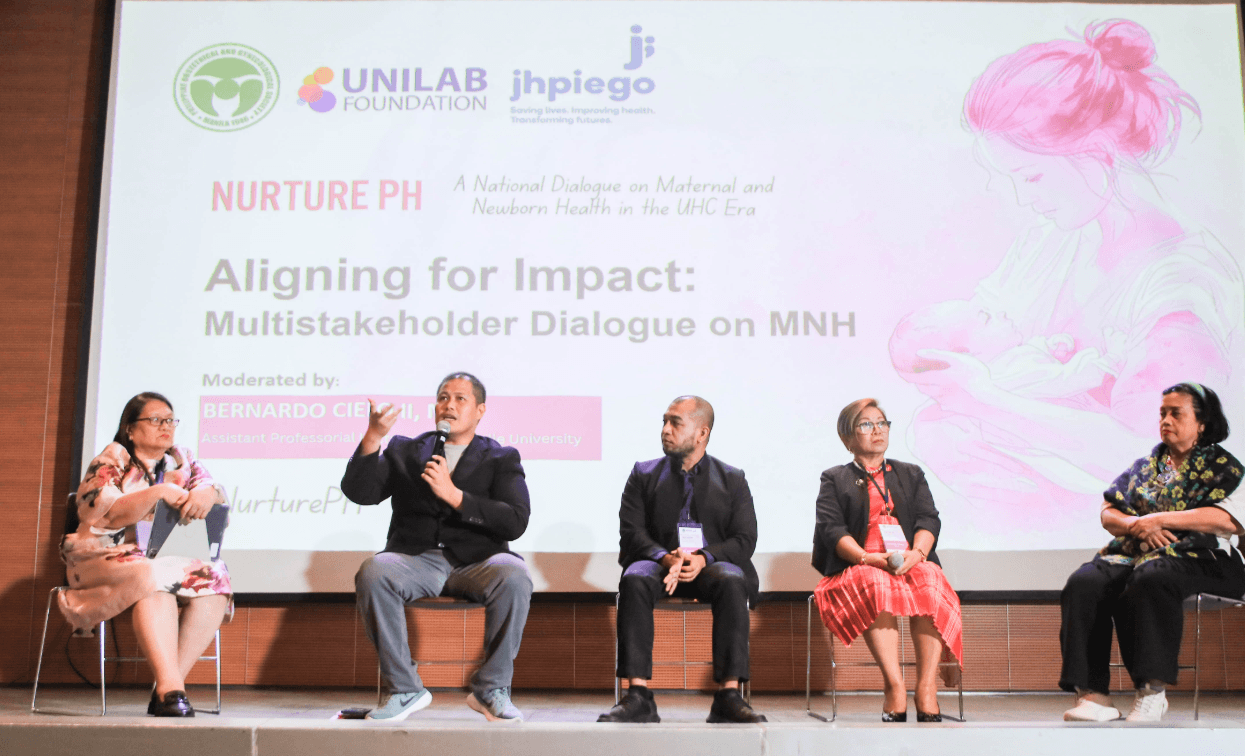
These concerns took centre stage during the NurturePH: A National Dialogue on Maternal and Newborn Health in the UHC Era, held in celebration of Women’s Month.
The forum, co-organized by the Philippine Obstetrical and Gynecological Society, Unilab Foundation, and Jhpiego, brought together more than 100 stakeholders, including representatives from professional societies, international development organizations, local government units, national agencies, and healthcare facilities.
Participants reviewed policy directions and program priorities from the Department of Health and PhilHealth, while also sharing best practices and ongoing initiatives from across the country.
Collaboration and Community Engagement Emphasized
In her keynote address, Department of Health Undersecretary Dr. Gloria J. Balboa underscored the importance of collaboration and grassroots involvement in improving outcomes.
“When communities are informed and empowered, better health outcomes follow,” she said, highlighting the need to involve women, families, and communities in their care.
Speakers throughout the forum echoed the need for a more integrated approach, emphasizing that isolated interventions are insufficient to address systemic challenges in maternal and newborn healthcare.
Addressing Systemic Barriers and Delays
A key theme of the discussion was the importance of tackling structural barriers that prevent timely access to care.
Dr. Grace Viola of UNFPA emphasized the need to address systemic barriers:
“To improve outcomes, we must address the ‘Three Delays’: delays in seeking, reaching, and receiving quality care.”
Experts noted that these delays remain a critical factor in maternal and neonatal mortality, particularly in underserved and geographically isolated communities.
Multi-Sector Partnerships and Local Innovations
The forum also highlighted the role of multi-sectoral partnerships in strengthening healthcare delivery. One example cited was the collaboration among the Korea International Cooperation Agency, the World Health Organization, and the United Nations Population Fund, working alongside the Department of Health and local governments in Eastern Visayas to improve sexual and reproductive health outcomes.
At the local level, participants shared promising practices, including culturally sensitive maternal care initiatives in the MIMAROPA region and programs in Ozamiz City aimed at reducing adolescent pregnancy while maintaining access to education and health services.
These localized efforts demonstrate how tailored approaches can address community-specific challenges while contributing to broader national goals.
Early-Life Investments Seen as Critical
Another focal point of the forum was the importance of early-life interventions. A joint presentation by Dr. Christia Padolina of the Asia and Oceania Federation of Obstetrics and Gynaecology and Dr. Esterlita Uy of the Philippine Society of Newborn Medicine emphasized the significance of the first 1,000 days of life—from pregnancy through a child’s second birthday—in shaping long-term health outcomes.
They noted that sustained investments during this critical window, and extending care up to the first 2,000 days, can significantly improve survival, growth, and development outcomes.
New Partnership Formalized to Strengthen Efforts
The event also marked a step toward greater institutional collaboration. Jhpiego, the Philippine Obstetrical and Gynecological Society, and Unilab Foundation signed a memorandum of agreement aimed at enhancing coordination in maternal and newborn health initiatives.
The partnership will focus on strengthening health worker capacity, promoting evidence-based interventions, improving integrated service delivery, and aligning efforts with UHC objectives.
Shared Vision for Universal Health Care
As the Philippines continues its transition toward Universal Health Care, stakeholders at the NurturePH forum emphasized the need for a unified approach to ensure lasting improvements.
The dialogue reinforced a shared vision: ensuring that every mother and every newborn has access to quality, respectful, and life-saving care.