

Annual Census Shows Modest Recovery but Signals Ongoing Threats
WASHINGTON — The latest annual census of migratory monarch butterflies overwintering in Mexico shows a modest population increase, but scientists and conservationists warn the species remains at significant risk of extinction.
According to newly released data, monarchs occupied 7.24 acres of forest habitat this winter, marking a 64 per cent increase from last year’s 4.42 acres. While the rebound offers a measure of optimism, the population remains well below the estimated 15-acre threshold scientists say is necessary to reduce the risk of migratory collapse.
“The monarchs’ crisis is a damning indictment of industrial agriculture’s toxic legacy,” said George Kimbrell, legal director at the Center for Food Safety. “For decades regulators have ignored the science while approving more pesticides that destroy habitat and poison pollinators. We must protect monarchs before it is too late.”
Long-Term Decline Raises Alarm
Despite the year-over-year improvement, the long-term trend remains sharply negative. Migratory monarch populations have declined by more than 80 per cent since the 1990s, reflecting sustained pressures from habitat loss, pesticide use and climate change.
A federal assessment indicates eastern monarchs face up to a 74 per cent chance of extinction within the next 60 years. The outlook is even more dire for western monarchs, whose population has dropped more than 95 per cent since the 1980s and now faces up to a 99 per cent probability of collapse.
This winter, the western population numbered fewer than 12,260 butterflies — the third lowest count on record — underscoring the fragility of the species across North America.
Regulatory Delays Draw Criticism
Efforts to secure federal protection for monarch butterflies have been ongoing for more than a decade. In December 2024, the species was proposed for listing under the U.S. Endangered Species Act. However, instead of finalizing protections, federal officials delayed the decision, categorizing it as a “long-term action” without a defined timeline.
That delay has prompted legal action from conservation groups. The Center for Biological Diversity and the Center for Food Safety filed a lawsuit in February seeking to compel the government to establish a firm deadline for protections.
“Monarchs need our help, and we need monarchs because they are spectacular and irreplaceable,” said Tierra Curry, endangered species co-director at the Center for Biological Diversity. “It would be unforgivable for their epic migrations to collapse because of political cowardice on enacting range wide protections for them.”
Migration and Measurement
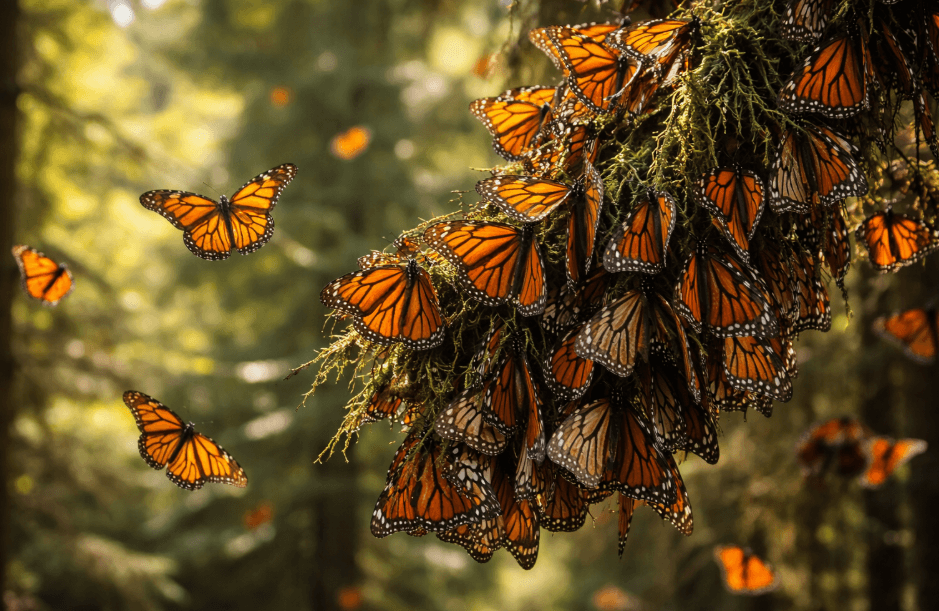
Monarch butterflies undertake one of the longest insect migrations in the world. Each year, eastern populations travel thousands of kilometres from the northern United States and southern Canada to high-elevation fir forests in Mexico, where they cluster in dense groups during the winter.
Population size is measured not by counting individual butterflies, but by calculating the total area of forest covered by these clusters. The bright orange-and-black insects blanket trees, creating a visually striking indicator of population health.
The annual survey is conducted by the World Wildlife Fund-Telmex Telcel Foundation Alliance in partnership with Mexico’s National Commission of Protected Natural Areas.
Key Threats to Survival
Scientists point to a range of interconnected threats driving the monarch’s decline, many of which are linked to modern agricultural practices.
The widespread use of glyphosate herbicides on genetically engineered corn and soybean crops has significantly reduced milkweed — the sole food source for monarch caterpillars. Additionally, newer herbicide formulations can drift beyond target fields, damaging wildflowers that adult butterflies rely on for nectar.
Neonicotinoid insecticides, commonly used in seed coatings and ornamental plants, further harm monarchs at multiple life stages.
Beyond agriculture, climate change is exacerbating the species’ vulnerability. Rising temperatures and extreme weather events are disrupting migration patterns and degrading critical overwintering habitats in Mexico.
Urban development is also contributing to habitat loss, with grasslands and green spaces — essential for feeding and breeding — steadily disappearing.
Cross-Border Pressures Mount
Human activity continues to impact monarch populations across their migratory range. Millions of butterflies are killed annually by vehicle collisions during migration.
In Mexico, deforestation linked to avocado farming — driven by growing demand in the United States — is degrading critical winter habitats. Meanwhile, in California, more than 60 known overwintering sites have been lost due to development and land-use changes.
Outlook Remains Uncertain
While this year’s population increase provides a short-term boost, experts caution that without coordinated conservation efforts and regulatory action, the monarch butterfly’s future remains uncertain.
The combination of ongoing habitat loss, chemical exposure and climate pressures continues to threaten one of North America’s most iconic migratory species — and the ecosystems that depend on it.