

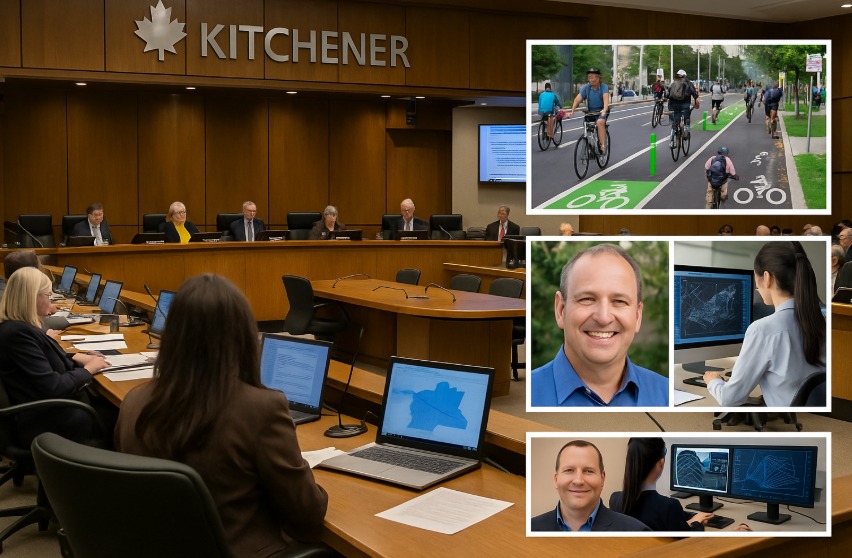
KITCHENER, ON – Kitchener City Council’s November 10 meeting highlighted community leadership, sustainable infrastructure, and innovation partnerships, reflecting the city’s ongoing commitment to excellence in public service and infrastructure development.
The evening’s agenda included the recognition of a national award for a City employee, a major infrastructure achievement for active transportation, and a new research partnership with the University of Waterloo aimed at strengthening the city’s gas infrastructure resilience.
City Employee Honoured with National Award
Council opened the meeting by honouring Karl Gallagher, Parking and Electronics Technician with Kitchener’s Parking Enterprise, who was named 2025 Canadian Staff Person of the Year by the Canadian Parking Association.
Gallagher was recognized for his exceptional dedication to customer service and his leadership within the city’s parking operations. Over his four years of service, he has consistently gone above and beyond to improve customer experiences and support colleagues, embodying the professionalism and teamwork that define Kitchener’s public service.
Council members praised Gallagher’s recognition as a reflection of the essential work performed by frontline staff who ensure the smooth delivery of municipal services.
“Karl’s national recognition highlights the crucial role of front-line staff in shaping public service excellence,” the City noted in its summary.
Downtown Cycling Grid Wins National Infrastructure Award
In a second moment of civic pride, Kitchener’s Downtown Cycling Grid project received the 2025 Active Transportation Achievement Award from the Transportation Association of Canada, a distinction that places the city among national leaders in sustainable urban mobility.
The multi-year project added approximately 10 kilometres of new and upgraded cycling infrastructure, linking key downtown corridors into a cohesive, accessible, and safe network for cyclists of all ages and skill levels.
Rooted in Kitchener’s Cycling and Trails Master Plan, the initiative was shaped by feedback from more than 5,700 residents and has already recorded over 160,000 users in 2025.
The award highlights the city’s ongoing investment in active transportation and road safety — part of a broader strategy to create a more livable, connected, and environmentally sustainable community.
City officials emphasized that this national recognition reinforces Kitchener’s leadership in building urban environments where walking, cycling, and public transit complement each other.
“The award underscores Council’s ongoing commitment to building a safer, more connected city through active transportation and road safety initiatives,” the city’s report stated.
Partnership with University of Waterloo to Advance Gas Infrastructure Research
Council also approved a research partnership with the University of Waterloo to develop a digital twin model of Kitchener’s gas distribution system — an innovative tool designed to simulate and assess infrastructure performance under different demand and environmental scenarios.
The digital model will enable Kitchener Utilities to evaluate the condition and efficiency of its gas network, anticipate future needs, and develop evidence-based strategies to address aging infrastructure and climate-related challenges.
The partnership includes $200,000 in direct city funding over four years and an additional $300,000 in in-kind support, demonstrating Kitchener’s commitment to applying data-driven solutions to critical municipal operations.
City staff said the collaboration will strengthen infrastructure resilience, optimize maintenance planning, and support long-term energy system management.
“The initiative will support Kitchener Utilities in evaluating system performance under various demand scenarios and addressing aging infrastructure,” the summary stated.
Investing in Innovation and Quality of Life
The partnership with the University of Waterloo aligns with Kitchener’s broader vision to be a leader in urban innovation. By integrating research partnerships into municipal planning, the city continues to position itself as a forward-thinking community focused on sustainability, technology, and resilience.
Council members noted that these initiatives — from front-line service excellence to infrastructure innovation — demonstrate how municipal leadership can create direct benefits for residents.
As part of its strategic priorities, Kitchener continues to focus on enhancing mobility, safety, and livability while leveraging academic collaboration to solve real-world challenges.
Council’s Broader Commitment
The November 10 meeting reinforced Kitchener’s reputation as a city that combines community values with long-term vision. Whether through national awards, active transportation success, or research partnerships, the city continues to showcase how collaboration and innovation can drive local progress.
Through initiatives like the Downtown Cycling Grid, Kitchener is improving access and mobility for residents, reducing carbon emissions, and supporting healthier lifestyles. The project’s rapid adoption — with 160,000 recorded users this year — underscores the growing demand for safer, more inclusive streets.
At the same time, investments in gas infrastructure research represent a forward-looking approach to energy management and sustainability — essential priorities as municipalities prepare for a changing climate and growing population.
By celebrating staff excellence and strengthening partnerships, Council demonstrated its continued commitment to delivering high-quality public services and shaping a future-ready city.
For full details and official minutes of the November 10 Council meeting, residents can visit kitchener.ca.
