

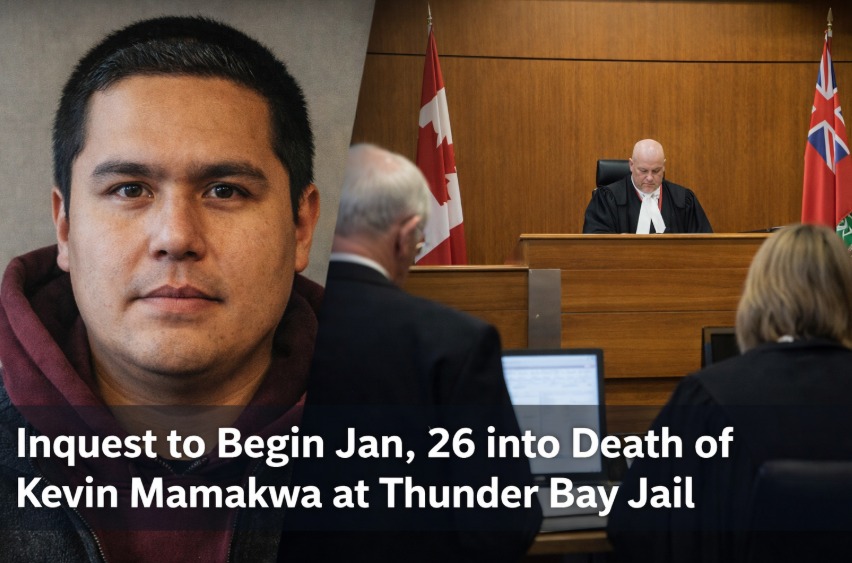
Ontario’s Office of the Chief Coroner has scheduled the start date for the inquest into the death of Kevin Mamakwa, a 27-year-old man who died while in custody at the Thunder Bay Jail in 2020.
Dr. Kevin Miller, Regional Supervising Coroner for the North Region in the Thunder Bay Office, announced that the inquest will begin at 9:30 a.m. on Monday, Jan. 26, 2026. Proceedings will take place at 189 Red River Road in Thunder Bay.
The inquest will be presided over by Dr. Michael Wilson, with Kate Forget and Robert Kozak serving as inquest counsel.
Mr. Mamakwa died on June 2, 2020, while in custody at the Thunder Bay Jail. He was a member of Kingfisher Lake First Nation. Under Ontario’s Coroners Act, an inquest into the death is mandatory.
The inquest is expected to examine the circumstances surrounding Mr. Mamakwa’s death and may result in recommendations aimed at preventing similar deaths in the future. The jury is empowered to make recommendations, though it does not determine criminal or civil liability.
The proceedings are expected to last 10 days and will hear testimony from approximately 15 witnesses, according to the Ministry of the Solicitor General.
The announcement comes as public attention remains focused on conditions within correctional facilities, including issues related to inmate health care, oversight, and the treatment of Indigenous people in custody. While the inquest is not a trial, it is designed to bring transparency to the circumstances of deaths that occur under the care or supervision of the state.
For communities in Northwestern Ontario, the inquest may also raise broader questions about access to supports, medical services, and mental health care in custody, as well as the systems in place to respond to emergencies inside provincial jails.
Ontario’s coroner system uses inquests as a fact-finding process, typically reserved for deaths that occur in specific settings such as correctional facilities, psychiatric institutions, or while in police custody. Inquests are held in public, and their outcomes often influence policy discussions around public safety and institutional accountability.
The Ministry said members of the public who wish to follow the proceedings will be able to view them live online through a webcast link hosted by First Class Facilitation.
Public access to the inquest is expected to provide an opportunity for greater scrutiny of the events leading up to Mr. Mamakwa’s death and the actions taken by staff and medical personnel while he was in custody.
The jury will hear evidence from witnesses and review relevant documentation as it considers what happened and whether any recommendations should be issued. While the coroner’s inquest process is not intended to assign fault, its findings can shape future operational practices and influence reforms across the justice and correctional systems.
Inquests can also have implications for public-sector risk management, workplace practices, and government operations, particularly where recommendations relate to staffing, training, health services delivery, emergency response protocols, or oversight mechanisms. Any recommendations issued by the jury are not legally binding, but government ministries and institutions are typically expected to review and respond to them.
The Ontario government has faced ongoing scrutiny over correctional health care and conditions in remand centres, with advocates and legal organizations calling for improved supports for inmates, particularly those experiencing mental health or substance-use issues. The inquest process is one of the formal mechanisms used to examine such concerns when a death occurs.
Further details on the inquest, including public viewing access, are available through the Office of the Chief Coroner’s online listing. Additional information about Ontario’s coroner inquest process can be found on the province’s website.
The inquest is scheduled to begin Jan. 26 and is expected to run for 10 days, subject to change depending on the pace of testimony and evidence presented.
