

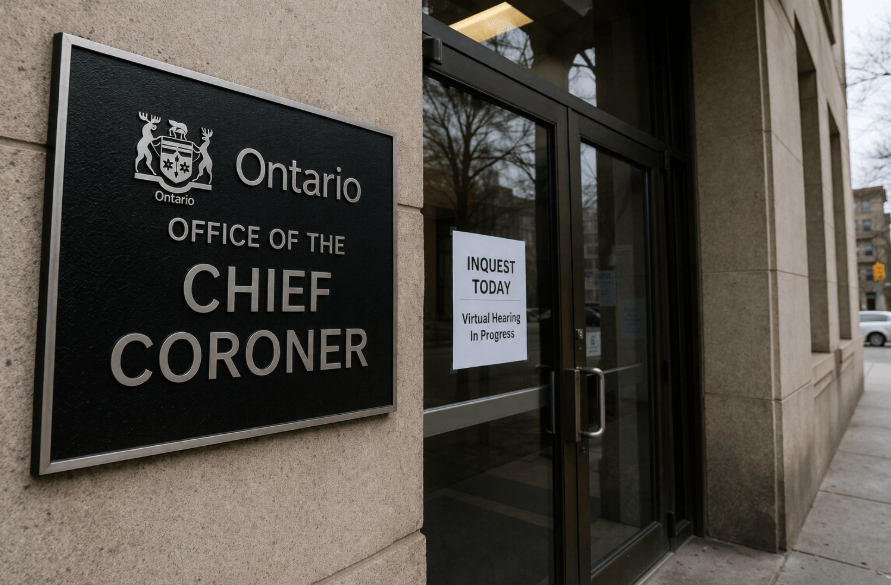
Ontario coroner’s office to examine circumstances surrounding 2021 hospital death
Proceedings set to begin March 30, expected to hear from 22 witnesses over 13 days
An inquest into the death of Heather Ashley Winterstein, a 24-year-old who died following a hospital visit in 2021, is set to begin later this month, Ontario’s Office of the Chief Coroner announced Friday.
In a statement released by the Ministry of the Solicitor General, Dr. Karen Schiff, Regional Supervising Coroner for the West Region in Hamilton, confirmed that proceedings will commence at 9:30 a.m. on Monday, March 30, 2026.
The inquest will be presided over by Dr. David Eden, with legal counsel provided by Julian Roy, Christina Varrette, and Vivian Sim.
Focus on circumstances leading to death
Ms. Winterstein died in hospital on Dec. 10, 2021, after being discharged from a recent emergency room visit. The inquest will focus on the events and medical circumstances surrounding her death, with the aim of identifying any systemic issues or gaps in care.
Under Ontario’s coronial system, inquests are public proceedings designed to establish the facts of a death. While they do not assign legal responsibility, juries are empowered to make recommendations intended to prevent similar deaths in the future.
“The inquest will examine the circumstances surrounding Ms. Winterstein’s death. The jury may make recommendations aimed at preventing further deaths.”
Such recommendations, while not legally binding, often influence policy changes in healthcare, public safety, and institutional practices across the province.
Scope and format of proceedings
Officials say the inquest is expected to last approximately 13 days and will hear testimony from around 22 witnesses. These witnesses typically include medical professionals, investigators, and others who may have had direct involvement in or knowledge of the events leading up to the death.
“The inquest is expected to last 13 days and hear from approximately 22 witnesses.”
Proceedings will be conducted virtually via video conference, continuing a format adopted widely since the COVID-19 pandemic to improve accessibility and efficiency.
Members of the public will be able to observe the inquest in real time through a livestream provided by the Office of the Chief Coroner.
“The inquest will be conducted by video conference. Members of the public who wish to view the proceedings can do so live at the link provided below.”
Public access and transparency
The coroner’s office emphasized that inquests play a key role in ensuring transparency and accountability, particularly in cases involving healthcare interactions.
By making proceedings publicly accessible online, officials aim to broaden participation and allow families, stakeholders, and the general public to follow developments without geographic constraints.
Additional information about the inquest process and public access can be found through Ontario government resources, including the livestream link provided in the official announcement.
Broader implications for healthcare oversight
Inquests such as this one often draw attention from healthcare professionals, policymakers, and patient advocacy groups, particularly when they involve deaths following hospital care.
Findings and recommendations stemming from the proceedings may contribute to ongoing discussions about patient safety, discharge protocols, and continuity of care within Ontario’s healthcare system.
While the inquest’s conclusions will not determine fault, its recommendations could shape future reforms aimed at reducing preventable deaths and improving patient outcomes across the province.