

Ontario Coroner to Examine Circumstances Surrounding 88-Year-Old’s Death
Jury May Recommend Measures to Prevent Similar Fatalities
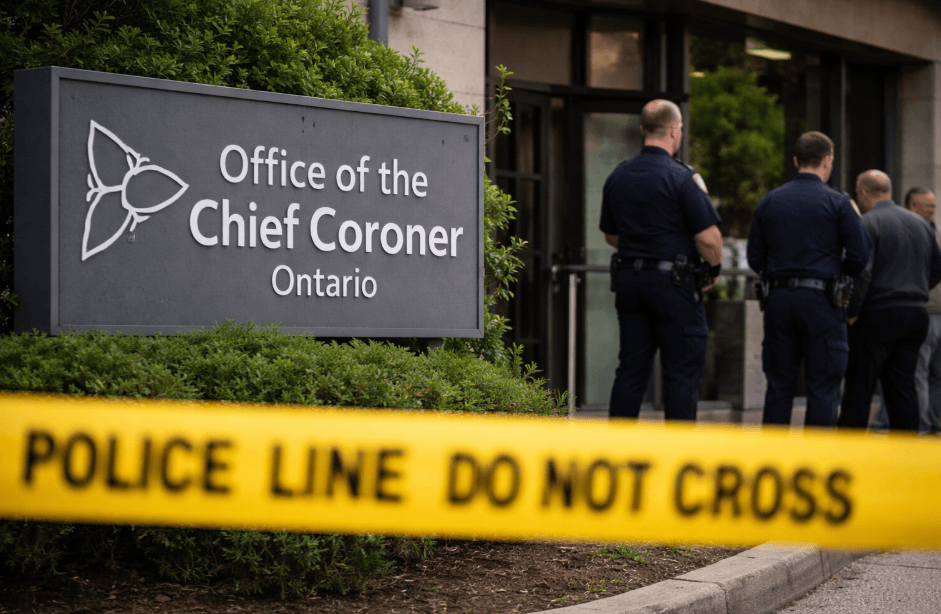
Toronto — Ontario’s Office of the Chief Coroner has announced that an inquest will be held into the death of John Brownlie, an 88-year-old man who died in September 2023 following an interaction with Peel Regional Police.
The announcement was made by Dr. Jennifer M. Dmetrichuk, Regional Supervising Coroner for the Central Region, Toronto East Office, in a statement released Friday by the Ministry of the Solicitor General.
Mr. Brownlie died on September 25, 2023, nearly two weeks after the reported interaction with police officers on September 13, 2023. Under Ontario’s Coroners Act, an inquest into the circumstances of his death is mandatory.
Mandatory Inquest Under Provincial Law
In Ontario, inquests are required in specific cases, including certain deaths involving individuals in custody or during interactions with law enforcement. These proceedings are not intended to assign blame or determine civil or criminal liability. Instead, they serve as a fact-finding process aimed at improving public safety.
The upcoming inquest will focus on examining the events and conditions surrounding Mr. Brownlie’s death. A jury will hear evidence from witnesses and review relevant materials to better understand what occurred.
At the conclusion of the proceedings, the jury may issue recommendations designed to prevent similar deaths in the future. While these recommendations are not legally binding, they often inform policy changes, operational procedures, and training within public institutions, including police services.
Details Yet to Be Confirmed
Officials have not yet released specific details regarding the timing or location of the inquest. According to the Ministry of the Solicitor General, further information, including the date and venue, will be announced at a later time.
The ministry also directed the public to additional resources on coroners’ inquests available through the Government of Ontario website, which outlines the purpose and process of such proceedings.
Broader Context and Public Interest
Inquests into deaths involving police interactions often draw public attention, particularly when they involve elderly individuals or vulnerable populations. These proceedings can play a critical role in maintaining transparency and accountability in the province’s oversight of law enforcement.
While limited information has been released about the nature of the interaction between Mr. Brownlie and Peel Regional Police, the inquest is expected to shed light on the circumstances leading up to his death and any contributing factors.
For families and communities, inquests can also provide a measure of closure, offering a formal forum to examine the facts and raise concerns. For policymakers and institutions, they can serve as a catalyst for reform.
Next Steps
Once scheduled, the inquest will proceed as a public hearing, allowing media and members of the public to attend. Witnesses, including medical experts, investigators, and potentially police officers, may be called to testify under oath.
The findings and recommendations issued by the jury will be made public following the conclusion of the inquest.
Until further details are released, the case remains under review as part of Ontario’s broader commitment to oversight and public safety in incidents involving law enforcement.