

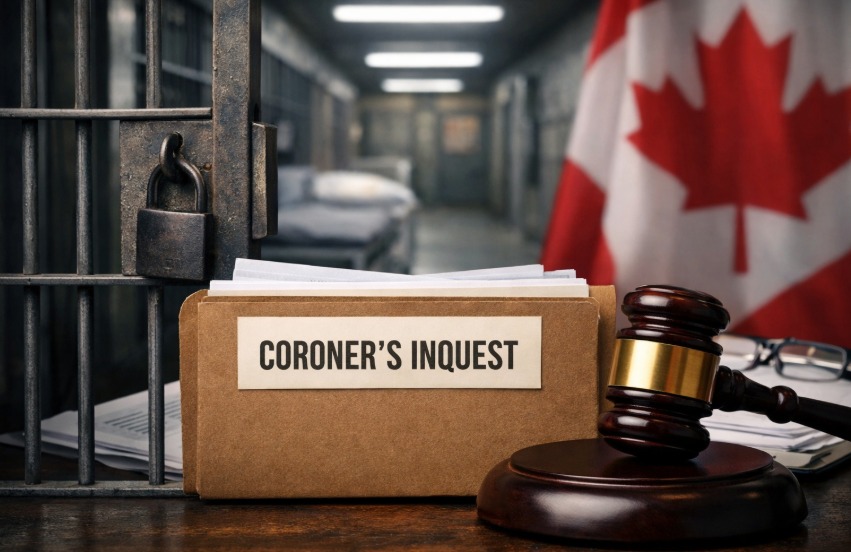
The Ministry of the Solicitor General has scheduled a coroner’s inquest into the 2021 death of a 26-year-old man while in custody at a provincial correctional facility, with proceedings set to begin early next month.
Dr. Kenneth Peckham, Regional Supervising Coroner for the West Region, Central Office, confirmed that the inquest into the death of Colin Pyne will commence at 9:30 a.m. on Monday, March 2, 2026.
In a statement released February 13, 2026, Dr. Peckham said a date has been scheduled for the inquest into the death of Colin Pyne.
Mr. Pyne died on August 17, 2021, while in custody at the Central North Correctional Centre in Penetanguishene, Ont. Under Ontario’s Coroners Act, an inquest is mandatory for deaths that occur in custody.
The inquest will be presided over by Murray Segal, with Grace Alcaide Janicas appointed as inquest counsel.
According to the Ministry, the proceedings will examine the circumstances surrounding Mr. Pyne’s death. As is standard in coroner’s inquests, the jury will be tasked with determining the who, how, when, where and by what means the death occurred. While the jury does not assign civil or criminal liability, it may make recommendations aimed at preventing similar deaths in the future.
The inquest is expected to last eight days and hear from approximately 16 witnesses.
Coroner’s inquests in Ontario serve as public fact-finding processes rather than trials. Their purpose is to provide transparency into deaths that meet specific legislative criteria, including those occurring in correctional facilities. Recommendations resulting from inquests are not legally binding but can influence policy, operational procedures and oversight practices across institutions.
The Central North Correctional Centre, located in Penetanguishene, is a provincially operated facility that houses individuals in pre-trial detention as well as those serving sentences of less than two years. Deaths in custody can trigger reviews not only under the Coroners Act but also through internal investigations and, in some cases, oversight bodies.
The upcoming inquest will be conducted by video conference. Members of the public who wish to observe the proceedings will be able to do so via a livestream link provided by the Office of the Chief Coroner. The Ministry directed interested viewers to an online portal where access details are posted.
Public access to inquests has increasingly shifted to digital platforms in recent years, allowing broader participation while reducing logistical constraints. Officials did not indicate whether any portions of the hearing would be subject to publication bans or other restrictions.
Inquests often draw participation from family members of the deceased, institutional representatives, medical professionals and subject-matter experts. Witness testimony can include correctional staff, health-care providers, investigators and other individuals involved in the events leading up to the death.
The jury’s recommendations, if any, are typically directed at government ministries, correctional institutions, health authorities or other relevant organizations. Past inquests in Ontario have led to changes in training, mental health protocols, supervision standards and emergency response procedures within custodial settings.
Further information about coroner’s inquests, including procedural details and the legal framework governing them, is available through the Province of Ontario’s website.
The inquest into Mr. Pyne’s death is scheduled to begin March 2 and is anticipated to conclude after eight days of hearings.