

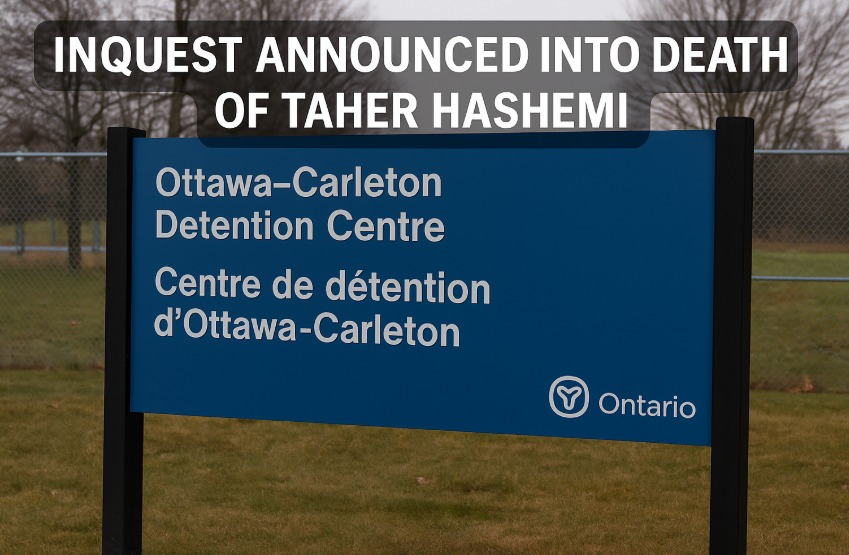
Ontario’s Office of the Chief Coroner has announced a forthcoming inquest into the death of 50-year-old Taher Hashemi, who died while in custody at the Ottawa-Carleton Detention Centre in August 2021. The inquest, which is mandatory under Ontario’s Coroners Act, will examine the circumstances surrounding his death and may result in recommendations aimed at preventing similar incidents in the future.
Mandatory Inquest Under the Coroners Act
In a statement released Tuesday, Dr. Louise McNaughton-Filion, Regional Supervising Coroner for the East Region (Ottawa Office), confirmed that an inquest will be convened to investigate the death. “Mr. Hashemi, 50 years old, died on August 24, 2021, while in custody at the Ottawa-Carleton Detention Centre. An inquest into his death is mandatory under the Coroners Act,” Dr. McNaughton-Filion said.
Under the Act, an inquest is required whenever an individual dies while detained in a correctional facility or in police custody. These proceedings are not designed to assign blame but to establish the facts surrounding a death and make recommendations to enhance public safety and institutional practices.
Purpose and Process of the Inquest
According to the Ministry of the Solicitor General, the upcoming inquest will focus on the events leading to Mr. Hashemi’s death, including the care and supervision he received while incarcerated. “The inquest will examine the circumstances surrounding Mr. Hashemi’s death. The jury may make recommendations aimed at preventing further deaths,” the statement continued.
The process will involve a public hearing overseen by a coroner, with evidence presented by witnesses including medical staff, correctional officers, and experts in detention facility management. A five-person jury will ultimately review the evidence and may issue recommendations to improve procedures within Ontario’s correctional institutions.
Details regarding the inquest’s schedule, venue, and presiding coroner will be released at a later date. The Ministry indicated that announcements will follow once logistics are finalized.
Broader Context: Oversight and Accountability in Custodial Deaths
Inquests into deaths occurring in custody are a central part of Ontario’s system of transparency and accountability. Each year, several inquests are held to address fatalities in correctional and mental health facilities, with findings often influencing policy changes.
The Ottawa-Carleton Detention Centre (OCDC), where Mr. Hashemi’s death occurred, has faced scrutiny in recent years over conditions and inmate care. Past inquests have led to recommendations related to overcrowding, mental health support, and medical response protocols. While no details have yet been released regarding the specific circumstances of Mr. Hashemi’s case, the forthcoming inquest is expected to revisit some of these systemic issues.
Advocates have long argued that mandatory inquests serve as an important mechanism for improving standards within correctional facilities. They also provide a public record of how institutions manage inmate health, safety, and crisis response. The coroner’s office emphasizes that recommendations from these proceedings, while not legally binding, often lead to meaningful reform when implemented by correctional authorities.
Information for the Public
The Ministry’s release directs members of the public to resources explaining the purpose and procedure of coroner’s inquests. For more information, Ontarians can visit the provincial government’s official website at ontario.ca/page/coroners-inquests.
As Dr. McNaughton-Filion noted, the inquest represents a key step in understanding what happened to Mr. Hashemi and how future deaths in custody might be prevented. The proceedings are expected to provide greater transparency into the operations of Ontario’s correctional system and reaffirm the province’s commitment to ensuring accountability and safety within its institutions.
