

SALEM, Ore. — Oregon regulators are facing renewed pressure to strengthen oversight of factory farm pollution as the Center for Food Safety (CFS) urges the state to tighten proposed permit requirements governing concentrated animal feeding operations (CAFOs).
CFS said it submitted formal comments to the Oregon Department of Environmental Quality and the Oregon Department of Agriculture on Tuesday, arguing that draft rules currently under review fall short of protecting waterways and nearby communities from agricultural runoff and waste-related contamination.
The comments respond to a draft National Pollutant Discharge Elimination System (NPDES) general permit that state regulators are finalizing. The permit is expected to set water pollution requirements for hundreds of factory farms across Oregon for the next five years, establishing compliance standards for waste handling and discharge controls.
While the draft permit is designed to regulate water impacts from large-scale livestock operations, CFS argues the current version does not include sufficient monitoring or enforceable safeguards to prevent pollution. The group says stronger provisions are needed to ensure farms meet water quality standards and to improve accountability for violations.
“Oregon’s water quality protections have historically been lax when it comes to regulating animal factory water pollution,” said Suzannah Smith, attorney at Center for Food Safety. “The contents of the final NPDES permit will determine whether Oregon will truly protect our communities and our rivers, streams, and groundwater from factory farm pollution, or continue with business as usual.”
CAFOs are large-scale livestock operations that can produce significant volumes of manure and wastewater. According to CFS, the waste generated by these facilities often includes manure mixed with heavy metals, pharmaceuticals, and other contaminants, creating risks when not properly contained or treated.
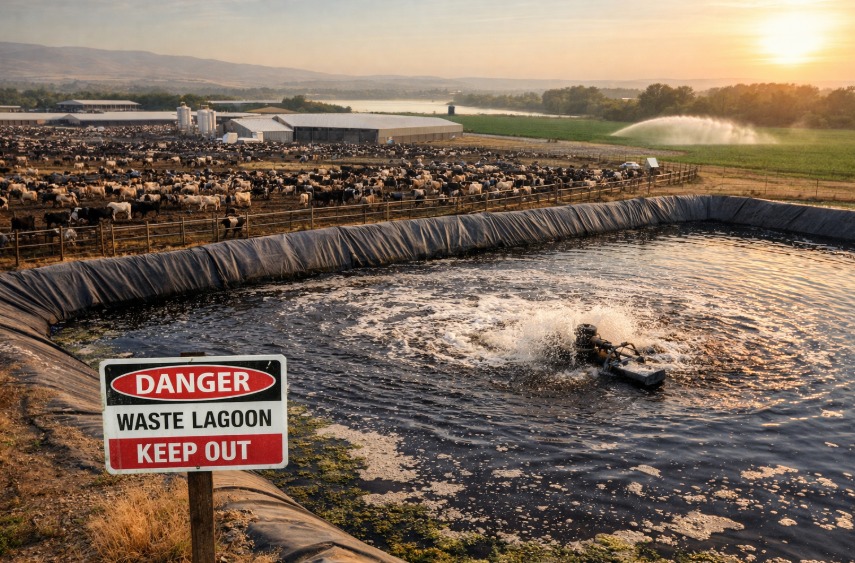
In many cases, the organization says, the waste is stored in open-air containment pits commonly referred to as “lagoons” and later applied to agricultural fields. Without adequate safeguards, runoff and seepage can enter nearby waterways or leach into groundwater, potentially affecting drinking water sources and downstream ecosystems.
The debate comes as states across the U.S. continue to face scrutiny over how agricultural pollution is regulated, particularly in regions where water bodies are already classified as impaired due to excess nutrients, pathogens, or other contaminants. Environmental advocates argue that permit standards must match the scale and intensity of industrial livestock production, while industry groups often warn against overly burdensome compliance requirements.
CFS is calling for several specific changes to Oregon’s draft permit, beginning with expanded monitoring requirements. The group argues that the final permit should require monitoring at all discharge points in order to verify that CAFOs are meeting water quality standards, rather than relying on limited reporting or infrequent testing.
The organization is also pushing for stronger structural safeguards related to manure storage systems. In its comments, CFS says the state should require proven, practicable pollution prevention methods by mandating that manure lagoons use double synthetic liners, along with leak detection technology and depth markers designed to reduce the risk of groundwater contamination.
Another area of concern raised by the group involves CAFOs that participate in anaerobic digestion systems for fuel production, often marketed as a source of “renewable” natural gas. CFS argues that these operations introduce additional water quality risks that are not adequately addressed in the current draft permit.
As a result, the group is urging Oregon to exclude CAFOs using anaerobic digestion for fuel production from the general permit framework unless the state can ensure the permit contains safeguards tailored to those added risks.
CFS also says the permit must better account for disproportionate impacts on communities that bear a higher burden from industrial agricultural pollution. The group is calling on regulators to fully consider the direct and cumulative effects of CAFOs on nearby residents, including those living in areas where multiple pollution sources may already exist.
The concerns are framed against a broader water quality backdrop in Oregon. CFS points to state figures indicating Oregon has 122,800 miles of impaired rivers and streams, along with three groundwater management areas created in response to dangerous levels of contamination in groundwater supplies.
The group says those conditions demonstrate why stronger oversight is needed, particularly as the state sets regulatory requirements that will remain in place for years.
CFS, which has been active in environmental and food system advocacy for decades, said its comments are intended to ensure the final permit meets both state and federal legal requirements while offering meaningful protection for Oregon waterways.
State regulators have not yet announced a final decision on the NPDES permit language. Once finalized, the permit will guide how Oregon monitors and enforces water pollution requirements for large livestock operations through the next permitting cycle, shaping compliance expectations and potential liabilities for factory farms operating across the state.
