

The International Energy Agency (IEA) is placing renewed emphasis on energy security, market reform and workforce readiness as geopolitical tensions and rapid clean-energy transitions reshape global energy systems. A series of high-level meetings, new analyses and international training initiatives underscored the agency’s expanding role across Europe, North America and emerging economies in recent weeks.
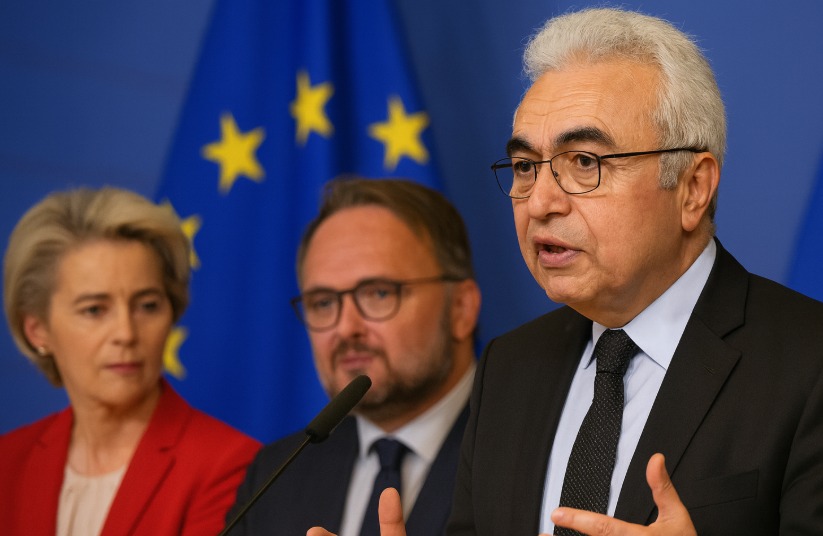
IEA Executive Director Fatih Birol joined European Commission leaders in Brussels to praise the European Union’s newly approved plan to end all natural gas imports from Russia by 2027. Calling the agreement a defining geopolitical milestone, Dr. Birol said it marked the close of a half-century era of deep European reliance on Russian energy.
“In the energy world, overreliance can quickly turn into major geopolitical vulnerabilities,” he said during a joint press conference with European Commission President Ursula von der Leyen and Energy and Housing Commissioner Dan Jørgensen. “My number one golden rule for energy security is diversification.” Both EU officials publicly thanked Dr. Birol for the IEA’s longstanding policy guidance.
The IEA moved quickly in 2022 after Russia’s full-scale invasion of Ukraine, issuing a 10-Point Plan just one week after the attack to help the EU reduce its dependence on Russian gas. Collaboration between the IEA and the Commission has continued as Europe works to shore up its energy systems and assist Ukraine through successive winters.
The push for enhanced security also featured prominently in Dr. Birol’s recent discussions with Norwegian Prime Minister Jonas Gahr Støre during meetings in Oslo. The talks focused on Norway’s critical role as a major gas supplier to Europe, as well as joint efforts to expand clean-cooking access across Africa. The initiative builds on momentum from the Summit on Clean Cooking in Africa, held in Paris in May 2024.
While in Norway, Dr. Birol also met with Energy Minister Terje Aasland, Foreign Affairs Minister Espen Barth Eide and International Development Minister Åsmund Grøver Aukrust. He later delivered a keynote address at the Autumn Conference, which draws senior industry executives and policymakers.
New analysis released by the IEA this week highlights the need for electricity markets to evolve as systems integrate more renewable power, storage and flexible technologies. The report, Electricity Market Design: Building on strengths, addressing gaps, finds that traditional short-term markets have largely performed well, ensuring efficient electricity dispatch. But long-term investment frameworks have lagged, leaving gaps in system planning, revenue certainty and risk management across major markets in Europe, the United States, Japan and Australia.
According to the report, robust market design remains essential for balancing supply and demand, coordinating system operations and signalling where new investment is most urgently required. The study was presented at a launch event led by Keisuke Sadamori, the IEA’s Director of Energy Markets and Security.
Another flagship publication—World Energy Employment 2025—shows that strong investment in energy infrastructure pushed global energy employment up 2.2 per cent last year, almost twice the pace of broader economic job growth. The sector employed 76 million people in 2024, more than five million above pre-pandemic levels.
The power sector is now the industry’s largest employer, driven by surging demand for solar PV, nuclear construction, grid expansion and storage. Jobs in electric-vehicle manufacturing and batteries alone grew by nearly 800,000 last year. Oil, gas and coal employment remained stable.
But the IEA warns that increasingly acute shortages of skilled labour risk slowing progress. More than half of the 700 companies, unions and training institutions surveyed reported “critical hiring bottlenecks,” raising the possibility of delayed projects and higher system costs.
Capacity-building efforts continue across emerging markets. Nearly 150 policymakers and practitioners from 12 countries gathered in Hanoi for the IEA’s Southeast Asia Energy Efficiency Policy Training Week, co-hosted with Viet Nam’s Ministry of Industry and Trade and supported by the Asian Development Bank. The event, now in its tenth year, is part of a global training series that has educated more than 3,000 participants from over 130 countries and contributed to the adoption of more than 1,000 energy-efficiency policies.
The IEA also spotlighted the rapid expansion of solar power in a new episode of its Everything Energy podcast, featuring analysis from Brent Wanner and Anthony Vautrin. The conversation examines long-term growth pathways outlined in the World Energy Outlook 2025 and the factors influencing solar’s future dominance in electricity supply.
Additional developments include meetings with senior officials from Kenya and Egypt, new workshops on methane reduction in Nigeria, and several reports on emissions abatement, distributed solar PV in Ukraine, and strategies for enhancing energy security in Latvia. A joint IEA-OECD report also details the capital requirements for decarbonising heavy industry in emerging economies.
Collectively, the week’s initiatives reflect the IEA’s expanding global reach as countries confront intertwined challenges—energy security, clean-energy investment, workforce shortages and the technical demands of transforming electricity systems.
