

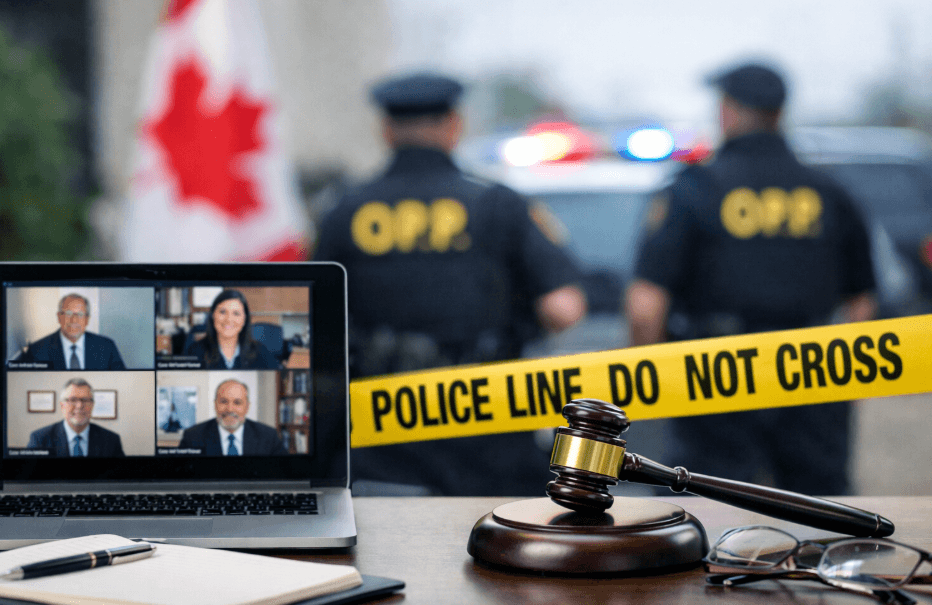
Proceedings to begin March 23 via video conference
Jury to examine circumstances and consider recommendations
The Ontario Ministry of the Solicitor General has announced that an inquest into the death of Dominick Martorino will begin on March 23, 2026, marking the next step in a mandatory legal process aimed at examining the circumstances surrounding his death and identifying potential measures to prevent similar incidents.
Dr. Armita Rahmani, Regional Supervising Coroner for the East Region based in Kingston, confirmed the schedule on March 17. The inquest will commence at 9:30 a.m. and will be conducted virtually. Murray Segal has been appointed as the presiding officer, while Jai Dhar will serve as inquest counsel.
Mr. Martorino, 43, died on April 6, 2021, following an interaction with officers from the Ontario Provincial Police earlier that same day. Under Ontario’s Coroners Act, an inquest is mandatory in cases involving deaths that occur in circumstances requiring public examination, including those involving police interaction.
Focus on accountability and prevention
The primary role of the inquest will be to review the events leading up to Mr. Martorino’s death. A jury will hear evidence from approximately five witnesses over the course of the proceedings, which are expected to last five days.
Unlike criminal trials, inquests do not assign legal responsibility or determine guilt. Instead, they are fact-finding processes designed to provide transparency and public accountability. At the conclusion of the hearings, the jury may issue recommendations aimed at preventing similar deaths in the future.
Such recommendations, while not legally binding, can influence policy changes, operational procedures, and training standards within public institutions, including law enforcement agencies.
Virtual format expands public access
The inquest will be անցկացed by video conference, continuing a format that has become more common in Ontario’s coronial system since the COVID-19 pandemic. Officials say the virtual format allows broader public access while maintaining procedural efficiency.
Members of the public will be able to observe the proceedings live through an online streaming link provided by the Office of the Chief Coroner. This approach reflects ongoing efforts to enhance transparency and public engagement in the inquest process.
Broader context of coroners’ inquests in Ontario
Coroners’ inquests in Ontario serve as an important mechanism for oversight, particularly in cases involving deaths in custody or during interactions with law enforcement. They are intended to shed light on systemic issues and identify opportunities for reform.
While the findings of an inquest cannot be used to establish civil or criminal liability, they often play a significant role in shaping public discourse and influencing institutional practices. Past inquests have led to changes in areas such as use-of-force policies, mental health crisis response, and emergency medical protocols.
Looking ahead
The upcoming inquest into Mr. Martorino’s death is expected to draw attention from community members, legal observers, and advocacy groups interested in police oversight and public safety.
With a relatively short witness list and a five-day schedule, the proceedings are likely to focus closely on the specific circumstances of the April 2021 incident. The jury’s recommendations, if any, will be closely watched for their potential impact on policing practices and broader public policy in Ontario.
Further details about the inquest, including access to the live stream and general information about the coroners’ process, are available through the province’s official channels.