

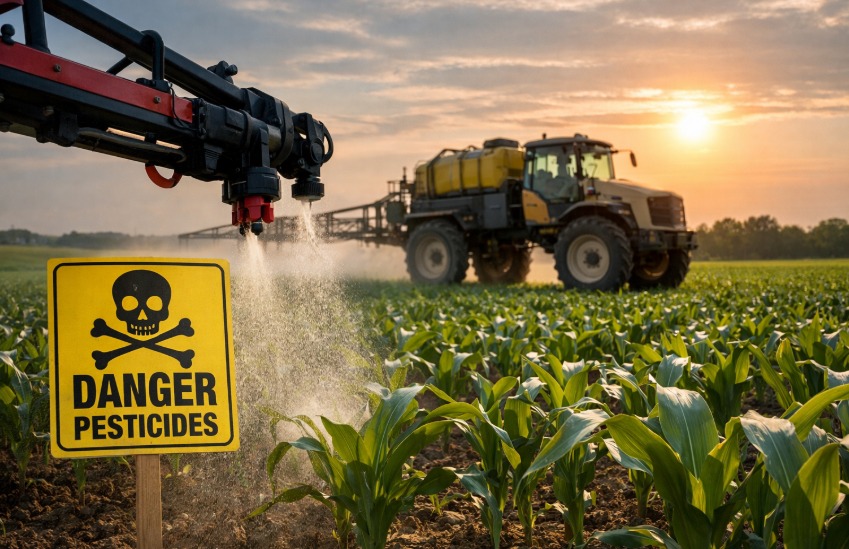
WASHINGTON, D.C. — Corteva Agriscience has formally cancelled its Enlist Duo herbicide, ending the product’s run in the U.S. market after more than a decade of legal challenges and regulatory scrutiny. The decision follows sustained litigation and advocacy from the Center for Food Safety and its allies, who argued the pesticide posed risks to human health and the environment.
The cancellation, announced alongside the Environmental Protection Agency, marks a significant development for the agricultural chemical sector, where herbicide-tolerant crop systems have played a central role in modern farming practices. Enlist Duo combined glyphosate and 2,4-dichlorophenoxyacetic acid (2,4-D), two widely used weedkillers, and was designed for use with genetically engineered crops resistant to both chemicals.
Advocacy groups said the move reflects mounting legal and regulatory pressure. “This is a monumental win for people and the planet,” said Kristina Sinclair, staff attorney at CFS. “After over a decade of legal battles, and rather than try and rebut our arguments in court, the manufacturer pulled Enlist Duo from the market. Persistent public-interest litigation works. Our food system never should have been doused in this toxic cocktail and now never will be again.”
Farmworker advocates also welcomed the decision, pointing to long-standing concerns about pesticide exposure. “This victory is a long-overdue step toward justice for farmworker women and rural communities who have borne the brunt of pesticide exposure for far too long,” said Mily Treviño-Sauceda, Executive Director of Alianza Nacional de Campesinas. “For years, Enlist herbicides have put our families at risk—causing reproductive harm, cancer, and devastating community health impacts. Today’s decision to cancel Enlist Duo proves that people power works, and that protecting the health of women, children, and farmworkers must always come before corporate profit.”
CFS first challenged federal approval of Enlist Duo in 2015, arguing regulators failed to properly assess its environmental and health impacts under U.S. pesticide law. Over the years, litigation resulted in additional reviews and court rulings requiring regulators to examine risks more closely, including potential harm to monarch butterfly habitat.
“CFS has been in this fight since day one,” said Amy van Saun, senior attorney at CFS. “For more than a decade, we’ve challenged the revolving door between pesticide corporations and their regulators. This cancellation is the result of our relentless watchdogging, evidence-based advocacy, and the power of communities refusing to back down.”
Corteva, which was spun off from DowDuPont’s agricultural division, positioned the Enlist system as a successor to Monsanto’s Roundup Ready platform, one of the most commercially successful weed-control technologies. However, the combination of glyphosate and 2,4-D also drew criticism from environmental and farm groups, who cited risks including herbicide drift, weed resistance, and ecosystem damage.
Opponents argued the product contributed to economic and environmental challenges in farming regions. “This decision finally acknowledges what farmers and communities have been saying for years—that Enlist Duo’s harm far outweighs its supposed benefits,” said Rob Faux, an Iowa farmer and Communications Manager for Pesticide Action and Agroecology Network. “Enlist Duo is a product that drifts from its target, damaging both alternative crops and threatening health. Our food systems should not be collateral damage to corporate chemical profits.”
The cancellation adds to a series of legal victories by advocacy organizations that have influenced pesticide regulation and oversight in the United States. Such decisions can have broader implications for agricultural input suppliers, farmers, and global crop production systems, including in Canada, where similar herbicides are widely used and regulated by federal authorities.
“No one watchdogs EPA and its pesticide decisions as closely as CFS, or holds the agency to account when it violates pesticide law,” said Bill Freese, science director at Center for Food Safety.
For Corteva, the withdrawal of Enlist Duo represents a shift in its product portfolio, though the company continues to sell related crop protection products, including Enlist One, which contains 2,4-D alone and remains the subject of ongoing litigation.
Advocates say the outcome highlights the influence of legal challenges and public scrutiny on agricultural chemical regulation. “Every cancellation, every court win, every shift in public policy is the result of unwavering dedication,” added Sinclair. “Today’s victory is a reminder that persistence works—and that together, we can end the toxic pesticide era.”
The long-running dispute underscores the balance regulators and companies must strike between agricultural productivity and environmental and health considerations, an issue likely to remain central to the crop protection industry in North America.