

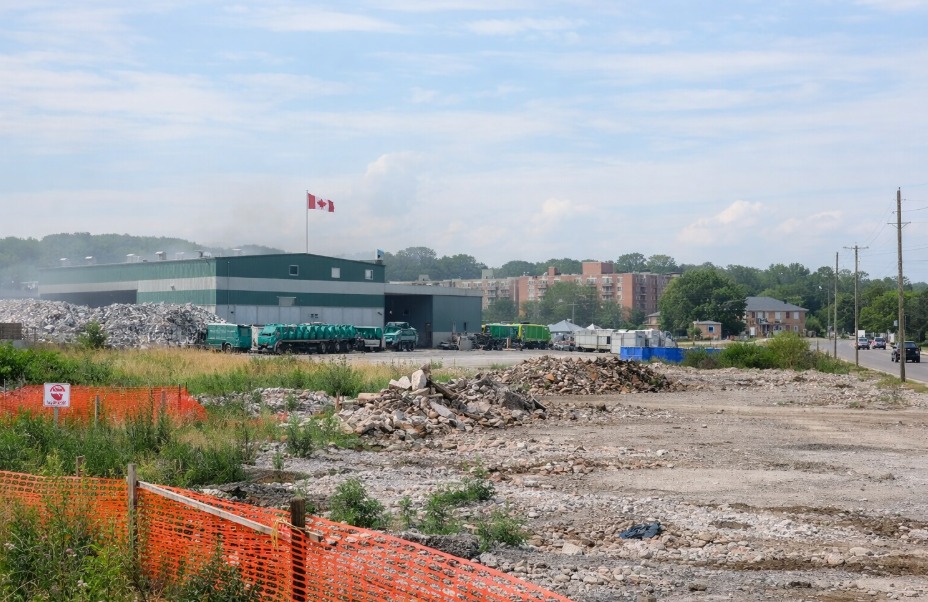
Noise and Odor Concerns Near Waste Management Centre Prompt Recommendation Ahead of March 24 Council Meeting
CAMBRIDGE, ON — City of Cambridge planning staff are recommending that council reject a development proposal seeking to amend the city’s Official Plan to permit a mixed residential and commercial project at 1070 and 1140 Main Street, citing unresolved concerns related to noise and odours from a nearby waste facility.
The recommendation will be presented to council during its March 24, 2026 meeting, where elected officials will determine whether the proposed amendment should proceed.
According to city staff, the site’s immediate proximity to the Cambridge Waste Management Centre presents potential quality-of-life issues for future residents, despite extended discussions between municipal planners and the Toronto-based developer.
“We have a responsibility to assess development proposals with the best interests of current and future residents in mind and the understanding that this is where families will invest in building their homes for the long term,” said Brynn Nheiley, Director of Planning. “Staff have spent a significant amount of time, exceeding the decision timeline, working with the applicant to try to resolve issues around noise and odor as the site is located immediately next to the Cambridge Waste Management Centre.”
The proposed amendment would allow the lands at 1070 and 1140 Main Street to be used for both residential and commercial purposes, a change from the property’s current planning designation. While mixed-use developments have become increasingly common in Ontario municipalities seeking to expand housing supply and intensify urban areas, municipal planners say the location raises environmental compatibility concerns.
City officials say the key issue lies in whether the development could coexist with the operations of the waste management facility located directly beside the proposed site. Waste processing centres typically generate persistent noise and odours from vehicle traffic, waste handling and processing operations, factors that planners must consider when evaluating nearby residential projects.
Municipal planning staff have spent months reviewing the application and consulting with the developer to explore potential mitigation measures. However, city staff concluded that those efforts did not sufficiently address the concerns tied to the facility’s ongoing operations.
The staff recommendation does not represent a final decision. Instead, it serves as professional planning advice to city council, which has the authority to approve, modify or reject the proposal after reviewing the staff report and hearing from stakeholders.
If council ultimately rejects the proposal, the developer still has several options under Ontario’s planning framework.
The company could accept council’s decision and withdraw the proposal. Alternatively, it could appeal the decision through the appropriate provincial planning appeal process if it disagrees with council’s determination.
A third option allows the developer to file an appeal before council renders its decision, citing a “non-decision” if it believes the municipality exceeded the prescribed timeline for reviewing the application.
The possibility of such appeals reflects the broader tension in many Ontario municipalities between accelerating housing development and ensuring compatibility with existing infrastructure and industrial operations.
Cities across the province have faced growing pressure to increase housing supply amid rising population growth and affordability challenges. At the same time, planners must ensure new residential developments are located in environments suitable for long-term living.
The Cambridge proposal illustrates the balancing act municipalities often face when considering redevelopment opportunities near established industrial or municipal service sites.
While mixed-use developments can support economic activity and provide additional housing, planners say developments located next to facilities such as waste management centres can create conflicts between residents and ongoing municipal operations.
Municipal staff emphasized that protecting future residents from environmental impacts remains a central consideration in the city’s planning process.
The issue also ties into the city’s broader planning framework outlined in the Cambridge Connected Strategic Plan, which aims to guide long-term development and community growth.
Under that plan, the city states it seeks to “promote, facilitate and participate in the development of safe and healthy neighbourhoods with a range of housing options.”
Council’s decision later this month will determine whether the Main Street proposal aligns with those objectives or whether the location’s environmental challenges outweigh the potential benefits of additional housing and commercial space.
The March 24 council meeting will provide the next opportunity for the proposal to be debated publicly before a final decision is made.