

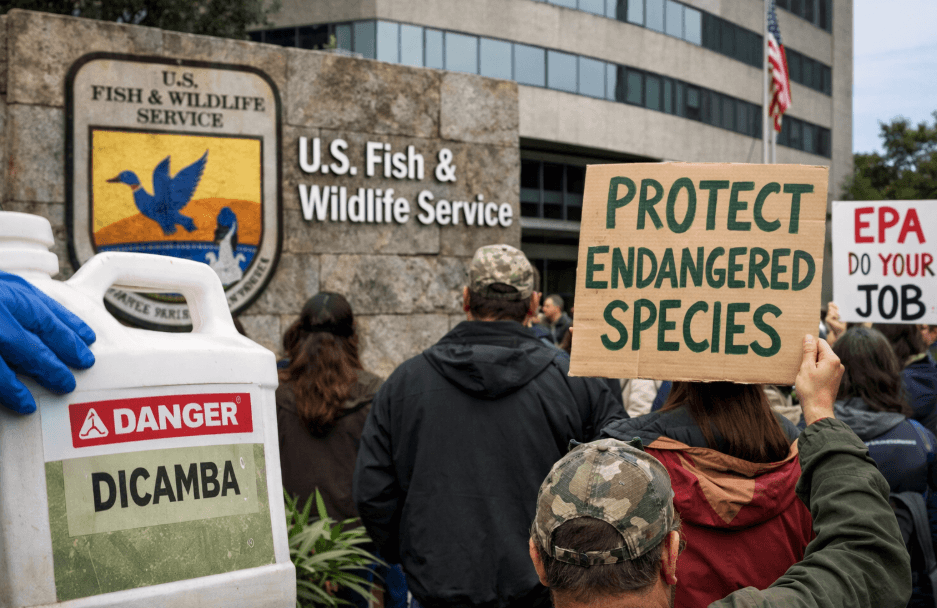
Legal action targets transparency in pesticide oversight
SALEM, Ore. — The Center for Food Safety has launched legal action against the U.S. Fish and Wildlife Service (FWS), seeking to compel the release of federal records المتعلقة the environmental review of the herbicide dicamba, in a dispute that underscores ongoing concerns about regulatory transparency and endangered species protection.
The lawsuit, filed under the Freedom of Information Act (FOIA), alleges that FWS has failed to provide requested documents tied to its consultation with the Environmental Protection Agency (EPA) بشأن the ecological risks associated with dicamba. The herbicide has long been controversial due to its tendency to drift and damage neighbouring crops and natural vegetation.
Dispute centres on endangered species protections
At the core of the case is the EPA’s determination that re-registering dicamba is likely to harm species listed under the Endangered Species Act (ESA). Under U.S. law, such a finding triggers a mandatory consultation process with FWS to develop mitigation measures aimed at protecting vulnerable wildlife.
This inter-agency consultation is a critical component of the pesticide approval framework, designed to ensure that environmental risks are adequately assessed and addressed before products are permitted for widespread use.
The Center for Food Safety (CFS) argues that access to records documenting this process is essential for public accountability and regulatory compliance.
FOIA request unanswered for months
According to the complaint, CFS first submitted a FOIA request to FWS in July 2025, seeking documents related to dicamba’s re-registration. More than seven months later, the organization says it has yet to receive any responsive records, despite acknowledgment of the request by the agency.
The lawsuit contends that this delay constitutes a violation of FOIA requirements, which mandate timely disclosure of government records unless specific exemptions apply.
“Acquiring these records is essential to determine whether FWS and EPA are complying with Endangered Species Act obligations triggered by the re-registration of dicamba,” said Kingsly McConnell, an attorney at Center for Food Safety.
Dicamba approval remains contentious
The legal challenge comes shortly after dicamba was re-registered by the EPA, despite a history of judicial setbacks. Courts have previously banned the herbicide on two occasions, citing environmental and agricultural damage linked to its volatility and propensity to drift beyond intended application areas.
CFS, along with allied organizations, is separately challenging the latest re-approval in court, signalling a broader legal strategy aimed at halting or revisiting the herbicide’s use.
Concerns over regulatory oversight and conflicts of interest
The lawsuit also points to what CFS describes as a pattern of limited transparency within the current U.S. administration regarding pesticide regulation.
Among the concerns raised is the appointment of Kyle Kunkler, a former lobbyist for the American Soybean Association, to a senior role within the EPA’s Office of Chemical Safety and Pollution Prevention. Kunkler has publicly supported dicamba in the past, and critics argue that his involvement in regulatory decisions raises questions about potential conflicts of interest.
The administration has not required Kunkler to recuse himself from dicamba-related matters, according to the lawsuit.
Historical scrutiny and staffing pressures
Regulatory handling of dicamba has faced scrutiny before. In 2021, an Inspector General investigation found that the herbicide’s original approval process excluded key scientific evidence during an expedited review under a previous Trump administration.
More broadly, the case highlights operational challenges within federal agencies. Budget cuts and staffing reductions have strained FOIA processing capabilities, contributing to growing backlogs.
Public data cited in the lawsuit indicates that FWS experienced a 43% increase in overdue FOIA requests between 2024 and 2025, alongside a 27% decline in full-time staffing levels.
Broader implications for transparency
For CFS, the lawsuit is part of a wider effort to enforce transparency in the regulation of food production and agricultural chemicals. The organization maintains that timely access to government records is essential for public oversight, particularly when environmental and economic stakes are high.
The outcome of the case could have implications not only for dicamba regulation but also for how federal agencies manage information requests amid resource constraints and heightened scrutiny.
As legal proceedings move forward, the dispute is likely to draw attention from stakeholders across agriculture, environmental advocacy, and regulatory policy, including Canadian observers monitoring cross-border impacts of U.S. pesticide decisions.