

Civil liberties group intervenes in challenge tied to Quebec’s Bill 21
Case could redefine judicial oversight when governments invoke Charter override
Ottawa — The BC Civil Liberties Association (BCCLA) is set to appear before the Supreme Court of Canada later this month in a closely watched constitutional case that could reshape how governments use the notwithstanding clause.
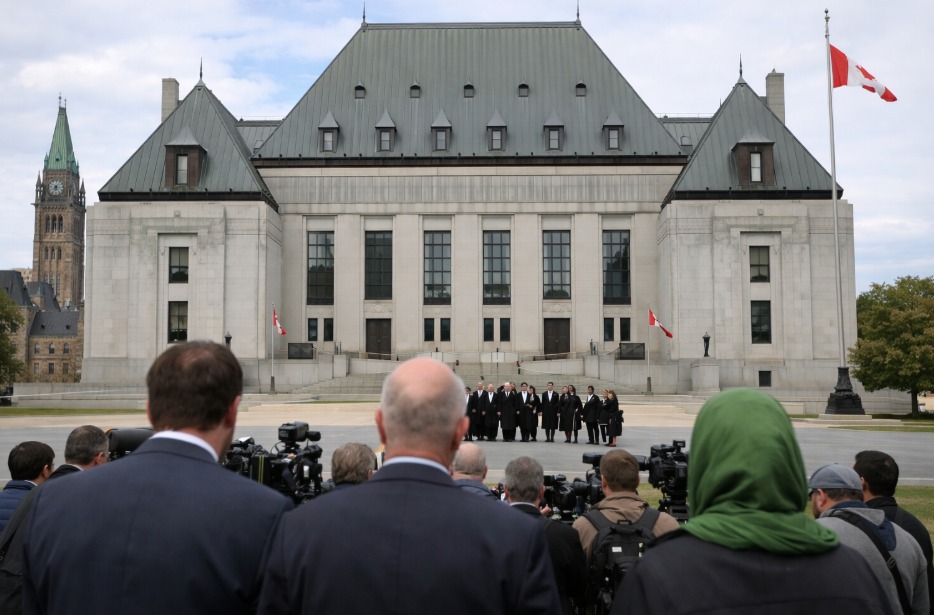
The hearing, scheduled for March 23–26, 2025, centres on English School Board of Montreal et al v Attorney General of Quebec, a case widely expected to clarify the scope and limits of the Charter’s override provision. Proceedings will take place at the Supreme Court in Ottawa and will be available via live webcast.
At issue is whether governments can shield legislation entirely from judicial scrutiny by invoking the notwithstanding clause — formally Section 33 of the Canadian Charter of Rights and Freedoms — or whether courts retain a role in assessing and declaring rights violations even when the clause is used.
Challenge rooted in Quebec’s Bill 21
The case originates from legal challenges to Quebec’s Bill 21, enacted in 2019. The legislation prohibits certain public sector employees — and those seeking such positions — from wearing religious symbols, including hijabs, turbans, yarmulkes, and crosses.
Critics argue the law infringes on Charter-protected freedoms of religion and expression and disproportionately affects Muslim women, as well as Sikh, Jewish, and other racialized and newcomer communities.
Quebec invoked the notwithstanding clause pre-emptively when passing the law, aiming to insulate it from constitutional challenges. Lower courts, including the Quebec Superior Court and the Quebec Court of Appeal, accepted the province’s argument that such invocation limits the courts’ authority — even preventing them from issuing formal declarations that a law violates Charter rights.
BCCLA seeks clarity on court powers
The BCCLA has intervened in the Supreme Court appeal, arguing that such a broad interpretation risks undermining democratic accountability.
The organization contends that while the notwithstanding clause allows governments to temporarily override certain Charter protections, it does not eliminate the judiciary’s role entirely. Specifically, the group maintains that courts should still be able to declare when legislation is unconstitutional and provide remedies where appropriate.
According to the BCCLA, the clause should function strictly as written — preventing courts from striking down legislation, but not from examining or publicly identifying rights violations.
The stakes are heightened by what the organization describes as a growing trend among Canadian governments to invoke or threaten to invoke the clause more frequently.
Concerns over expanding use of override powers
Legal observers say the Supreme Court’s decision could have far-reaching implications, particularly as debates intensify over the balance between parliamentary sovereignty and constitutional protections.
The BCCLA warns that allowing governments to fully bypass judicial oversight would weaken transparency and erode public trust in democratic institutions.
Ga Grant, BCCLA Litigation Staff Counsel, underscored these concerns in a statement ahead of the hearing:
“It is extremely concerning that Quebec and other provinces are overinflating the notwithstanding clause in an attempt to completely oust the courts. The Court’s ability to issue declarations and other remedies is crucial in holding the government accountable when it chooses to violate constitutional rights. Court declarations ensure the public is informed when their government commits constitutional violations. This is essential to the democratic process and transparency in government.”
Broader implications for Canadian governance
The Supreme Court’s ruling is expected to set a national precedent on how far governments can go when invoking the notwithstanding clause, a provision that has historically been used sparingly but is increasingly entering political discourse.
A decision affirming broader judicial powers could reinforce the courts’ role as a check on legislative authority, even in cases where governments seek to override Charter rights. Conversely, a ruling favouring Quebec’s position could embolden provinces to use the clause more aggressively, potentially limiting avenues for legal recourse.
The BCCLA is represented in the case by lawyers Avnish Nanda and Anna Lund of Nanda Law.
As the hearing approaches, legal experts, policymakers, and civil liberties advocates across the country will be watching closely, with the outcome poised to influence the future balance between rights protection and governmental authority in Canada.