

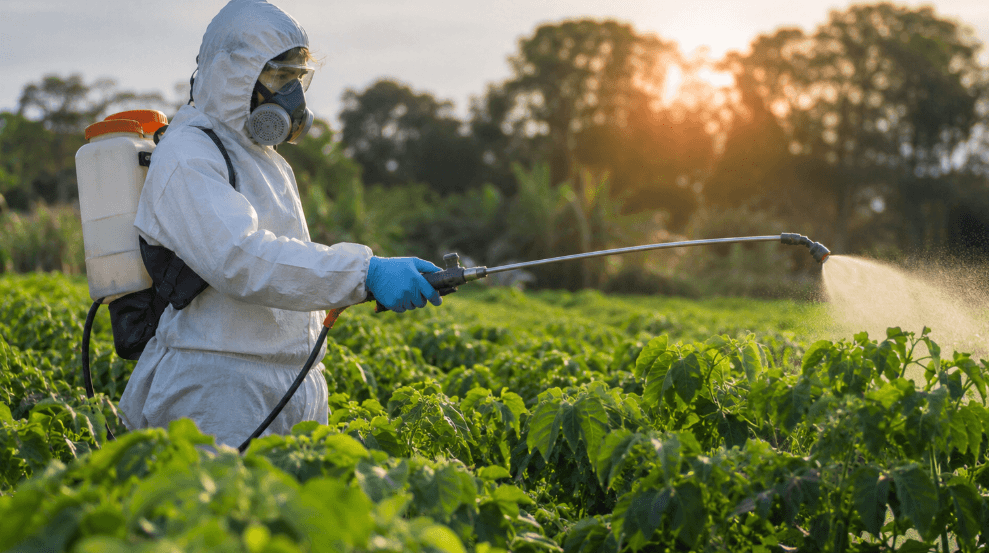
A broad coalition of environmental, agricultural and public health organizations has launched a nationwide campaign calling for a ban on paraquat and a transition toward pesticide-free farming practices in the United States.
The Take Down Pesticides campaign seeks stronger government oversight of hazardous agricultural chemicals while encouraging investment in organic and agroecological alternatives. Organizers argue that restricting individual pesticides will not adequately address the broader health and environmental risks associated with chemical-intensive agriculture.
Growing Pressure for a Nationwide Paraquat Ban
According to the coalition, more than 13 U.S. states have introduced legislation seeking to prohibit paraquat, a herbicide already banned in more than 70 countries.
Campaign organizers cite research associating pesticide exposure with Parkinson’s disease, certain cancers and neurological harm. They also point to growing international efforts to restrict highly hazardous pesticides, including atrazine and chlorpyrifos.
The campaign comes amid continuing debate over pesticide regulation, agricultural productivity and the economic implications of transitioning to alternative pest-management systems.
Farmworkers and Rural Communities Face Exposure Concerns
Advocacy organizations say farmworkers, agricultural families and communities near farmland face particular risks from repeated pesticide exposure and chemical drift.
“Pesticides are not combating insects and pests,” says Hormis Bedolla, Initiative Coordinator for Pesticides and Environmental Justice, Alianza Nacional de Campesinas. “They are poisoning and killing us. The idea of creating perfect fruit is not worth our health nor our lives.”
Mily Trevino-Sauceda, Executive Director of Alianza Nacional de Campesinas, also raised concerns about reproductive health, premature births and medical conditions affecting children in agricultural communities.
The coalition is urging lawmakers to strengthen protections for workers and residents while reconsidering the continued use of pesticides prohibited in other jurisdictions.
Organic Farming Alternatives Gain Attention
Beyond advocating for paraquat restrictions, the campaign promotes agricultural systems that reduce or eliminate synthetic pesticide use.
Organizers point to long-term research suggesting that organic and agroecological farming can achieve competitive productivity and profitability while improving soil health and resilience during drought conditions.
However, the economic feasibility of transitioning depends on factors including crop type, regional conditions, labour requirements and access to agricultural support programs.
“Virtually all paraquat imported to the U.S. comes from Chinese companies, even though paraquat is banned in China. Why are we using pesticides that the rest of the world has deemed too dangerous?” said Deidre Nelms, Communications and Research Director of Coming Clean. “We should be investing in pesticide-free farm systems that make soil healthier, are more resistant to drought, and that keep farmers and farmworkers safe.”
Campaign Calls for Government Investment and Regulatory Reform
The coalition is calling on Congress to prioritize public health in pesticide policy and provide financial and technical support for farmers adopting alternative growing methods.
It also wants state and local governments to restrict EPA-approved pesticides on public lands and strengthen protections against agricultural chemical exposure.
“For decades, the Center for Food Safety has championed the rights of farmworkers, consumers, endangered species, and the planet by challenging government policies permitting the overuse of toxic pesticides,” said Reagan Ferris, Legislative and Policy Coordinator at the Center for Food Safety. “Pesticides are a poisonous false promise that harm people, contaminate our food, and irreparably pollute the water, soil, and air. A new agriculture for the 21st century is not only possible, but essential, to ensure a regenerative, healthful food system.”
Public Health and Agricultural Policy Remain Central
The campaign also intends to highlight farmers who have successfully eliminated synthetic pesticides and share their experiences with agricultural communities.
Participating organizations believe greater public awareness, regulatory reform and investment in sustainable farming could accelerate the adoption of alternative agricultural practices.
For policymakers, the initiative raises broader questions about balancing agricultural competitiveness, food affordability, environmental protection and occupational health.
The Take Down Pesticides coalition plans to continue advocating for paraquat restrictions while building support for a longer-term transformation of American agriculture. Its success will depend on legislative action, farmer participation and the availability of economically viable alternatives to conventional pesticide use.
Discover more from Wire Service Canada
Subscribe to get the latest posts sent to your email.