

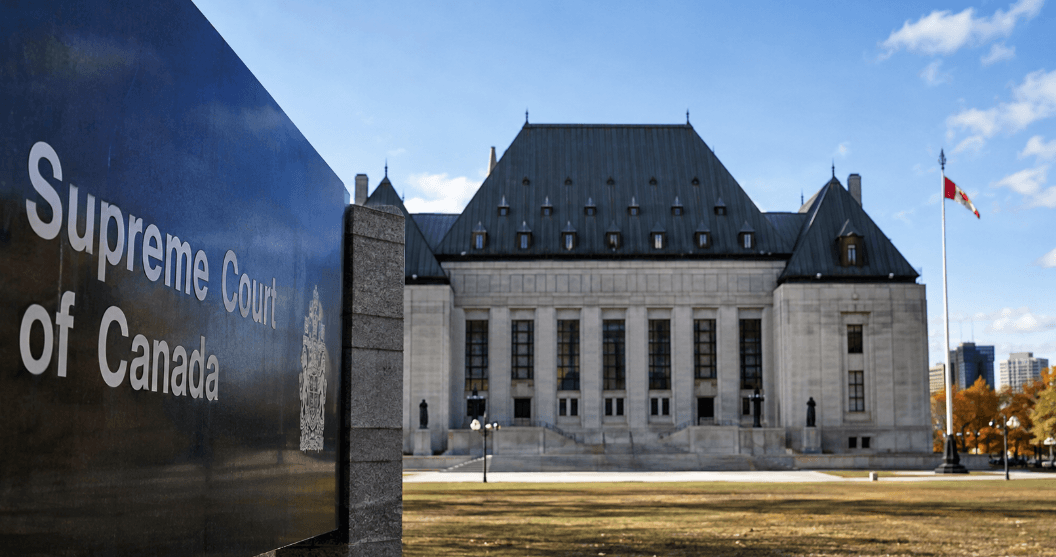
OTTAWA, October 9, 2026 — The BC Civil Liberties Association (BCCLA) is set to present arguments before the Supreme Court of Canada in a case examining the relationship between religious freedom, personal information rights and the legal standards used to assess potential violations of the Canadian Charter of Rights and Freedoms.
The organization is intervening in Vabuolas v. Information and Privacy Commissioner for British Columbia, a dispute involving two former Jehovah’s Witnesses who sought access to personal information retained by their former religious congregations.
The case raises broader constitutional questions about how courts should review administrative decisions affecting Charter-protected rights, particularly when religious institutions and individual privacy interests come into conflict.
Supreme Court Case Examines Religious Freedom and Privacy Rights
The dispute began when Gabriel-Liberty Wall and Gregory Westgarde, both former Jehovah’s Witnesses, submitted requests for personal information held by their respective former congregations.
The congregations refused to provide the requested records, prompting proceedings involving British Columbia’s Office of the Information and Privacy Commissioner (OIPC).
An OIPC adjudicator subsequently ordered the congregations to disclose the relevant information to the privacy regulator. The disclosure was intended to allow the office to determine whether the records could legally be withheld from the individuals requesting them.
The congregations challenged that order in court, arguing that providing the information to the regulator would interfere with their constitutionally protected freedom of religion.
The dispute centres on British Columbia’s Personal Information Protection Act (PIPA), which establishes rules governing how private-sector organizations collect, use and disclose personal information.
Lower Courts Applied Different Charter Frameworks
The initial court proceedings examined whether the disclosure requirements under PIPA infringed religious freedom protections established by section 2 of the Charter.
The petition judge concluded that the legislation breached the right to freedom of religion but determined that the infringement was justified under section 1 of the Charter.
That assessment relied on the Oakes test, a constitutional framework used to determine whether government restrictions on protected rights can be justified in a free and democratic society.
The British Columbia Court of Appeal subsequently approached the constitutional question differently.
Rather than identifying the legislation itself as the source of the Charter concern, the appellate court focused on the OIPC adjudicator’s discretionary decision requiring disclosure.
The court applied the Doré/Loyola framework, which examines whether administrative decisions appropriately balance Charter protections with the statutory objectives decision-makers are required to pursue.
Using that approach, the Court of Appeal upheld the lower court’s outcome, finding that the relevant Charter considerations had been properly balanced.
BCCLA Calls for Stronger Judicial Review of Charter Rights
The BCCLA is participating as an intervener to address the broader legal principles governing administrative decisions that affect constitutional protections.
Its central argument concerns the distinction between Charter rights and Charter values, which the organization maintains has introduced unnecessary uncertainty into Canadian administrative law.
According to the BCCLA, courts should focus directly on constitutionally guaranteed rights when reviewing administrative orders that may restrict those protections.
The association argues that a more rigorous judicial approach is necessary to ensure constitutional rights receive consistent protection regardless of whether a dispute involves legislation or an administrative decision.
Organization Supports Correctness Standard and Oakes Test
The BCCLA is urging the Supreme Court to apply the correctness standard of review when administrative decisions engage Charter rights.
Under this standard, reviewing courts independently determine whether the relevant legal decision is correct rather than granting substantial deference to the administrative decision-maker.
The association also supports applying the Oakes test when determining whether an infringement of Charter rights can be constitutionally justified.
This approach would impose closer judicial scrutiny on administrative orders affecting protected freedoms, including decisions issued by privacy regulators.
The BCCLA maintains that such scrutiny is necessary to prevent constitutional protections from being weakened by differences in the legal frameworks applied to administrative and legislative decisions.
Supreme Court Hearing Could Clarify Administrative Law Standards
The Supreme Court hearing is scheduled for October 9, 2026, in Ottawa, with the media advisory listing a start time of 9:30 a.m. Eastern Daylight Time.
Beyond the immediate dispute involving religious congregations and access to personal information, the proceedings could provide guidance on how Canadian courts assess competing constitutional and statutory obligations.
The outcome may have implications for privacy regulators, religious organizations and other administrative bodies whose decisions engage Charter-protected freedoms.
The Supreme Court will be asked to consider the appropriate balance between protecting individual information rights and respecting religious freedom, alongside the broader question of how rigorously courts should examine administrative decisions affecting constitutional rights.
A ruling could help clarify the legal standards governing future Charter-related administrative disputes across Canada.
Discover more from Wire Service Canada
Subscribe to get the latest posts sent to your email.