

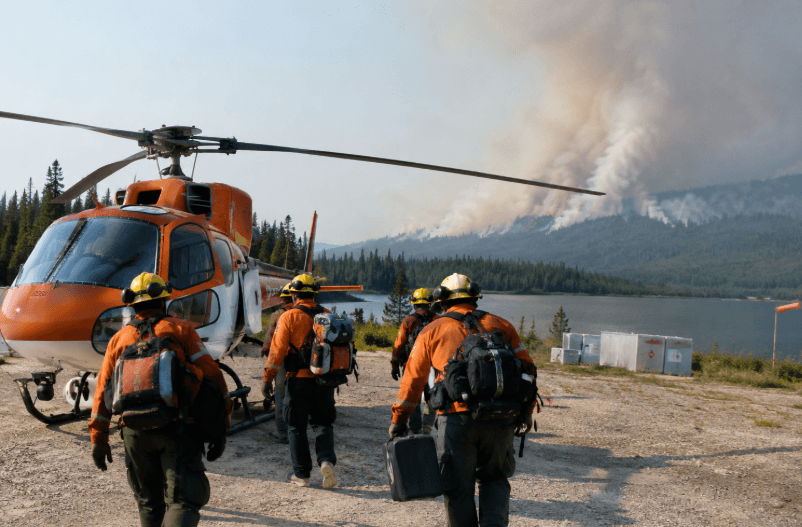
Ontario is investing more than $20 million to rebuild and modernize two key wildland firefighting bases in Northwestern Ontario, part of a broader effort to strengthen emergency response capacity as the province faces increasingly demanding fire seasons.
The Vedette and Socket Lake Forward Attack Bases will receive upgrades designed to improve the deployment of firefighters, equipment and aircraft. The facilities serve as strategically positioned response hubs, allowing provincial crews to operate closer to active wildland fires and reach affected communities more quickly.
Vedette and Socket Lake Bases to Be Modernized
Construction is already underway at both forward attack bases, with the province expecting the work to be completed ahead of the 2027 fire season.
The modernization projects will include new staff accommodations, improved operational facilities, upgraded electrical and plumbing infrastructure and new technologies. The province says the improvements will help crews deploy critical resources faster during wildland fire emergencies.
“Ontario’s dedicated fire crews and pilots are the heroes on the frontlines protecting Ontario during fire season,” said Mike Harris, Minister of Natural Resources. “Our government is sparing no expense to ensure they have the tools they need, including upgraded facilities to keep people safe now and for years to come.”
Ontario is also preparing upgrades at other wildland fire management facilities, including bases at Ranger Lake and Ogoki.
Northwestern Ontario Fires Highlight Preparedness Needs
The investment follows a challenging 2026 wildland fire season. Ontario recorded 786 wildland fires during the season, with more than 744,222 hectares burned across the province.
“The wildland fires that impacted Northwestern Ontario earlier this summer underscored the importance of preparedness and strong partnerships. Ontario remains committed to working with municipalities, First Nation communities and emergency management partners to support communities when emergencies occur,” said Jill Dunlop, Minister of Emergency Preparedness and Response.
Ontario’s wildland fire network includes hundreds of trained employees working across 14 fire management headquarters, three attack bases, 15 forward attack bases, two regional fire centres, a provincial fire centre and an emergency operations centre.
The system also includes three logistics centres, seven aircraft hangars and a flight training centre. Together, the resources support fire protection and emergency operations across approximately 90 million hectares of public land.
Province Expands Firefighting Budget and Aircraft Fleet
The latest infrastructure funding adds to a series of investments in Ontario’s wildland fire program. The province has more than doubled its year-start emergency firefighting budget, increasing it from $70 million to $150 million.
Ontario has also committed $650 million to expand its aerial firefighting capacity through the acquisition of six new waterbombers and five new helicopters. The existing provincial fleet includes 28 specialized aircraft used for wildland firefighting and other natural resource and emergency response operations.
Workforce capacity has also expanded. Since 2024, more than 170 permanent fire management positions have been added, alongside increased compensation for key personnel, including firefighters and pilots.
“Across Northwestern Ontario, we depend on the good folks within our fire crews to protect us and keep us safe. Never missing an opportunity to thank our frontline workers, we are making sure they have the right tools and critical infrastructure needed to continue their service,” said Greg Rickford, Minister of Indigenous Affairs and First Nations Economic Reconciliation.
Upgrades Aim to Improve Emergency Response Times
The government expects the modernized bases to provide additional logistical capacity and improve coordination during major fire emergencies.
“Having two Forward Attack facilities dedicated to providing a full-scale fire response capability will be a tremendous asset to our dedicated personnel and to the communities that rely on their support. It will ensure a high level of preparedness for emergency situations while providing the essential logistical capacity, modern tools, and advanced technologies needed to respond effectively. This investment will improve response times, strengthen coordination among teams, and enhance the overall ability of our personnel to mobilize quickly and efficiently when emergencies arise. Most importantly, it will enable these brave individuals to get where they are needed most on the frontlines and provide critical support to communities facing the growing dangers and impacts of wildland fires,” said Bill Rosenburg, MPP for Algoma—Manitoulin.
With construction targeted for completion before the next fire season, the Vedette and Socket Lake projects form part of Ontario’s wider effort to strengthen firefighting infrastructure, aircraft capacity and frontline staffing across the province.