

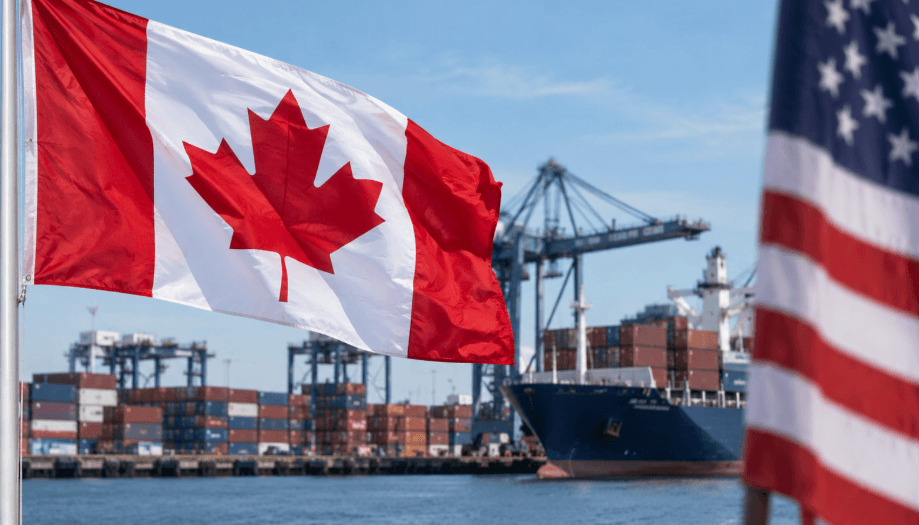
Ontario is widening access to two major business-support programs as the province prepares for another round of U.S. tariffs and import restrictions targeting Canadian goods, a move aimed at protecting jobs, maintaining business liquidity and reducing dependence on U.S.-based supply chains.
The provincial government said the expanded eligibility under the Protect Ontario Financing Program (POFP) and Ontario Together Trade Fund (OTTF) will provide additional financial support to businesses affected by escalating cross-border trade measures.
Ontario Responds to New U.S. Tariffs and Import Restrictions
The announcement follows measures outlined by the U.S. government on September 8 targeting Canadian exports. According to the province, the measures include additional tariffs of 50 per cent scheduled to take effect September 15, as well as import bans covering certain Canadian products, including alcohol, dairy products and motorcycles, beginning September 29.
The Ontario government said widening eligibility for its tariff-support programs is intended to provide affected businesses with access to capital needed to maintain operations, retain employees and reorganize supply chains.
“Ontario will not back down in our fight to protect our workers and businesses from tariffs and economic uncertainty,” said Vic Fedeli, Minister of Economic Development, Job Creation and Trade. “In the face of President Trump’s latest economic attacks, we are helping businesses keep workers on the job and building an economy that can stand up to anything that comes our way for decades to come.”
$1 Billion Financing Program Provides Business Liquidity
The $1-billion Protect Ontario Financing Program is designed to provide immediate financial relief to Ontario businesses facing disruption from tariffs and changing trade conditions.
Loans available through the program can be used to cover operating expenses such as payroll, lease payments and utilities, providing companies with additional liquidity as they adjust to changes in their export markets.
The Ontario Together Trade Fund, meanwhile, has $150 million available through grants or loans for small and medium-sized businesses. The program is focused on helping companies increase interprovincial trade and reshore supply chains away from the United States.
Eligibility under both programs will be expanded as additional U.S. trade measures affecting Canadian products take effect, the province said.
“Our government is delivering nearly $30 billion in support for tariff-impacted workers and businesses, providing critical support so we can protect workers and communities,” said Peter Bethlenfalvy, Minister of Finance. “We’ll do whatever it takes to protect Ontario jobs as we continue delivering on our plan to build the most competitive economy in the G7.”
Ontario Links Trade Response to Long-Term Economic Strategy
Beyond immediate tariff relief, Ontario is positioning its response as part of a broader strategy to make the provincial economy more resilient and self-reliant.
The government is pursuing development of critical mineral resources, particularly in the Ring of Fire region. The province estimates development could support 70,000 jobs and contribute $22 billion to Ontario’s economy.
Construction work has begun on several transportation projects supporting the region, including the Marten Falls Community Access Road, Webequie Supply Road and the Anaconda and Painter Lake Roads. Ontario says its work with First Nations could allow the Ring of Fire road network to be completed five years ahead of schedule.
Nuclear Energy and Infrastructure Form Part of Investment Plan
The province is also expanding its nuclear energy strategy through several major projects, including construction of what it describes as the first small modular reactor in the G7 and refurbishment work at the Darlington, Pickering and Bruce nuclear generating stations.
Planning is also underway for potential new nuclear generation, including at the Wesleyville site in Port Hope. Ontario estimates its nuclear expansion plans could support 150,000 jobs and generate $800 billion in provincial GDP over the longer term while increasing supplies of reliable electricity.
Another component is the proposed Northern Shield Energy Corridor, which would run from Hardisty, Alberta, to Sarnia using an entirely Canadian route. The province says the corridor would be constructed by Canadian workers using Canadian steel.
Ontario is also moving ahead with a $236-billion infrastructure program covering highways, hospitals, housing-enabling infrastructure and major transit projects. The government says the investments are intended to keep hundreds of thousands of people employed while strengthening the province’s long-term economic capacity.
Province Focuses on Jobs and Supply-Chain Resilience
The expanded tariff programs underline Ontario’s effort to provide short-term financial protection while encouraging businesses to diversify markets and supply chains.
With further U.S. trade restrictions approaching, the province says it will continue supporting workers, businesses and communities affected by tariffs while advancing investments intended to strengthen Ontario’s competitiveness and reduce its vulnerability to future cross-border trade disruptions.
Discover more from Wire Service Canada
Subscribe to get the latest posts sent to your email.