

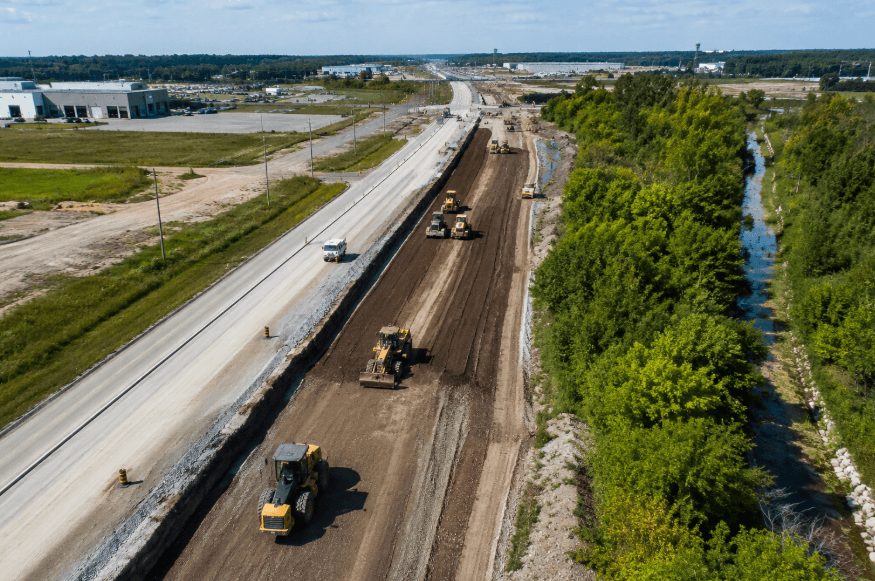
Highway 3 Twinning Project Aims to Improve Safety, Strengthen Regional Economy and Connect Workers to Major EV Investment
ST. THOMAS, Ont. — The Ontario government has begun construction on the expansion of Highway 3 in St. Thomas, advancing a key transportation project designed to improve road safety, strengthen regional connectivity and support the development of Volkswagen’s PowerCo electric vehicle battery gigafactory.
The highway expansion forms part of the province’s broader infrastructure strategy to accommodate economic growth in southwestern Ontario, where major investments in electric vehicle manufacturing are reshaping the automotive sector. The upgraded corridor is expected to improve access for workers, businesses and freight while supporting future residential, commercial and industrial development.
“Under the leadership of Premier Ford, our government is making historic investments in highway infrastructure to keep our roads safe while getting people and goods where they need to go,” said Prabmeet Sarkaria, Minister of Transportation. “The expansion of Highway 3 will connect people to good-paying jobs, support housing growth and help businesses access the workforce they need to drive economic growth.”
Nearly Seven Kilometres of Highway 3 to Be Expanded
Construction crews have begun work on the expansion of nearly seven kilometres of Highway 3 between Centennial Avenue and Ron McNeil Line. The upgraded roadway will connect with the future Talbotville Bypass, creating a more direct transportation link between Highway 401 and the City of St. Thomas.
Once completed, the Highway 3 expansion and Talbotville Bypass are expected to improve traffic flow, reduce travel times and provide enhanced access to the rapidly growing St. Thomas Industrial Park.
Provincial officials say the project is intended to support long-term growth across Elgin County by improving transportation infrastructure needed for expanding residential neighbourhoods, commercial developments and industrial investments.
Infrastructure Supports Volkswagen’s $7 Billion EV Battery Investment
The highway project is closely tied to Volkswagen Group’s $7-billion investment announced in April 2023 to build its PowerCo electric vehicle battery manufacturing facility in St. Thomas.
Construction of the battery plant is already underway, with major building work progressing after crews began pouring concrete last year. The facility is expected to become Canada’s largest electric vehicle battery manufacturing plant and is projected to create thousands of direct and indirect jobs while reinforcing Ontario’s position within the North American automotive supply chain.
“As our government continues to attract historic, job-creating investments from global companies, we are investing in critical infrastructure to support this growth,” said Vic Fedeli, Minister of Economic Development, Job Creation and Trade. “By expanding Highway 3, we will strengthen access to the St. Thomas Industrial Park, reduce commute times for workers, and position the region to attract new businesses.”
Regional Leaders Welcome Highway Investment
Local officials and industry organizations said the project will play an important role in supporting continued economic development across southwestern Ontario.
Rob Flack, MPP for Elgin-Middlesex-London, said:
“This is another important step forward for St. Thomas, Elgin County, and our entire region. As our community continues to experience unprecedented growth, we need the infrastructure to support it. Expanding Highway 3 will improve access for workers, residents, and businesses, while strengthening connections to the PowerCo plant, Vianode, the St. Thomas Industrial Park, and Highway 401. These investments are helping build a stronger local economy, creating opportunities for families, and ensuring our region is ready to support growth for decades to come.”
St. Thomas Mayor Joe Preston also welcomed the start of enabling work ahead of full construction.
“The City of St. Thomas welcomes the Province’s continued progress on Highway 3 twinning. Advancing enabling works such as utility relocations and grading is an important milestone toward full construction beginning in 2027. This project will improve safety, strengthen connections for residents and businesses, and support the continued growth and economic development of St. Thomas, the broader region, and Southwestern Ontario.”
Industry organizations representing construction, road building and business groups also endorsed the investment.
Patrick McManus, Executive Director of the Ontario Sewer & Watermain Construction Association (OSWCA), said the project would support construction employment while improving regional transportation infrastructure.
Steven Crombie, Senior Director of Public Affairs at the Ontario Road Builders’ Association (ORBA), said the project would improve highway safety, strengthen economic competitiveness and enhance the movement of goods across southwestern Ontario while congratulating Dufferin Construction on securing the utilities contract.
Nadia Todorova, Executive Director of the Residential and Civil Construction Alliance of Ontario (RCCAO), said advancing enabling works demonstrates the province’s long-term commitment to transportation infrastructure and regional connectivity.
Daniel Tisch, President and CEO of the Ontario Chamber of Commerce, added:
“The Ontario Chamber has long championed investments that connect people, goods, and opportunity. The expansion of Highway 3 will strengthen a vital economic corridor, improve workforce mobility, and support growth across Southwestern Ontario and beyond.”
Highway Expansion Forms Part of Broader Infrastructure Strategy
The Highway 3 twinning project is designed to improve safety, reduce travel times and provide reliable access to the St. Thomas Industrial Park and the PowerCo battery manufacturing site.
The Talbotville Bypass, which entered construction in the summer of 2025, extends from Highway 4 to Highway 3 at Ron McNeil Line and will eventually connect with the expanded highway.
The project is part of Ontario’s approximately $31 billion investment over the next decade to build, repair and expand highways, roads and bridges across the province, supporting economic development while improving transportation infrastructure for communities and businesses.
Discover more from Wire Service Canada
Subscribe to get the latest posts sent to your email.