

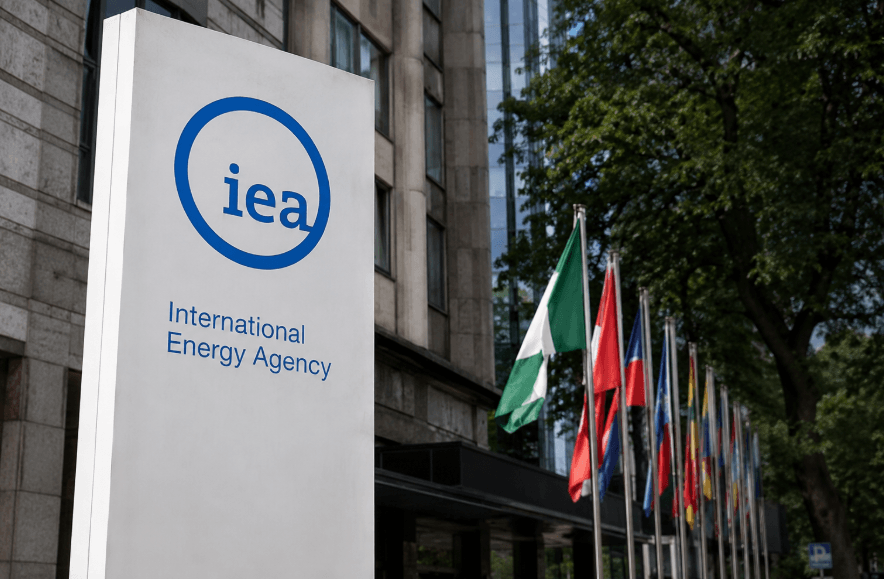
Nigeria Becomes Latest IEA Association Country
Nigeria has taken a significant step onto the global energy stage after member governments of the International Energy Agency (IEA) unanimously agreed to admit the country as an Association nation, strengthening cooperation with Africa’s largest economy and most populous country.
The move marks a major development in international energy governance and reflects Nigeria’s growing influence across global energy markets. With a population exceeding 240 million and substantial oil and natural gas resources, Nigeria plays a critical role in both African and global energy supply chains. The country is also emerging as one of Africa’s fastest-growing renewable energy markets.
However, Nigeria continues to face major domestic energy challenges, including expanding access to reliable electricity and clean cooking solutions for millions of citizens. Through its new Association status, Nigeria is expected to deepen collaboration with the IEA on energy security, investment, sustainability and access initiatives.
Leaders Renew Focus on Clean Cooking Access Across Africa
International leaders gathered virtually last week to accelerate efforts aimed at improving access to clean cooking solutions across Africa, an issue that continues to affect nearly one billion people across the continent.
The high-level event brought together Kenyan President William Ruto, Norwegian Prime Minister Jonas Gahr Støre, U.S. Secretary of Energy Chris Wright, African Union Commissioner for Energy and Infrastructure Lerato Mataboge, and IEA Executive Director Fatih Birol.
Participants emphasized that limited access to clean cooking remains one of the most serious energy security and public health challenges facing Africa, contributing to an estimated 850,000 premature deaths annually.
During the meeting, Dr. Birol announced an additional US$900 million in financial commitments for clean cooking initiatives across Africa. The new funding builds on the US$2.2 billion mobilized during the first Summit on Clean Cooking in Africa held in May 2024.
According to a new IEA status report, approximately US$740 million from the earlier commitments has already been deployed across 22 African countries. The report also highlights substantial policy momentum, with 121 new clean cooking policies introduced in more than 30 countries representing around 80% of Africans who currently lack access to clean cooking solutions.
Strait of Hormuz Tensions Continue to Shape Oil Markets
The IEA’s latest Oil Market Report shows that oil exports through the Strait of Hormuz increased significantly following an interim ceasefire in June. However, volumes remain below levels recorded before the outbreak of conflict in the region.
The temporary easing of restrictions on Iranian exports and enhanced security support for shipping helped clear a backlog of tankers waiting to transit the strategic waterway. Total Gulf oil exports rose by approximately 6.5 million barrels per day, reaching around 16 million barrels daily in June.
Despite the recovery, exports remain well below the roughly 24 million barrels per day average recorded before the conflict began.
Refined fuel exports have recovered more slowly. Shipments of refined petroleum products and liquefied petroleum gas remained below half of their pre-war levels, highlighting ongoing supply chain disruptions.
The IEA said global oil markets are expected to return to surplus conditions later this year, but the outlook depends heavily on continued recovery in tanker traffic and energy infrastructure operations throughout the region.
Geopolitics Reshaping the Global Energy Landscape
The conflict in the Middle East, combined with earlier disruptions caused by the 2022 energy crisis linked to Russia’s invasion of Ukraine, is fundamentally changing how countries approach energy security and investment decisions.
In a recent opinion article, Dr. Birol argued that the global energy system is entering a new phase where geopolitical considerations increasingly influence energy strategies, trade routes and investment priorities.
Governments and businesses are reassessing supply chains, fuel choices and infrastructure investments, while energy security concerns are becoming more prominent in policy discussions worldwide.
To coordinate responses to the ongoing crisis, the IEA continues to work alongside the International Monetary Fund, World Bank and World Trade Organization through a joint high-level coordination group established earlier this year.
Energy Efficiency Takes Centre Stage in Montreal
Energy efficiency emerged as a key policy priority during the IEA Global Conference on Energy Efficiency held in Montreal in partnership with the Government of Canada.
Ministers from dozens of countries agreed that recent disruptions in energy markets have reinforced the importance of efficiency measures to reduce costs, improve energy security and shield consumers from price volatility.
The conference was opened by Dr. Birol alongside Canada’s Minister of Energy Tim Hodgson, Minister of the Environment, Climate Change and Nature Julie Dabrusin, European Union Commissioner for Energy and Housing Dan Jørgensen, and Hydro-Québec CEO Claudine Bouchard.
Governments issued a joint statement supporting stronger efficiency measures, including improved building standards, investment incentives and targeted assistance for vulnerable households and businesses.
A key outcome of the event was the announcement that the COP31 Presidency has commissioned the IEA to prepare a special report supporting the development of a global energy-efficiency target for buildings ahead of COP31 in Antalya, Türkiye.
Natural Gas Demand Expected to Decline as Prices Remain Elevated
The IEA also reported that global natural gas demand is expected to contract by 0.5% this year as supply disruptions and higher prices continue to weigh on consumption.
The agency said tensions affecting shipments through the Strait of Hormuz, which previously handled about one-fifth of global liquefied natural gas supplies, have tightened markets and increased uncertainty.
While natural gas prices in Europe and Asia have eased from peaks reached earlier in the year, they remain significantly above 2025 levels. The report warns that disruptions to LNG infrastructure and delayed expansion projects in Qatar could continue affecting global gas supplies beyond 2026.
At the same time, the agency highlighted growing electricity demand driven by rising temperatures and increased adoption of air conditioning worldwide. New analysis from the IEA suggests that hotter weather linked to El Niño conditions could further accelerate electricity consumption in the coming years, adding pressure on energy systems while increasing the importance of efficiency measures and grid resilience.