

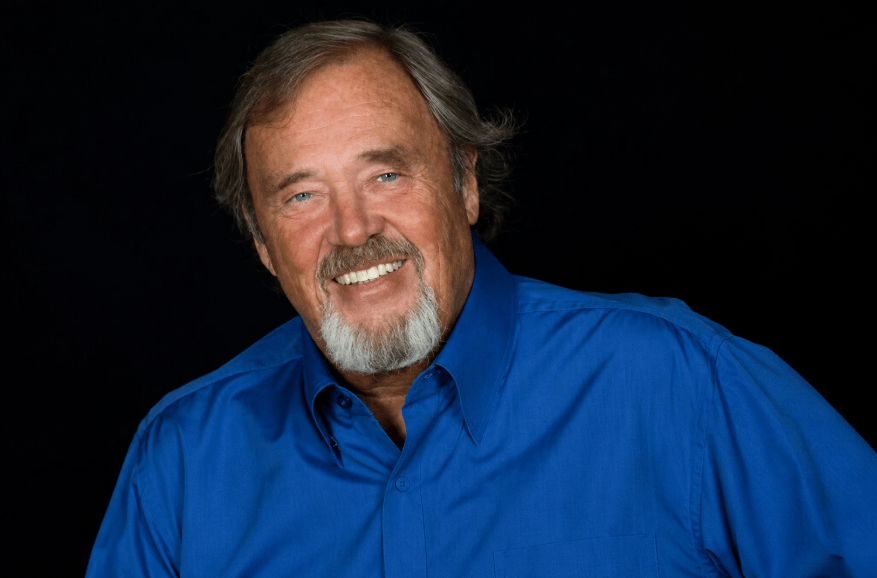
Title: David Clayton-Thomas, Iconic Canadian Voice of Blood, Sweat & Tears, Dies at 84
Subtitle: Grammy-winning singer and songwriter leaves behind a legacy that transformed jazz-rock and inspired generations of Canadian musicians
David Clayton-Thomas, the Grammy Award-winning Canadian singer and songwriter whose powerful vocals helped propel Blood, Sweat & Tears to international success, has died at the age of 84.
Clayton-Thomas died peacefully on the evening of Wednesday, June 24, 2026, at St. Michael’s Hospital in Toronto, according to a statement released by his family. His death marks the end of a remarkable career that spanned more than six decades and helped define the sound of jazz-rock while establishing him as one of Canada’s most celebrated musical figures.
Recognized for his commanding voice and emotionally charged performances, Clayton-Thomas sold more than 40 million records during his career. His work with Blood, Sweat & Tears earned worldwide acclaim and cemented his reputation as one of the most influential vocalists of his generation.
Early struggles shaped a remarkable musical journey
Born David Henry Thomsett in Surrey, England, on Sept. 13, 1941, Clayton-Thomas was the son of Canadian soldier Fred Thomsett and Freda, an English music student. Following the Second World War, the family relocated to Willowdale, then a suburb of Toronto.
His childhood was marked by hardship, including a difficult relationship with his father that led him to leave home at the age of 14. Living on Toronto’s streets and spending time in correctional institutions, he discovered music after teaching himself guitar on an instrument left behind by another inmate. Performing in jailhouse concerts gave him his first experience of public recognition and set him on the path toward a professional career.
After his release in 1962, Clayton-Thomas immersed himself in Toronto’s thriving rhythm and blues scene along Yonge Street. Rockabilly pioneer Ronnie Hawkins recognized his talent early and helped launch his career. He later led David Clayton-Thomas and the Fabulous Shays before forming the jazz-influenced Bossmen, one of Canada’s earliest rock groups to integrate jazz musicians into a rock lineup.
His 1966 anti-war song “Brainwashed” became a major Canadian hit and attracted broader industry attention.
International success with Blood, Sweat & Tears
A pivotal moment came after singer Judy Collins recommended Clayton-Thomas to drummer Bobby Colomby, whose band Blood, Sweat & Tears was undergoing major changes.
The partnership produced immediate success. The group’s self-titled 1968 album sold an estimated 10 million copies worldwide, spent seven weeks atop the Billboard album chart and remained on the chart for 109 weeks. It earned five Grammy Awards, including Album of the Year, surpassing the Beatles’ Abbey Road for the honour.
The album also produced three Billboard Hot 100 No. 2 singles: “You’ve Made Me So Very Happy,” “And When I Die,” and Clayton-Thomas’s own composition, “Spinning Wheel.” His interpretation of Billie Holiday’s “God Bless the Child” also became one of his signature performances.
During his tenure, Blood, Sweat & Tears headlined many of the world’s premier venues, including the Royal Albert Hall, Madison Square Garden, the Hollywood Bowl, the Metropolitan Opera House and the Newport Jazz Festival. The band also performed at Woodstock and released successful follow-up albums including Blood, Sweat & Tears 3 and Blood, Sweat & Tears 4, featuring hits such as “Lucretia MacEvil” and “Go Down Gamblin’.”
In 1970, the group became the first rock band to tour Eastern Europe behind the Iron Curtain at the request of the U.S. State Department, an event later revisited in the 2023 documentary What the Hell Happened to Blood, Sweat & Tears?
Clayton-Thomas left the band in 1972 due to the demands of extensive touring before returning later in the decade. He continued leading various versions of Blood, Sweat & Tears until 2004.
Solo career and commitment to youth advocacy
Beyond his work with the band, Clayton-Thomas released nearly a dozen solo albums. Among his favourites was The Evergreens in 2008, while 2015’s Combo reflected his return to jazz and blues with a stripped-down ensemble of leading Canadian musicians. His final projects included the politically themed Say Somethin’ in 2020.
He also hosted a CBC television series and, following major heart surgery in 2010, returned to the stage alongside the Toronto Symphony Orchestra at Massey Hall.
Away from music, Clayton-Thomas became a dedicated advocate for justice-involved youth through Peacebuilders Canada. Drawing on his own difficult upbringing, he supported restorative justice initiatives, wrote the song “The System” to benefit the organization and headlined numerous fundraising concerts.
His achievements earned widespread recognition, including induction into the Canadian Music Hall of Fame, a special Juno Award for outstanding contribution to Canadian music, a star on Canada’s Walk of Fame in 2010 and induction of “Spinning Wheel” into the Canadian Songwriters Hall of Fame in 2007. His 2010 memoir, Blood, Sweat and Tears, chronicled his journey from homelessness to international fame.
Even in later years, Clayton-Thomas continued performing in Toronto, the city he always considered home.
“People like me don’t retire,” he once said with a grin. “This is what I was put here to do.”
Clayton-Thomas is survived by his daughters, Ashleigh Clayton-Thomas and Christine Graham. A memorial concert celebrating his life and music will be held at a later date, with proceeds supporting Peacebuilders Canada, continuing the charitable work that became central to his legacy.
Discover more from Wire Service Canada
Subscribe to get the latest posts sent to your email.