

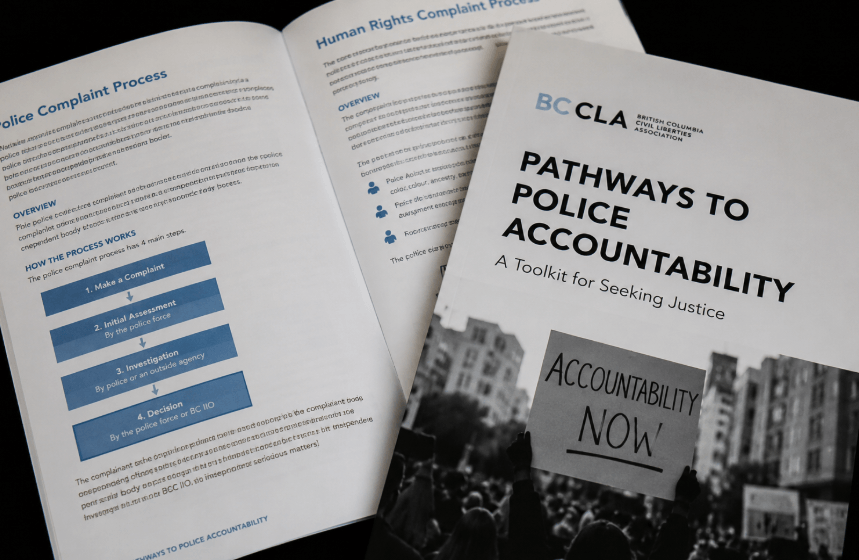
New 112-Page Resource Explains Complaint Processes, Human Rights Claims and Civil Lawsuits Following Police Harm
The BC Civil Liberties Association (BCCLA) has released a new public legal resource aimed at helping people in British Columbia better understand their options for seeking accountability after harmful interactions with police.
The organization announced the launch of its Pathways to Police Accountability Toolkit on Thursday in Vancouver, on the traditional territories of the xʷməθkʷəy̓əm (Musqueam), Sḵwx̱wú7mesh (Squamish) and səlilwətaɬ (Tsleil-Waututh) Nations.
The 112-page publication is designed to provide accessible information about the different pathways available to individuals seeking justice following police misconduct or harm, including police complaints, human rights claims and civil litigation.
“Today, the BC Civil Liberties Association (BCCLA) publishes a new Pathways to Police Accountability Toolkit,” the organization said in a statement.
The toolkit is available online, with printed copies offered at no cost to community-serving organizations across the province.
Resource Aims to Simplify Complex Accountability Processes
According to the BCCLA, the toolkit was developed to help individuals understand and compare the available accountability mechanisms, while also explaining how the systems interact with one another.
The publication includes checklists, explanations of legal terminology and step-by-step guidance intended to support people navigating processes that are often viewed as difficult or inaccessible.
The organization said the toolkit also provides realistic information about the effectiveness and limitations of each option.
“This toolkit, as the next installment, helps readers compare and understand which police accountability pathway is right for them, provides tips about how the pathways interact, and supports them to take action with tools like checklists,” the BCCLA stated.
The release follows the organization’s updated Arrest Handbook, which outlines legal rights during interactions with police.
Together, the two resources form part of a broader public education initiative focused on policing, civil liberties and access to justice in British Columbia.
Concerns Raised Over Accessibility of Oversight Systems
BCCLA representatives say many people affected by police misconduct face significant barriers when attempting to navigate complaint systems or pursue legal remedies.
“Government agencies mandated to hold police accountable are failing to provide the necessary information and support to help people navigate the system and meaningfully access justice,” said Meghan McDermott, BCCLA Policy Director.
“By launching this toolkit, we are taking action to build public capacity and confidence to seek remedies for police harm or misconduct. We hope that an increase in the volume of complaints, a greater awareness of systemic misconduct, and building pressure for police reform will ultimately enable stronger independent police oversight.”
The organization argues that while oversight structures exist in British Columbia, public understanding of how to access those systems remains limited.
BCCLA Staff Counsel Jerome Igbokwe said many individuals are unaware that accountability options may extend beyond filing complaints directly with police agencies.
“Too often, people who experience harmful or troubling interactions with police are unaware of where to turn for solutions or justice, and that options beyond the police complaints system may be available,” said Igbokwe.
“This toolkit seeks to bridge that information gap by equipping advocates and individuals with practical pathways toward accountability, while being transparent about the limitations of each pathway.”
Toolkit Supported by Legal and Community Partnerships
The BCCLA said the project received financial support from the Canadian Race Relations Foundation, with funding provided by the Government of Canada, as well as the Law Foundation of BC.
The organization also acknowledged contributions from community groups and legal experts specializing in several fields, including human rights law, civil litigation, Indigenous law, mental health and public-interest advocacy.
“BCCLA is grateful for the generous financial support of the Canadian Race Relations Foundation (with funding provided by the Government of Canada) and the Law Foundation of BC,” the statement said.
The association added that it extends appreciation to “community groups and subject matter experts in human rights, mental health, public interest, civil litigation, and Aboriginal and Indigenous law who shared their expertise with us and helped bring this resource to life.”
Public Access and Legal Information Disclaimer
Digital versions of the toolkit are available through the BCCLA’s website, alongside information on requesting printed copies.
The organization emphasized that the publication is intended to provide general legal information rather than formal legal representation or advice.
“The toolkit provides legal information only and is not intended to replace legal advice from a qualified lawyer,” the BCCLA said.
The launch comes amid ongoing national discussions surrounding police accountability, oversight reform and public confidence in law enforcement institutions across Canada.
By publishing the toolkit, the BCCLA says it hopes to empower individuals, advocates and community organizations with clearer information about the legal pathways available when seeking accountability following police harm or misconduct.