

Province targets homelessness with new housing units and shelter spaces in Northwestern Ontario
Funding supports five projects aimed at prevention, stability and recovery
THUNDER BAY, Ont. — The Ontario government is investing $10.7 million to expand supportive and emergency housing capacity in Thunder Bay, a move aimed at addressing rising homelessness and housing insecurity in Northwestern Ontario.
The funding, delivered through the province’s Homelessness Prevention Program (HPP), will support the creation of 66 supportive housing units and 120 emergency shelter spaces across five local projects. The initiative is part of a broader provincial strategy to provide both immediate and long-term housing solutions for vulnerable populations.
“We are working with our municipal partners to get more emergency and supportive housing built across the province, including in northern communities like Thunder Bay, to help prevent and alleviate homelessness,” said Rob Flack, Minister of Municipal Affairs and Housing. “A key part of our plan to protect Ontario is giving vulnerable people the support they need to secure safe, stable housing.”
Targeted investments across five projects
The funding will be distributed among five developments designed to address different stages of housing need, from emergency shelter to transitional living.
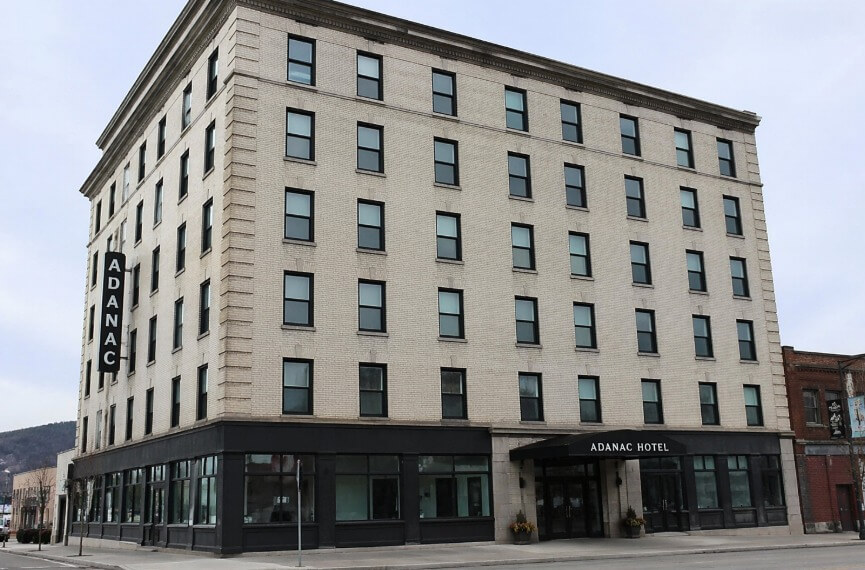
The largest allocation—$3.79 million—will go toward redeveloping the Adanac Hotel on Simpson Street into 46 transitional supportive housing units. Additional projects include seven units at the Teen Challenge Men’s Program, 13 units through PACE Transitional, and expanded shelter capacity at Grace Place.
The province is also investing nearly $2.77 million into a Temporary Shelter Village Initiative, which will create 80 modular emergency shelter spaces.
“These investments are an important step forward in addressing homelessness in Thunder Bay and across Northwestern Ontario,” said Kevin Holland, MPP for Thunder Bay–Atikokan. “By supporting projects that create both emergency shelter spaces and transitional housing, we are helping ensure individuals have access to safe, stable environments as they work toward long-term independence.”
Local partners emphasize collaborative approach
Community organizations and local leaders say the funding reflects a coordinated effort between provincial and municipal governments, as well as frontline service providers.
“The projects announced today aim to meet unhoused individuals where they are, at different points on their path toward stable housing. We are grateful to the Ontario government for trusting us with capital funding for projects like these, and to our community partners for stepping up to address the needs in our community.”
- Jim Vezina
Board Chair, District of Thunder Bay Social Services Administration Board
Operators of funded facilities say the investments will have immediate, tangible impacts.
“Grace Place is grateful to the Ontario government and the District of Thunder Bay Social Services Administration Board for providing the funds to enable this project. The expansion has enabled us to provide more shelter spaces and much needed supports to those who need it the most.”
- Melody Macsemchuk
Grace Place
“Urban Abbey is so thankful to receive the funding and support to create 46 transitional housing apartment units in the former historic Adanac Hotel. Without the critical support of the Ontario government and collaboration with the District of Thunder Bay Social Services Administration Board, such projects would not be possible. We look forward to offering these units to those who are on housing wait lists, in the shelter system, and to those who are in encampments.”
- Scotland Morrison
Head of Staff, Urban Abbey
Addressing addiction and long-term recovery
Beyond housing, some projects aim to address underlying issues such as addiction and recovery support, which are often linked to housing instability.
“Through this investment, we are able to take a significant step forward in expanding addiction recovery services in Northwestern Ontario. This project will increase access to safe, structured support for individuals seeking freedom from addiction while also strengthening the network of care available to families and the broader community. We are seeing firsthand the growing need for accessible, long-term recovery options, and this funding allows us to respond with both urgency and purpose. We are grateful to the Ontario government and the District of Thunder Bay Social Services Administration Board for recognizing the importance of this work and for partnering with us to bring real, lasting change. This is about restoring lives, rebuilding families, and creating healthier communities for generations to come.”
- Daniel Emond
President and CEO Adult & Teen Challenge of Central Canada Inc.
Broader provincial strategy
The Thunder Bay investment is part of a larger provincial commitment of more than $1.7 billion in 2025–26 to support housing and homelessness initiatives across Ontario. Of that, $654 million is allocated through the HPP, which provides municipalities with flexibility to tailor solutions such as rent supports, shelters and capital housing projects.
Emergency shelter expansions are also supported through the province’s Encampment Response Initiative, which has allocated $20 million to help transition individuals from encampments into safer housing alternatives.
Local officials say the latest funding demonstrates how coordinated investment can deliver measurable outcomes.
“The funding announced today will strengthen safety, stability, and opportunity for members of our community. While more work lies ahead, it demonstrates how collaboration between the province, the city, and our local partners can lead to real progress.”
- Ken Boshcoff
Mayor of Thunder Bay
As housing pressures continue across Ontario—particularly in northern and rural communities—the province’s approach reflects a dual focus on immediate shelter needs and long-term pathways to independence.
Discover more from Wire Service Canada
Subscribe to get the latest posts sent to your email.