

Province plans legislation to assume City of Toronto’s role and accelerate modernization of key regional hub
Expansion aimed at boosting capacity, jobs and competition in Ontario’s aviation sector
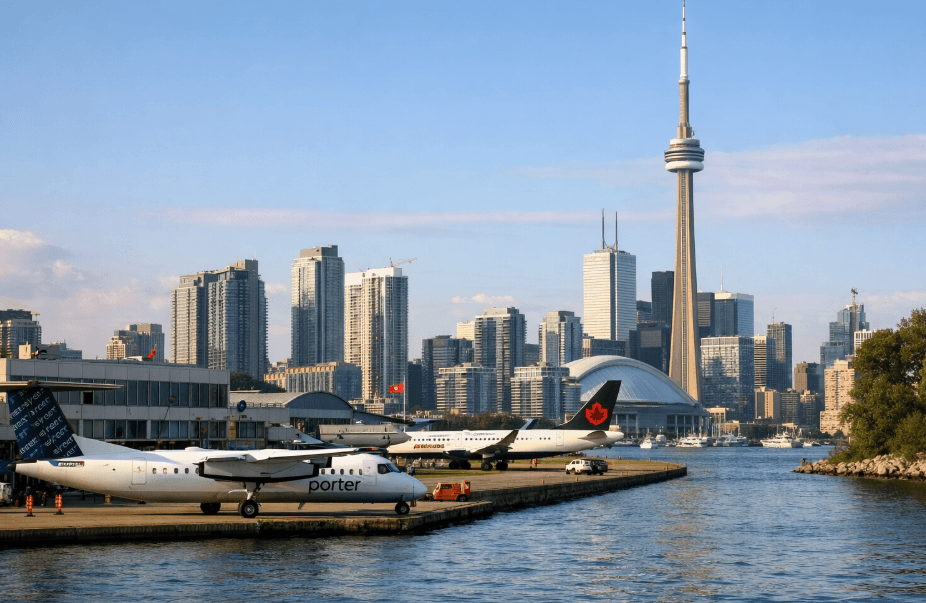
TORONTO — The Ontario government is moving to take a more direct role in the expansion and modernization of Billy Bishop Toronto City Airport, tabling plans to assume the City of Toronto’s position in the airport’s governing agreement and acquire city-owned lands as part of a broader strategy to increase aviation capacity and economic growth.
The move, announced Monday by Premier Doug Ford, is expected to form part of legislation to be introduced during the province’s upcoming spring session. If passed, the legislation would allow the province to replace the city in the airport’s tripartite agreement and take ownership of municipal lands at the site in exchange for compensation.
The expansion is positioned as a key infrastructure initiative to address rising travel demand across southern Ontario, ease congestion at Toronto Pearson International Airport, and stimulate competition in the airline sector.
“We’re unlocking Billy Bishop Airport’s full potential by expanding the airport so we can bring cheaper flight options, more routes and more convenience to the millions of people from across Ontario who use this airport every year,” said Premier Doug Ford. “With an upgraded airport on the waterfront, Toronto and Ontario will be able to compete with world-class cities across the globe, supporting tourism and business travel across Ontario and creating thousands of new jobs for Ontario workers.”
Strategic infrastructure push tied to population growth
Ontario’s plan comes amid projections that the province’s population will exceed 20.5 million by 2051, with significant growth concentrated in the Greater Toronto Area. The government argues that expanding transportation infrastructure, including regional air travel capacity, is essential to supporting that growth.
“With Ontario’s population expected to grow to more than 20.5 million by 2051, including significant growth across the Greater Toronto Area, it’s critical that we build the infrastructure needed to support that growth and keep people and goods moving,” said Prabmeet Sarkaria, Minister of Transportation. “Billy Bishop Airport is an important and underused part of Ontario’s transportation network, and additional capacity will help meet future demand, strengthen connectivity and support jobs across Ontario.”
Billy Bishop Airport currently serves about two million passengers annually, connecting Toronto to more than 20 cities in Canada and the United States. Under a proposed modernization plan by the Toronto Port Authority, passenger volumes could rise to as many as 10 million per year.
Special Economic Zone designation under consideration
As part of its plan to accelerate development, the province intends to designate the airport as a Special Economic Zone prior to construction, following consultations with First Nations communities. The designation would streamline regulatory approvals while maintaining environmental and safety standards.
Officials say more than 130 First Nations have already been engaged in discussions on the framework for such zones, with further consultation planned.
The Toronto Port Authority’s proposal includes updates to the existing tripartite agreement to permit modern jet aircraft, runway modifications, terminal upgrades, and improved waterfront access.
Significant economic impact projected
The province highlighted the airport’s existing economic contribution, estimating it generates approximately $900 million in GDP and $1.8 billion in total economic output annually, while supporting about 9,000 jobs.
Longer term, the impact could be substantially larger. The Toronto Port Authority estimates that once fully expanded, the airport could contribute up to $8.5 billion annually to Canada’s economy by 2050 and support up to 23,000 construction jobs. Over a 25-year period, the province projects up to $140 billion in economic output tied to the project.
“Billy Bishop Airport is a vital transportation hub not just for Toronto but for Ontario and all of Canada,” said Peter Bethlenfalvy, Minister of Finance. “Today’s announcement is another step towards our government making Ontario the most competitive jurisdiction in the entire G7 by attracting investment, encouraging economic growth and supporting job creation in the province.”
Business and industry groups back expansion
Business organizations and regional stakeholders voiced support for the plan, citing improved connectivity and economic competitiveness.
“Our vision for Billy Bishop Toronto City Airport is rooted in modern aviation technology, operational excellence and a commitment to ensuring that progress brings tangible benefits to the communities we serve. For us this means expanding connectivity; responding to population growth and rising aviation demand; protecting access to northern and remote communities; strengthening tourism and trade; and embracing modern aircraft types that are cleaner, quieter and more efficient. We welcome the opportunity to work collaboratively with the province of Ontario to secure the future of the airport, which is a valuable asset for Toronto and the region.”
- RJ Steenstra
President and CEO, Toronto Port Authority, owner and operator of Billy Bishop Toronto City Airport
“Cities grow by strengthening the connections that power their economies. Billy Bishop Airport plays a unique role in linking Toronto’s downtown to key markets across North America and communities across Ontario. Modernizing and expanding the airport is a vital opportunity to make our city more competitive and unlock economic growth. Given the economic pressures from US tariffs, the sooner these changes can take place, the better.”
- Giles Gherson
President and CEO, Toronto Region Board of Trade
“Billy Bishop Toronto City Airport boosts Toronto’s competitiveness as a business and tourism destination and connects Ontario communities to opportunities across North America. The Ontario Chamber welcomes responsible expansion of the airport, grounded in local consultation, high environmental standards and integrated planning for a clean, vibrant waterfront.”
- Daniel Tisch
President and CEO, Ontario Chamber of Commerce
“Modernizing Billy Bishop Airport represents an important investment in Ontario’s transportation network and Canada’s economic future. Improved service and expanded capabilities will better connect Northern Ontario to the GTA, helping to unlock the full potential of the North’s resource sectors, communities and workforce. This connectivity is key to provincial and national growth and NOMA welcomes this collaborative approach.”
- Rick Dumas
President, Northwestern Ontario Municipal Association (NOMA)
“Today marks a pivotal moment in a new era for Billy Bishop Toronto City Airport and for the people who rely on it. The province of Ontario’s actions enable the modernization of the airport to deliver greater choice, convenience and connectivity; strengthen regional and national resilience; and deliver real value for people and businesses across Ontario and Canada.”
Broader economic strategy
The airport expansion forms part of a wider provincial effort to position Ontario as a competitive destination for investment and business activity within the G7. Additional details are expected in the province’s 2026 budget, scheduled for release on March 26.
With the Greater Golden Horseshoe projected to grow by nearly 25 per cent over the next quarter century, the province is betting that expanded air travel infrastructure — alongside transit and highway investments — will be critical to sustaining economic momentum and meeting future demand.