

Province shifts focus toward treatment and recovery as part of addiction strategy
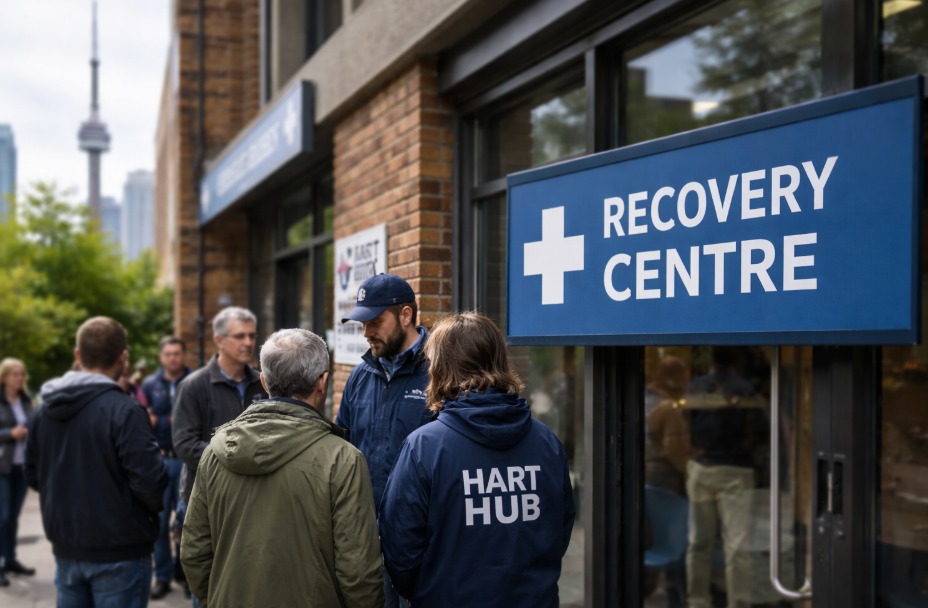
TORONTO — The Ontario government is ending provincial funding for seven supervised drug injection sites located in communities that already host Homelessness and Addiction Recovery Treatment (HART) Hubs, a move the province says will strengthen its focus on treatment and long-term recovery while addressing local public safety concerns.
The announcement, made Monday by the Ministry of Health, is part of the province’s broader strategy to address addiction and homelessness through treatment-oriented services rather than continuing to fund supervised drug consumption facilities. The sites affected are located in Toronto, Ottawa, Niagara, Peterborough and London.
The province says the decision aligns with its nearly $550 million investment in 28 HART Hubs across Ontario, which provide integrated addiction treatment, mental health support and housing services designed to help people recover from substance use disorders.
“Our government is focused on treatment, recovery and safer communities,” said Sylvia Jones, Deputy Premier and Minister of Health. “Through our almost $550 million investment to establish HART Hubs across the province, we are ensuring people struggling with addiction can access the care and supports they need to break the tragic cycle of addiction and rebuild their lives while protecting Ontario communities.”
90-day wind-down period announced
The government will begin a 90-day transition period to wind down provincial funding for the injection sites. The period is 60 days longer than required, according to the ministry, and is intended to allow individuals who use the facilities to transition to services available through their local HART Hub.
During the transition, provincial officials will work with municipalities and community organizations to coordinate the closure process and help clients move to treatment and recovery programs.
The seven sites losing funding include two in Toronto, two in Ottawa and one each in Niagara, Peterborough and London.
Provincial officials say the shift responds to concerns raised by local communities about public safety and the presence of drug use near residential areas and public spaces. By redirecting resources toward HART Hubs, the government says it aims to expand access to treatment, recovery services and supportive housing.
Building a recovery-focused system
The policy change builds on legislation passed in 2024 that restricts drug injection sites from operating within 200 metres of schools and child-care centres.
Ontario says the HART Hub model emphasizes coordinated care that combines addiction treatment, mental health services, primary care and housing support in a single system. According to the province, the hubs have already facilitated more than 100,000 client interactions across the province.
Officials say these interactions have connected individuals to addiction treatment programs, counselling and other supports designed to help stabilize their lives. In addition, hundreds of people have accessed supportive housing and recovery-focused programs through the initiative.
The government also plans to expand housing supports connected to the hubs. Nearly 900 supportive housing units are expected to be added across Ontario as part of the HART Hub rollout, providing stable housing for individuals transitioning out of addiction treatment or homelessness.
Legislative framework for addiction response
The move follows a series of legislative measures introduced by the provincial government to address addiction and public drug use.
The Community Care and Recovery Act, 2024, passed in December 2024, established the 200-metre restriction on drug injection sites near schools, child-care centres and other designated locations. The legislation also requires provincial approval before municipalities can seek federal exemptions or funding for supervised consumption or safer supply services.
Another law, the Safer Municipalities Act, 2025, introduced additional enforcement tools aimed at addressing public drug use. The legislation prohibits the consumption of illegal substances in public spaces and allows police and provincial offences officers to order individuals to stop using drugs in public or leave the area. Failure to comply can result in an offence.
Long-term investment in mental health and addiction care
The HART Hub initiative is part of Ontario’s broader health strategy, Your Health: A Plan for Connected and Convenient Care, which aims to improve access to integrated health services across the province.
It also builds on the province’s Roadmap to Wellness strategy, a 10-year plan to strengthen mental health and addiction care.
Through the roadmap, Ontario has committed $3.8 billion over a decade to expand services, close gaps in care and develop what the government describes as a world-class mental health and addictions system.
Provincial officials say the combination of expanded treatment programs, housing support and integrated care will help address addiction in a way that prioritizes recovery while responding to community safety concerns.
With 27 of the planned 28 HART Hubs already operational, the government says the system is positioned to take on a larger role in Ontario’s addiction response as the province phases out funding for the affected injection sites.