

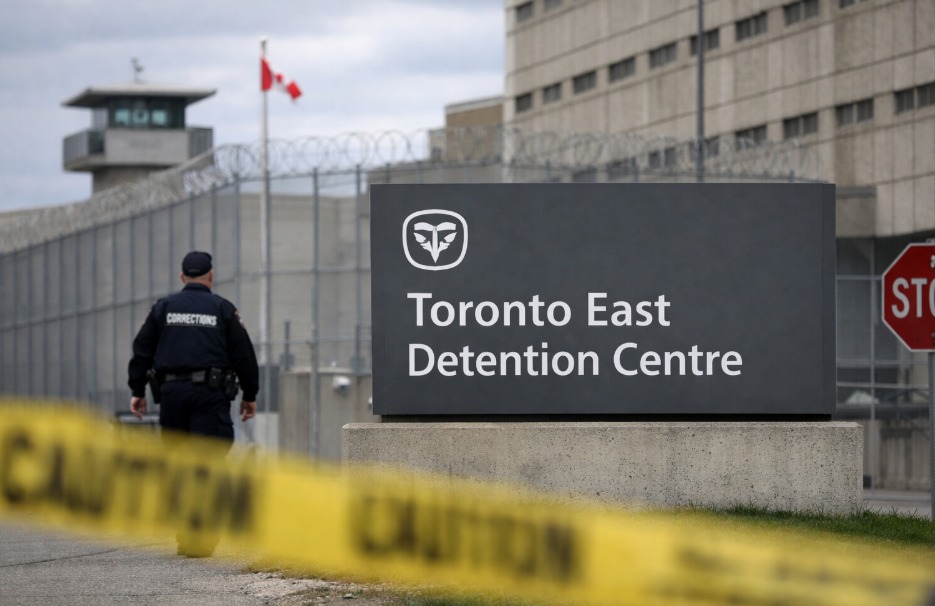
Ontario coroner to examine circumstances surrounding 23-year-old’s death in custody
Ontario’s Office of the Chief Coroner will conduct a mandatory inquest into the death of Ethan Dawichuk, a 23-year-old man who died while in custody at the Toronto East Detention Centre in 2021.
The announcement was made Thursday by Dr. Jennifer Dmetrichuk, Regional Supervising Coroner for the Toronto Region at the Toronto East Office. The inquest will review the circumstances surrounding Dawichuk’s death and determine whether any recommendations should be made to help prevent similar incidents in the future.
“Dr. Jennifer Dmetrichuk, Regional Supervising Coroner, Toronto Region, Toronto East Office, has announced that an inquest will be held into the death of Ethan Dawichuk.”
Dawichuk died on Nov. 29, 2021, while detained at the Toronto East Detention Centre, a provincial correctional facility located in Toronto. Under Ontario’s Coroners Act, deaths that occur while individuals are in custody require a mandatory inquest to ensure transparency and accountability in the correctional system.
“Mr. Dawichuk, 23 years old, died on November 29, 2021, while in custody at the Toronto East Detention Centre. An inquest into his death is mandatory under the Coroners Act.”
Coroner’s inquests in Ontario are formal public hearings designed to investigate deaths that occur under certain circumstances, including those involving individuals in state custody. The process allows a jury to hear evidence from witnesses, experts and officials connected to the case. While the proceedings are not intended to assign blame or determine legal liability, they aim to establish the facts surrounding a death and identify systemic issues that could pose risks to others.
The upcoming inquest will focus on understanding the events leading up to Dawichuk’s death and the broader conditions that may have played a role. The jury, typically composed of five members of the public, will review testimony and documentary evidence presented during the hearings.
“The inquest will examine the circumstances surrounding Mr. Dawichuk’s death. The jury may make recommendations aimed at preventing further deaths.”
Recommendations issued by a coroner’s inquest jury are not legally binding. However, they often influence policy changes within correctional institutions, health services, and other public-sector agencies. Past inquests into deaths in custody in Ontario have led to reforms in areas such as inmate health care protocols, staff training, mental-health supports, and oversight mechanisms.
Deaths occurring inside correctional facilities continue to draw scrutiny from oversight bodies, advocacy groups and policymakers. Inquests are one of the primary mechanisms used in Ontario to review such cases publicly and to examine whether improvements to institutional procedures or policies are warranted.
The Toronto East Detention Centre, where Dawichuk died, is one of several provincial facilities overseen by Ontario’s Ministry of the Solicitor General. The ministry is responsible for the province’s correctional services system, including the operation of detention centres, jails and correctional institutions that house individuals awaiting trial or serving shorter sentences.
Details regarding the inquest proceedings have not yet been finalized. Officials say information about the hearing schedule and venue will be released once arrangements are complete.
“Further details regarding the inquest, including the date and location, will be provided at a later date.”
Once convened, the inquest will be open to the public, with proceedings typically documented as part of the public record. Family members of the deceased, institutional representatives, and other interested parties may participate through legal counsel.
In Ontario, coroner’s inquests serve both investigative and preventative functions. By examining deaths that occur in specific contexts—such as workplaces, medical settings or correctional facilities—the process is intended to identify lessons that may reduce risks and improve safety across public systems.
Additional information about the coroner’s inquest process and how hearings are conducted is available through the provincial government’s website.
Discover more from Wire Service Canada
Subscribe to get the latest posts sent to your email.