

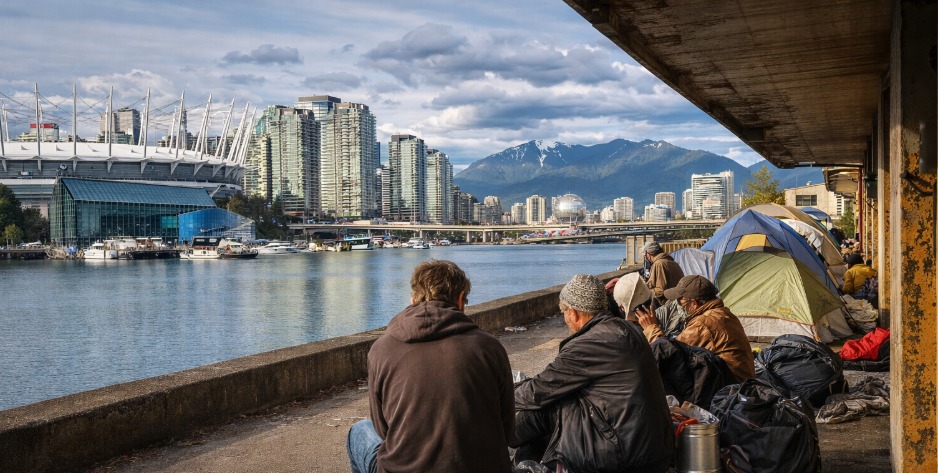
VANCOUVER — Community organizations in Vancouver’s Downtown Eastside and Chinatown are raising concerns about potential human rights impacts tied to the 2026 FIFA World Cup, warning that the city’s draft Human Rights Action Plan falls short of protecting vulnerable residents as preparations accelerate.
An informal coalition of neighbourhood groups says the plan, released Feb. 19 by Vancouver’s FIFA Host City Committee, relies too heavily on existing laws and lacks concrete measures to prevent harm, particularly for people experiencing homelessness and housing insecurity.
“On behalf of an informal coalition of organizations and collectives in the DTES and Chinatown communities (“the Coalition”), we are sounding the alarm on the massive human rights implications of the upcoming FIFA World Cup 2026 – which, so far, the City of Vancouver has refused to adequately address,” the coalition said in a statement.
Vancouver is set to play a prominent role in the international soccer tournament, hosting the FIFA Congress in April 2026 and seven World Cup matches at BC Place between June 11 and July 7. As part of its contractual obligations with FIFA, the city is required to produce a Human Rights Action Plan aligned with FIFA’s Human Rights Framework.
The coalition argues Vancouver entered the process later than other host cities, which were required to submit preliminary human rights assessments and stakeholder engagement plans earlier in their preparations.
“Unlike other FIFA World Cup 2026 host cities, Vancouver was not required to submit an initial consideration of human rights and plans to involve stakeholders,” the coalition said. “Instead, coasting on its reputation as a City dedicated to so-called ‘equity’ and ‘reconciliation,’ Vancouver signed onto a boiler-plate agreement that it is committed to maintaining human rights – promising that an Action Plan, guided by the FIFA Human Rights Framework, would follow.”
The coalition said it attempted to engage with the host committee as early as June 2024 but was unsuccessful.
“Our Coalition’s offers to meet with the Committee to share our perspectives, concerns, and potential solutions – which we made as early as June 2024 – were routinely rebuffed,” the statement said.
The 57-page draft plan acknowledges potential human rights risks linked to hosting the World Cup, including possible impacts on marginalized communities outside official event zones. However, the coalition said the document fails to introduce meaningful new protections.
“The February 19th Action Plan, in our reading, falls short of ‘introducing’ anything at all,” the coalition said. “The Plan does recognize the risk of FIFA-related human rights harms – and in some cases, even goes so far as to acknowledge the disproportionate risk for areas of the City outside of the immediate FIFA ‘perimeter’, including the Downtown Eastside. But, after acknowledging this very real risk of harm, the Plan offers little to mitigate it.”
Among the coalition’s key concerns is the plan’s approach to preventing displacement of unsheltered residents, a specific requirement under FIFA’s framework. The coalition said references to existing tenancy protections do not address risks faced by people living outdoors.
“The Committee well knows, however, that the ‘protections’ it references – including BC’s Residential Tenancy Act and the Short Term Rental Accommodations Act – do nothing to protect people who shelter outside, who are most likely to experience FIFA-related displacement,” the statement said.
The coalition also criticized what it described as vague language throughout the document, arguing it emphasizes monitoring rather than implementing new measures.
“The Plan as a whole is riddled with weak, empty language like the City ‘will continue’ or ‘will monitor’ – as opposed to ‘will implement’, ‘will scale up’, or ‘will fund,’” the coalition said.
Beyond prevention, the coalition said the plan does not provide accessible mechanisms for reporting and resolving human rights violations outside official venues.
“Within the stadium and fanzone at the PNE, FIFA’s own human rights reporting system is in place. For violations that occur outside these designated areas, the Draft Action Plan directs people to 311 services, which are not at this time equipped for reporting human rights violations or delivering real remedy,” the statement said.
The coalition noted that other recourse options, such as filing complaints with the BC Human Rights Tribunal, can take years to resolve and may not provide timely relief.
The draft action plan was initially expected by the end of 2025 but was delayed until February without explanation, shortening the consultation timeline ahead of the tournament. A final version is expected in May 2026, just weeks before FIFA-related bylaws come into force and the event begins.
“With the final draft of the City’s Action Plan to be released sometime in May, we are deeply skeptical about the Committee’s ability to have a comprehensive response, adequate training, and robust public education with respect to the human rights implications of the games before they kick off in June,” the coalition said.
The coalition also pointed to the timing of municipal bylaws supporting FIFA’s operational requirements, which were approved months earlier, as evidence of the city’s priorities.
“That the Bylaw, which focuses on the City’s branding and security obligations to FIFA, was finalized months ago and will come into effect well in advance of the games, while the Action Plan, intended to address FIFA-related human rights implications, is being pushed off until the final moment shows where the City’s priorities lie,” the statement said.
Despite ongoing concerns, coalition members said they plan to continue advocating for community-based protections.
“Our Coalition wants to be clear: we have not been effectively ‘consulted’, we have not been meaningfully ‘engaged’, and we do not trust that the Draft Action Plan tackles the FIFA-related harms that the City itself has invited by being a host city,” the coalition said. “In the absence of a ‘plan’ we can rely on, we will continue to find the answers for safety, harm reduction, and care in our own communities.”
The City of Vancouver has not publicly responded to the coalition’s latest statement. The final Human Rights Action Plan is expected ahead of the FIFA World Cup’s arrival in the city next year, as officials balance global event obligations with local social and economic pressures.
Discover more from Wire Service Canada
Subscribe to get the latest posts sent to your email.