

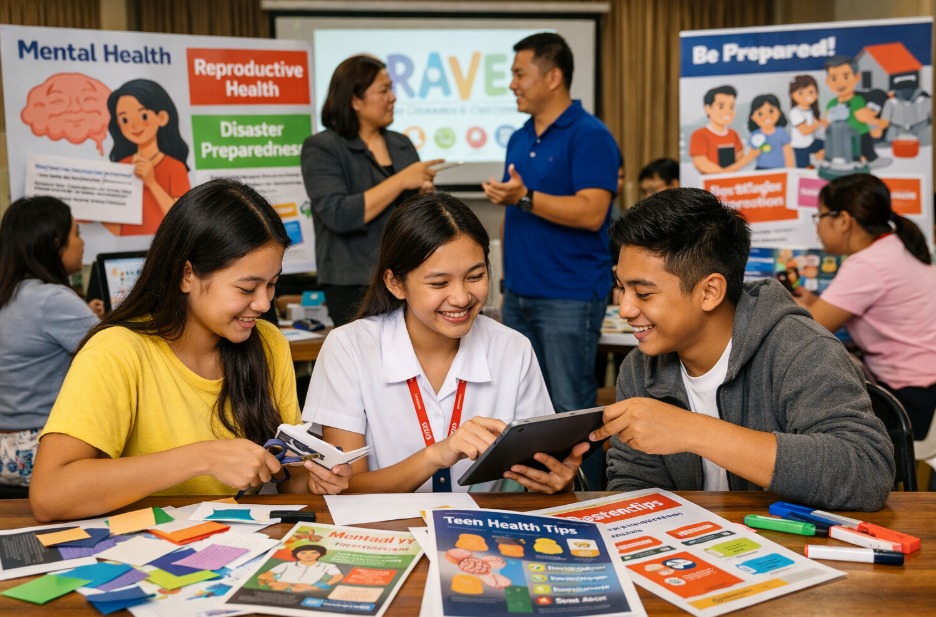
OZAMIZ CITY, Philippines — Students and teachers in Ozamiz City are taking a more direct role in shaping how health and safety information is delivered to young people, co-creating a new generation of educational materials designed to be more relevant, accessible, and effective for adolescents.
The initiative, led by Jhpiego Philippines under its BRAVE Project and funded by Olivia Rodrigo’s Fund 4 Good, brought together 35 participants for a two-day workshop on Feb. 25 and 26 at Bethany Gardens Resort. The effort reflects a growing emphasis among educators and development organizations on participatory approaches that involve end-users — in this case, students — in the design of information, education, and communication (IEC) tools.
The materials focus on three key areas affecting youth: mental health, adolescent sexual and reproductive health, and disaster preparedness. Organizers said the workshop was prompted by a training needs assessment that revealed dissatisfaction among students with existing school resources.
While IEC materials were already available, students reported that many were overly technical, text-heavy, outdated, or lacking local relevance. Others were not adapted for digital platforms, limiting their reach among tech-savvy youth. Participants instead expressed strong interest in visual, concise formats such as infographics, illustrated stories, short videos, and social media content.
“This workshop proves that young people are not just audiences of information but creators of change,” said Geri Matthew Carretero, Communications and Knowledge Management Officer of Jhpiego Philippines. “Under the BRAVE Project, we believe IECs should be clear, relatable, gender-sensitive, and grounded in the real experiences of students. When adolescents co-create messages, they become more authentic, inclusive, and impactful.”
The workshop brought together a cross-section of stakeholders, including student government leaders, guidance counsellors, teen centre managers, and education officials from the Department of Education’s Ozamiz City division. Over two days, participants attended technical sessions on adolescent health, psychosocial support, and disaster readiness, alongside training in social and behaviour change communication strategies.
Participants then applied those principles in hands-on design labs, using digital tools such as Canva to produce prototype IEC materials. Outputs included posters, brochures, comics, social media cards, and short-form videos tailored to youth audiences.
Each group also developed dissemination plans combining online and offline channels, including school assemblies, bulletin boards, peer education sessions, teen centres, and social media platforms. Organizers said this integrated approach is intended to maximize reach and engagement.
Education officials said the process marked a shift toward more collaborative learning models that prioritize student perspectives.
“This activity highlights the importance of listening to our learners,” said Arlene Via, Senior Education Program Specialist of the Department of Education Ozamiz City Division. “By working side by side with our students, we ensure that the information we provide is not only technically accurate but also meaningful and understandable to them. This strengthens our commitment to building safe and responsive school communities.”
For student participants, the workshop represented an opportunity to move beyond passive learning and become advocates among their peers.
“Usually, we just receive posters or modules. This time, we created them ourselves. We understand the issues better because we helped shape the messages. I feel more confident now to talk about mental health, disaster preparedness, and adolescent sexual and reproductive health with my peers,” said Marchie Mae Candilla, President of the Supreme Secondary Learner Government at Montol National High School.
Organizers emphasized that the workshop adhered to strict youth safeguarding protocols.
“The workshop strictly observed youth safeguarding and ethical standards, including age-appropriate content, avoidance of triggering language or imagery, consent for documentation, confidentiality of sensitive stories, and compliance with DepEd Child Protection Policy and Jhpiego safeguarding standards,” added Jaime Bonifacio, Jr., Program Manager of Jhpiego Philippines.
Facilitators will now consolidate and refine the prototypes into a standardized IEC package for further testing and eventual rollout in participating schools.
The initiative underscores a broader trend in education and public health programming toward co-creation, where target audiences help design messaging to improve effectiveness and adoption. Advocates say such approaches can strengthen both program outcomes and youth leadership.
Through the BRAVE Project, Jhpiego Philippines aims to empower adolescents not only as recipients of information but as active contributors shaping conversations around their health, safety, and well-being — an approach organizers hope will build more resilient school communities in the long term.
Discover more from Wire Service Canada
Subscribe to get the latest posts sent to your email.