

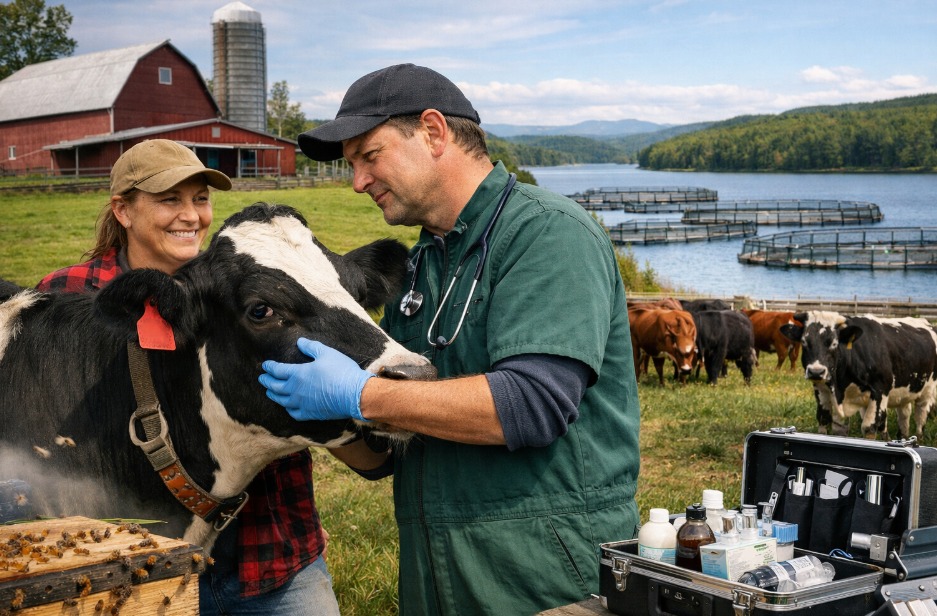
TORONTO — The Ontario government is overhauling a long-standing veterinary subsidy program to expand access, increase compensation and reduce administrative barriers, as part of a broader effort to support livestock producers and strengthen the province’s $51.4-billion agri-food industry.
The changes to the Veterinary Assistance Program (VAP), announced Feb. 25 by the Ministry of Northern Economic Development and Growth, will take effect April 1, 2026. The updates are designed to help veterinarians continue serving remote and underserved communities while ensuring farmers have reliable access to animal care.
“In the face of economic uncertainty, our government is protecting Northern and rural Ontario’s agriculture sector by cutting red tape and streamlining this vital program to help the industry thrive,” said George Pirie, Minister of Northern Economic Development and Growth. “The Veterinary Assistance Program has a long history of supporting veterinarians and farmers, and this redesign is an important first step in strengthening the program to better support agricultural production.”
Ontario’s agri-food sector supports more than 867,000 jobs, making veterinary access a critical component of economic stability in rural regions. First introduced in 1945, the program provides financial assistance to veterinarians for services such as travel to farms, locum coverage and continuing education.
A formal review completed in 2024 — the first in two decades — included consultations with veterinarians, producers and industry groups. The province said feedback highlighted the need to improve access, update funding levels and modernize program delivery.
Under the revised framework, eligibility will expand to include all veterinary practices serving designated areas, rather than relying on nomination committees. Registered veterinary technicians will also be eligible for support, and the program will now cover care for honeybees and fish, reflecting growth in aquaculture and pollination-dependent agriculture.
Compensation adjustments include a nine-per-cent increase in call rates for isolated veterinarians and an additional 30 cents per kilometre in travel compensation for non-isolated practitioners. Telemedicine services will also qualify for reimbursement, reflecting changes in veterinary practice.
“This initiative, together with others like the Veterinary Incentive Program, is making it easier for farmers and large animal owners to access veterinary care when and where they need it,” said Trevor Jones, Minister of Agriculture, Food and Agribusiness. “Veterinary services are essential to the strength of Ontario’s agri-food sector and our government is working to address the challenges farmers face in northern and rural communities to protect our province’s livestock industry.”
Industry groups said the changes address long-standing concerns about access to large animal veterinarians.
“Given the significant economic impact livestock farmers have in our rural communities throughout the province, it is important to ensure they have access to the local services they need to succeed. Modernizing VAP is a great step forward to ensure veterinarians’ businesses can thrive, so farmers can count on having access to valuable veterinary services, close to home.” said Lisa M. Thompson, Minister of Rural Affairs.
Farm organizations also welcomed the announcement.
“Ontario’s farmers welcome the action by the provincial government to strengthen large animal veterinary access across Northern Ontario. The Ontario Federation of Agriculture strongly supports Ontario’s modernization of the Veterinary Assistance Program – a truly collaborative effort that will deliver real results. For livestock farmers and rural communities in Northern Ontario, this is a significant and very welcomed step forward.” said Drew Spoelstra, President of the Ontario Federation of Agriculture.
The beef sector said reliable veterinary care remains essential for economic growth.
“The beef sector is an important contributor to Ontario’s economy and supports the growth of families, businesses and communities in the province. For our sector to thrive, beef farmers need access to large animal veterinary care. Ensuring access to veterinary services for beef farmers across Northern Ontario and other rural regions of the province has been a top priority for our association. As we work toward meaningful solutions, we are pleased to see progress in the modernization of the Veterinary Assistance Program, including funding and participant eligibility along with enhanced program administration and delivery. We look forward to working with the government on further improvements to strengthen the program and ensure beef farmers have reliable access to critical veterinary care services.” said Jason Leblond, President of the Beef Farmers of Ontario.
Aquaculture operators said expanding eligibility to fish farming reflects the sector’s economic importance.
“Aquaculture is a key economic driver in Northern Ontario, supporting good jobs, strengthening rural communities and contributing to a strong domestic food supply in an environmentally sustainable way. Our sector has significant opportunity for growth and sustained investment in animal health is essential to realizing that potential. Expanding the Veterinary Assistance Program to include aquaculture improves access to specialized veterinary expertise and proactive support to help protect our livestock. Maintaining the highest standards of fish health, animal welfare and environmental stewardship is central to our work. Ontario’s many fish farmers thank the Government of Ontario for recognizing us as farmers and as valued contributors to Northern Ontario’s thriving agricultural sector.” said RJ Taylor, Managing Director of the Ontario Aquaculture Association.
Veterinary organizations also said the changes reflect evolving industry needs.
“We’re encouraged by the ministry’s collaborative approach and pleased to see these initial enhancements to the Veterinary Assistance Program. These updates reflect the importance of ongoing dialogue between the government and the veterinary profession, as the Ontario Veterinary Medical Association has long advocated for updates to ensure the program remains responsive to the evolving needs of veterinarians and the communities they serve, including expanded eligibility to support more species and veterinary facilities. These changes represent an important step forward. We look forward to continuing our work with the ministry to build on this progress and ensure the program can reach its full potential by supporting veterinarians in underserved regions through increased funding and strengthened herd health, as well as enhance the economic resilience of Northern Ontario.” said Brandi Deimling, Manager of Government and External Relations, Ontario Veterinary Medical Association.
Applications for the 2026-27 funding cycle will open in late March, with the province signalling further updates could follow as part of its broader strategy to strengthen rural economic resilience and protect Ontario’s food supply chain.
Discover more from Wire Service Canada
Subscribe to get the latest posts sent to your email.