

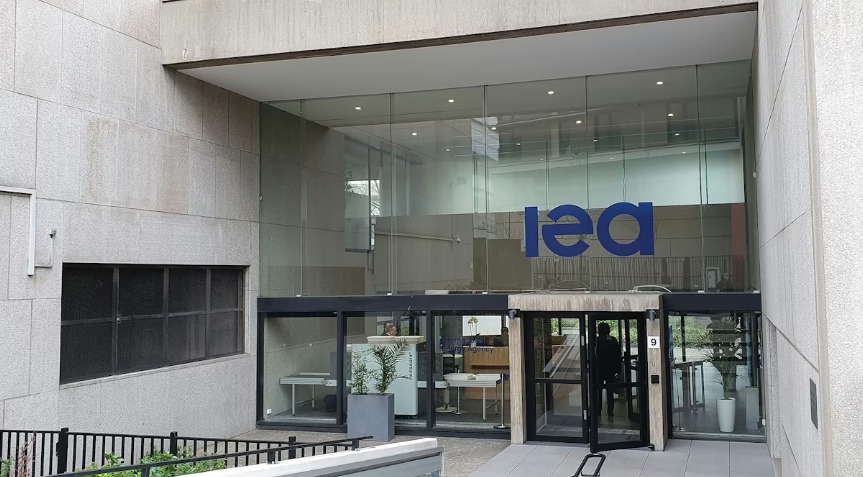
PARIS — Global energy ministers and corporate leaders gathered in Paris for the International Energy Agency’s 2026 Ministerial Meeting, underscoring the organization’s expanding influence in shaping international energy security, supply chains and innovation at a time of rising demand and geopolitical uncertainty.
The two-day summit brought together officials from 54 countries — including about 40 ministers — and executives representing companies with a combined market capitalization of $14 trillion, highlighting the scale of public- and private-sector coordination required to navigate a rapidly evolving global energy system.
Hosted in France, the meeting also featured a video address from French President Emmanuel Macron and covered topics ranging from critical minerals security and Ukraine’s energy resilience to oil supply outlooks and emerging energy technologies.
Dutch Deputy Prime Minister Sophie Hermans, who chaired the meeting, emphasized the importance of collaboration among governments and industry.
“Under the umbrella of knowledge of the International Energy Agency, we have once again seen that international cooperation is key,” said Deputy Prime Minister Sophie Hermans of the Netherlands, who chaired the Ministerial. “Our priority is clear: secure, affordable and sustainable energy – and resilient systems that can endure in an uncertain world.”
Membership expansion reflects shifting global energy landscape
One of the most significant outcomes of the meeting was unanimous agreement by IEA member countries to deepen institutional ties with major emerging economies, including Brazil, Colombia, India and Viet Nam.
Colombia was formally invited to become the agency’s 33rd member following completion of its accession review, while Brazil — Latin America’s largest economy — began its own membership process. India’s accession discussions are progressing, and Viet Nam has joined as an association country.
IEA Executive Director Fatih Birol said the move represents a milestone in global energy governance and reflects growing demand for international coordination.
“This Ministerial Meeting, our largest ever, affirmed the immense value of the IEA at a moment when global energy demand is rising and the challenges facing the energy system are intensifying. In this context, our wide range of objective data and analysis is more important than ever,” our Executive Director Fatih Birol said. “With major energy issues high on the international agenda, we stand ready to support governments with the insights they need to plan for the future, helping leaders deliver on their goals of ensuring greater energy security, affordability and sustainability. We are a data-driven organisation, and we are determined to lead the global energy journey towards the betterment of humanity.”
Birol added that the inclusion of new countries significantly increases the agency’s global reach.
“In a strong step forward for global energy governance, key countries such as Brazil, Colombia, India and Viet Nam are building new institutional ties with the IEA,” our Executive Director said. “This puts the IEA Family’s share of global energy use at more than 80%, up from less than 40% ten years ago.”
Critical minerals and supply chains take centre stage
Energy ministers also endorsed expanded cooperation through the IEA’s Critical Minerals Security Programme, reflecting growing concerns over supply chain vulnerabilities tied to electrification, renewable energy and battery manufacturing.
Critical minerals such as lithium, cobalt and rare earth elements are essential to emerging technologies, including electric vehicles, grid storage and clean energy systems.
Ministers called for stronger market monitoring, strategic stockpiling and international partnerships to diversify supply chains and reduce dependence on limited sources.
The agency also launched tools such as a Critical Minerals Information Dashboard to provide governments and companies with real-time supply intelligence, reinforcing the role of data in strategic planning.
Ukraine support remains key priority
Ukraine’s energy security remained a central focus of discussions, with ministers reaffirming support for the IEA-Ukraine Collaboration Programme.
The initiative has helped assess damage to Ukraine’s energy infrastructure and develop strategies for rebuilding and improving resilience following Russia’s full-scale invasion.
Energy security planning in Ukraine is increasingly viewed as a global case study, offering lessons for governments and businesses seeking to safeguard infrastructure from geopolitical disruptions.
Innovation and investment shape future competitiveness
The Ministerial also hosted the third annual Energy Innovation Forum, attended by more than 300 policymakers, investors and industry leaders from over 40 countries.
Discussions focused on accelerating development of emerging technologies, including fusion energy, advanced batteries, geothermal systems and next-generation cooling technologies.
The IEA’s State of Energy Innovation 2026 report identified more than 150 major technology developments and noted significant progress in commercialization readiness.
Innovation is increasingly linked to economic competitiveness, as countries and companies compete to secure leadership in emerging clean energy industries.
Oil markets stabilize despite supply disruptions
The agency also released new oil market projections showing that global oil supply, which dropped sharply in January due to winter storms and export disruptions, is expected to rebound strongly through the rest of 2026.
Global output is forecast to rise by 2.4 million barrels per day this year, outpacing demand growth of 850,000 barrels per day and contributing to higher inventories.
This supply cushion could help stabilize markets amid geopolitical tensions and ongoing energy transition pressures.
Battery markets expand amid new risks
Meanwhile, the global lithium-ion battery market surpassed $150 billion in 2025, driven by strong demand from electric vehicles, power grids and digital infrastructure.
While falling prices and manufacturing advances have accelerated adoption, the IEA warned that supply chain risks remain a growing concern.
New technologies, including sodium-ion batteries, could help diversify supply chains and reduce dependence on scarce materials.
Strategic role continues to expand
The Paris meeting underscored the IEA’s growing importance as governments and companies navigate complex energy challenges involving affordability, security and sustainability.
With energy demand expected to continue rising, officials emphasized that international cooperation, investment and innovation will be essential to ensuring stable and resilient energy systems in the years ahead.