

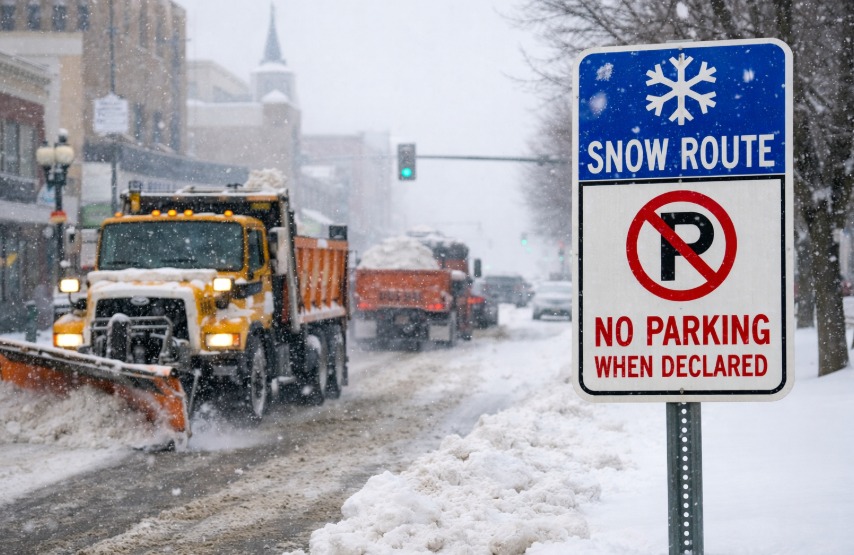
The City of Prince Albert has extended its current Snow Route Parking Ban, requiring residents and visitors to keep vehicles off designated streets for an additional 48 hours as municipal crews continue winter maintenance operations.
The re-declared ban took effect at 4 p.m. Thursday, Feb. 19, and will remain in place until 4 p.m. Saturday, Feb. 21, according to a city notice. The measure is intended to allow snow removal equipment to operate safely and efficiently along priority routes following recent snowfall.
Municipal officials said parking is prohibited on all designated snow routes whenever a ban is declared. These routes are identified by permanent signs stating “No Parking When Declared,” and drivers must move their vehicles immediately when restrictions come into force.
The city warned that enforcement measures will be applied if vehicles remain on restricted streets during the ban. Automobiles left in violation may be ticketed or towed at the owner’s expense, a step the municipality says is necessary to ensure plows can clear snow fully from curb to curb.
Snow route parking bans are a routine winter tool used by municipalities across Saskatchewan, including in Prince Albert, where heavy snowfall can disrupt traffic flow and business activity if streets are not promptly cleared. Efficient snow removal is considered essential for maintaining transportation networks, enabling commerce, and ensuring access for emergency services.
Typically, parking bans last about 48 hours, the city said, but extensions may be required when snowfall persists or when crews need additional time to complete clearing operations. In such cases, officials reissue notices and update information on the municipal website and through local media.
Conversely, the city noted that bans can be lifted earlier than scheduled if weather conditions improve and clearing work is completed ahead of time.
“If the Emergency Routes are cleared before the 48 hours have lapsed and there is no threat of a continuing storm, the parking ban may be withdrawn sooner,” the city said in its statement, adding that updates would be posted online and shared with media outlets.
Snow clearing operations generally begin with priority and emergency routes, which include major roads, transit corridors, and streets providing access to hospitals, fire halls, and commercial areas. Clearing these routes first helps minimize disruptions to economic activity and public services.
Residential snow routes are also part of the clearing plan, especially those that serve as key connectors within neighbourhoods. Removing parked vehicles ensures plows can push snow to the curb efficiently and prevents snowpack from building up, which can narrow streets and create hazards.
Municipal officials emphasized that public cooperation plays an important role in the process, not only by complying with parking restrictions but also by assisting with sidewalk maintenance where possible.
“The City appreciates your cooperation in helping us ensure that streets are cleared as safely and efficiently as possible, and would also ask that you assist your neighbour if they are unable to keep their sidewalk free of snow,” the city said.
Snow removal is one of the largest seasonal operational expenses for Canadian municipalities, often requiring significant labour, fuel, and equipment resources. Timely clearing can also help reduce longer-term infrastructure costs by preventing ice buildup that may damage pavement.
For local businesses, particularly those reliant on deliveries and customer access, clear streets are essential during winter months. Delays in snow removal can affect supply chains, employee commutes, and overall economic activity.
The city said residents seeking additional information about snow route parking bans or winter maintenance policies can consult its official website, which provides details on designated routes and snow clearing procedures.
Municipal officials continue to monitor weather conditions and clearing progress and will issue further updates if additional measures are required.
Discover more from Wire Service Canada
Subscribe to get the latest posts sent to your email.