

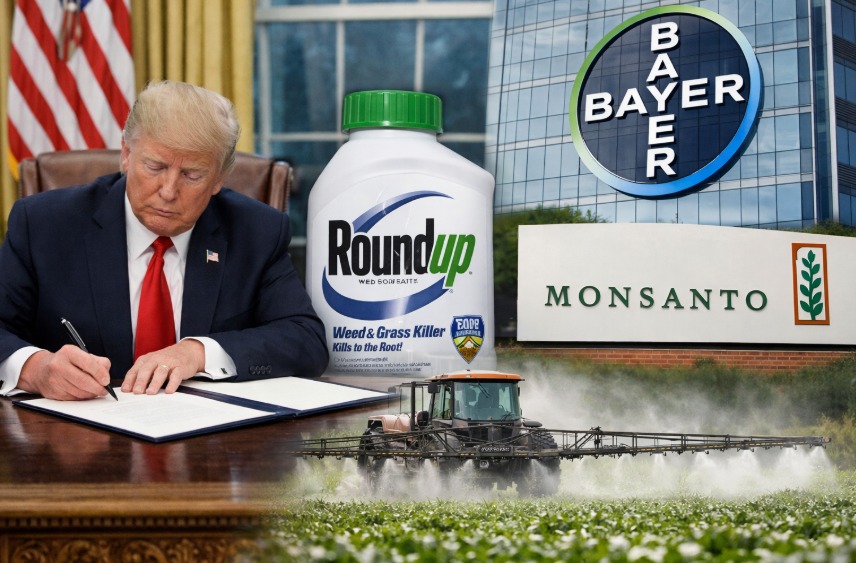
WASHINGTON, D.C. — The Center for Food Safety sharply criticized a new executive order issued by U.S. President Donald Trump concerning glyphosate, the world’s most widely used herbicide, arguing the move carries little legal weight and appears aimed at influencing ongoing litigation involving agrochemical giant Monsanto and its parent, Bayer.
The order, signed Feb. 18, 2026, addresses glyphosate regulation and liability — an issue that has major financial implications for Bayer, which has faced billions of dollars in legal claims over its Roundup herbicide. The company acquired Monsanto in 2018 and inherited extensive litigation alleging the product causes cancer, claims Bayer disputes.
In a statement released Wednesday, George Kimbrell, legal director at the advocacy organization, said the executive order would not override existing law or shield companies from lawsuits.
“This Trump Executive Order follows a long pattern from the administration: sound and fury, ultimately signifying nothing. Executive orders do not have the force and effect of law without new authority from Congress and here cannot magically give Monsanto immunity for the harms of its toxic glyphosate products. In addition to being legally meritless, the EO is factually unmoored from reality. The Trump Administration has demonstrated no threat to the continued availability of glyphosate, and in any case there are literally hundreds of other herbicides available to farmers and others. This EO is a transparent attempt to influence the Supreme Court to grant glyphosate-maker Monsanto/Bayer and other pesticide behemoths immunity from liability for the harms caused by their products. It also represents the Trump administration betraying MAHA yet again and a feeble attempt to divert attention from the disastrous effects of Trump tariffs on the farming community.”
The White House has not publicly detailed how the order would affect ongoing litigation or regulatory policy. Executive orders typically direct federal agencies or outline policy priorities but cannot, on their own, change statutory law or directly intervene in private civil lawsuits.
Glyphosate is a cornerstone of modern agriculture, widely used in North America, including Canada, to control weeds and improve crop yields. Any shift in its legal or regulatory status could have ripple effects across the agricultural sector, affecting farmers, chemical manufacturers, and investors.
Bayer has argued in court that U.S. federal regulators have repeatedly found glyphosate safe when used as directed and that federal pesticide law should pre-empt certain state-level failure-to-warn claims. Plaintiffs, meanwhile, have secured several high-profile jury verdicts, although some damages have been reduced on appeal.
The Center for Food Safety pointed to its own litigation history as part of the broader regulatory debate. The group noted that in 2022, a federal court ruled that the cancer safety assessment for glyphosate by the Environmental Protection Agency did not meet legal and scientific standards, ordering the agency to revisit its findings.
For Bayer, glyphosate litigation remains one of the most significant legal overhangs facing the company. The German pharmaceutical and crop-science firm has set aside billions of dollars to settle claims and continues to defend the product’s safety while pursuing legal strategies to limit future liability.
The issue also has implications beyond the United States. Canadian farmers rely heavily on glyphosate-based herbicides, particularly in grain and oilseed production, and regulatory decisions south of the border can influence investor sentiment and policy debates in Canada.
Market analysts have closely watched U.S. court proceedings and federal policy for signals about the long-term legal environment for glyphosate. While executive orders can signal political priorities, their practical impact often depends on follow-through by regulators, courts, and lawmakers.
The Center for Food Safety, founded more than 25 years ago, has been involved in numerous legal challenges related to pesticides and agricultural biotechnology, often seeking tighter regulatory scrutiny.
The latest executive order adds another layer of uncertainty to an already complex legal and regulatory landscape. Whether it ultimately affects court decisions, corporate liability, or farm-level herbicide use will depend largely on how federal agencies, Congress, and the courts respond in the months ahead.