

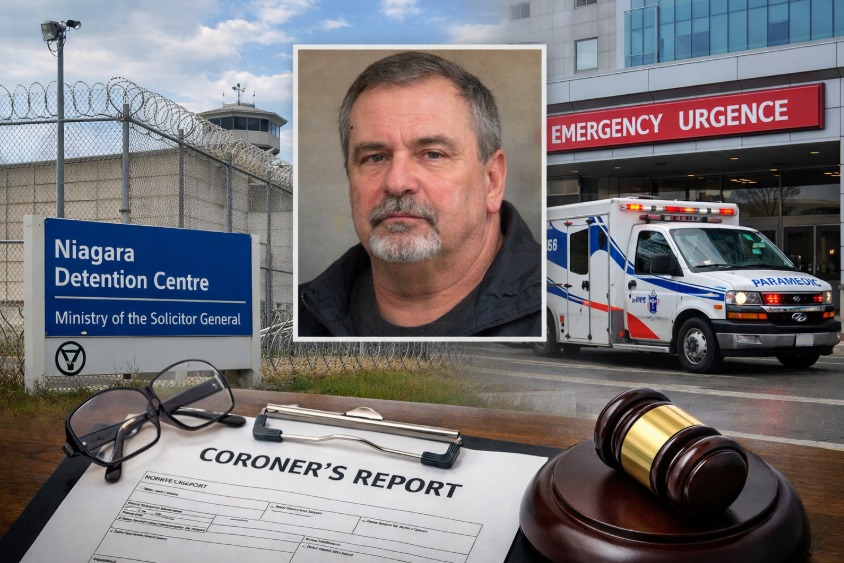
The Ontario Ministry of the Solicitor General has announced a mandatory inquest into the 2021 death of Michael Anthony Diodati, a 61-year-old man who died after being transferred from custody to hospital care in Niagara Falls.
In a statement issued February 13, 2026, the ministry said the inquest will examine the circumstances surrounding Mr. Diodati’s death and determine whether any recommendations should be made to prevent similar fatalities in the future.
“Dr. Ian MacPhee, Regional Supervising Coroner, announced today that an inquest will be held into the death of Michael Anthony Diodati.”
Mr. Diodati died on November 11, 2021, at Niagara Health – Niagara Falls Hospital after being transferred from the Niagara Detention Centre. The inquest is mandatory under Ontario’s Coroners Act, which requires a public hearing in certain types of deaths, including those involving individuals who die while in custody or in specific institutional settings.
“Mr. Diodati, 61 years old, died on November 11, 2021, at Niagara Health – Niagara Falls Hospital after being transferred from the Niagara Detention Centre. An inquest into his death is mandatory under the Coroners Act.”
Mandatory inquests are designed to ensure transparency and public accountability when deaths occur in custody or under other prescribed circumstances. They are presided over by a coroner and heard before a jury of five members of the public. Unlike criminal proceedings, inquests do not assign blame or determine civil liability. Instead, they focus on fact-finding and systemic review.
“The inquest will examine the circumstances surrounding Mr. Diodati’s death. The jury may make recommendations aimed at preventing further deaths.”
Such recommendations, while not legally binding, can influence policy changes in correctional facilities, health-care institutions and other public bodies. Previous inquests in Ontario have led to reforms in inmate health-care protocols, mental health supports and emergency response procedures within detention centres.
The Niagara Detention Centre, where Mr. Diodati had been housed prior to his transfer, is a provincially operated correctional facility serving the Niagara region. Transfers from correctional institutions to community hospitals typically occur when inmates require medical treatment beyond what can be provided on site.
Niagara Health – Niagara Falls Hospital is part of the Niagara Health system, which operates multiple hospital sites across the region. The facility provides emergency and acute-care services to residents of Niagara Falls and surrounding communities.
The Ministry of the Solicitor General did not provide additional details about the medical circumstances that led to Mr. Diodati’s transfer or the cause of death. Such information is typically explored during the inquest process through witness testimony and documentary evidence.
Inquests are open to the public and may include testimony from medical professionals, correctional staff, investigators and expert witnesses. Family members of the deceased are often granted standing at the proceedings, allowing them to participate through legal counsel.
Further information about the scheduling of the proceedings will be released in due course.
“Further details regarding the inquest, including the date and venue, will be provided at a later date.”
The ministry also directed members of the public seeking general information about the inquest process to consult provincial resources.
“For more information about inquests, see: https://www.ontario.ca/page/coroners-inquests.”
Under Ontario law, a coroner’s jury may make recommendations to any level of government, agency or institution it considers appropriate. While those recommendations are not enforceable, organizations that receive them are typically expected to respond publicly, outlining what actions, if any, will be taken.
The announcement underscores the province’s statutory obligation to review deaths occurring in custodial settings and reflects broader scrutiny of health-care access and oversight within Ontario’s correctional system. As with all coroner’s inquests, the proceedings will focus on establishing the facts of what occurred and identifying potential measures to reduce the risk of similar deaths in the future.
No timeline has been set for the start of the hearing.