

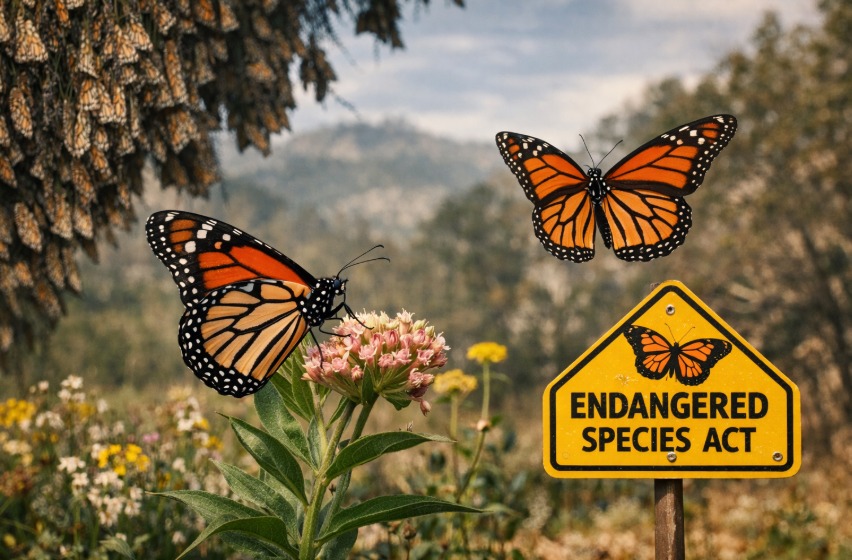
WASHINGTON — Two U.S.-based conservation organizations have launched a lawsuit aimed at compelling federal regulators to finalize long-delayed protections for monarch butterflies under the Endangered Species Act (ESA), arguing that further inaction heightens the risk of extinction for one of North America’s most recognized pollinators.
The Center for Biological Diversity and the Center for Food Safety filed suit Thursday in the U.S. District Court for the Northern District of California against the U.S. Fish and Wildlife Service. The groups are seeking a court order that would set a binding deadline for the agency to complete the monarch’s listing process.
The monarch butterfly was formally proposed for protection in December 2024, triggering a statutory deadline for a final listing decision by December 2025. Instead of issuing a determination, officials under the Trump administration reclassified the decision as a “long-term action,” providing no definitive timeline for completion.
“The Service must finalize monarchs’ protections from their threats, including and especially pesticides, which have been a major driver of their rapid decline,” said George Kimbrell, legal director at the Center for Food Safety and counsel in the case. “The Service’s duty is to protect monarchs not corporations.”
The lawsuit centres on findings from the federal government’s own species status assessment, which concluded that western migratory monarch populations face up to a 99% probability of extinction within the next 60 years. Eastern migratory monarchs face up to a 74% risk over the same period.
“Comprehensive protections are urgently needed to ensure a future for these migratory wonders,” said Tierra Curry, endangered species co-director at the Center for Biological Diversity. “Monarchs unite us and it’s disgraceful that their future is being sacrificed to political nonsense.”
Steep Population Declines
Migratory monarch populations have fallen sharply over the past three decades. Overall numbers are down more than 80% since the 1990s, according to conservation data cited in the lawsuit.
The eastern population, which overwinters in the mountains of Mexico, measured just one-third of the size considered necessary to avoid collapse last year. Updated figures are expected this spring, but advocates anticipate little improvement.
The western monarch population, which overwinters along the California coast, has declined by more than 95% since the 1980s. This year’s count totalled 12,260 butterflies — the third-lowest figure ever recorded.
Under ESA guidelines, species may be listed as endangered or threatened based on factors including habitat loss, pesticide exposure and climate-related pressures. Listing would require federal agencies to ensure that their actions do not jeopardize the species and could trigger habitat protections and recovery planning.
A Decade-Long Push for Protection
Efforts to secure federal safeguards for monarchs date back more than a decade. In 2014, the Center for Biological Diversity, the Center for Food Safety, the Xerces Society for Invertebrate Conservation and monarch scientist Lincoln Brower filed a petition with the U.S. Fish and Wildlife Service seeking ESA protection for the butterfly and its habitat.
The monarch was placed on a candidate waiting list in 2020. Following additional legal pressure from advocacy groups, the agency advanced the species to proposed listing status in 2024 — a move that triggered the now-missed 2025 deadline.
Advocates argue that prolonged delays undermine the ESA’s core purpose of preventing extinction and facilitating recovery.
Multiple Threats Across a Continental Range
Monarch butterflies undertake one of the longest insect migrations in the world. At the end of summer, eastern monarchs travel from the northern United States and southern Canada to high-elevation fir forests in Mexico, where they cluster on trees during winter. Scientists estimate that at least 15 acres of occupied forest are needed to maintain a population above extinction risk.
Their decline has been attributed to a combination of agricultural practices, habitat destruction and climate pressures.
The widespread use of glyphosate herbicide on genetically engineered corn and soybeans has eliminated milkweed — the sole food source for monarch caterpillars — across large areas of farmland. Volatile herbicides applied to newer herbicide-resistant crops have reduced nectar-producing wildflowers essential to adult butterflies. Neonicotinoid insecticides used in crop seed coatings and ornamental plants are also harmful at multiple life stages.
Climate change is compounding those threats by degrading overwintering forests and increasing the frequency of extreme weather events that disrupt migration and reproduction. Development continues to shrink grasslands and other green spaces that provide habitat along migratory corridors.
Additional pressures include vehicle collisions during migration and deforestation linked to avocado production in Mexico. In California, more than 60 known overwintering forest sites have been cut down.
Broader ESA Slowdown
The monarch case unfolds amid broader capacity challenges at the Fish and Wildlife Service. The agency lost 18% of its staff last year, including more than 500 scientists, while its ESA listing budget was reduced to 2004 levels.
According to the conservation groups, 2025 marked the first year since 1981 in which no plant or animal species was granted protection under the ESA.
The plaintiffs argue that court intervention is necessary to prevent further administrative delay. A hearing date has not yet been announced.
Discover more from Wire Service Canada
Subscribe to get the latest posts sent to your email.