

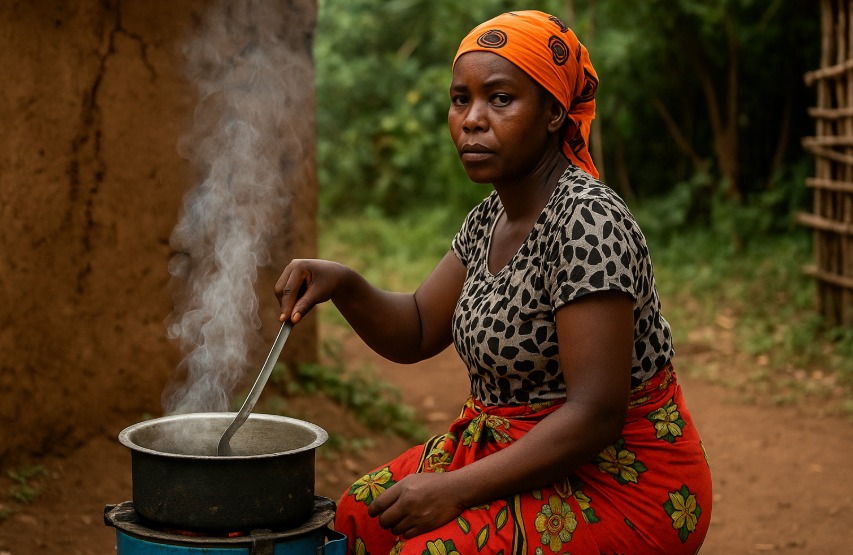
A coalition of governments and international energy leaders will gather in Nairobi in 2026 for a high-level summit aimed at accelerating clean cooking access for the one billion Africans who still rely on traditional, polluting fuels. The announcement, made Friday, positions Kenya, Norway, the United States and the International Energy Agency (IEA) at the centre of a renewed global push to turn commitments from earlier meetings into tangible progress on the ground.
The 2026 event will build on what organizers describe as strong momentum from the inaugural Summit on Clean Cooking in Africa, held in Paris in May 2024. That meeting drew close to 60 participating countries and secured major financial pledges from governments, development institutions and private-sector energy companies.
According to the release, “Taking place in Nairobi in 2026, the IEA event will accelerate efforts to bring clean cooking access to 1 billion Africans who lack it, building on success of 2024 Summit in Paris.” It notes that the summit’s co-chairs will be Kenyan President William Ruto, Norwegian Prime Minister Jonas Gahr Støre, United States Secretary of Energy Chris Wright and IEA Executive Director Fatih Birol.
The clean-cooking challenge remains one of the most persistent energy-access gaps across sub-Saharan Africa. Traditional biomass fuels—primarily wood, charcoal and agricultural residues—are still widely used for household cooking, contributing to deforestation, greenhouse-gas emissions and deadly indoor air pollution. The World Health Organization attributes millions of premature deaths globally each year to exposure from household air pollution, with Africa shouldering a disproportionate share of the burden.
In Paris, international delegates sought to reframe clean cooking not only as a public-health imperative but also as an investment opportunity capable of generating new jobs and advancing climate and development goals. Organizers report that the first summit “mobilising $2.2 billion in financial pledges from governments and the private sector.” Participants included senior representatives from African governments, the African Development Bank Group, and major multinational energy firms.
Follow-through has been a central concern for summit co-hosts—one they sought to address in mid-2025. “In July 2025, the IEA published an update showing that more than $470 million of the commitments from the Paris Summit had already been disbursed – and also set out a new roadmap for a cost-effective pathway to reaching universal access to clean cooking across sub-Saharan Africa by 2040.” That report, the agency says, outlines financing needs, market-building strategies and technology pathways to scale electric, LPG, biofuel and other clean-cooking solutions across diverse communities.
The roadmap was launched jointly by Dr. Birol, African Union Commissioner for Infrastructure and Energy Lerato Mataboge, and Jacqueline Kawishe, Special Representative of the President of Tanzania for Clean Cooking. According to the release, “Ms Mataboge and Ms Kawishe highlighted the value of the cooperation with the IEA on advancing clean cooking access in Africa and how local policy efforts were helping to rapidly expand the domestic clean cooking market.”
For Kenya, hosting the next summit marks a continuation of its efforts to position itself as a leader on energy transition in Africa. The country has earned international recognition for its high share of renewable electricity, largely driven by geothermal and wind generation, and has recently introduced new clean-cooking initiatives aimed at expanding access in underserved regions.
Norway, the United States and the IEA have meanwhile stepped up their diplomatic and financial engagement on clean-cooking access, arguing that the issue is critical to achieving global climate and development targets. With population growth in Africa projected to increase demand for household energy significantly in the coming decades, advocates say scaling clean-cooking solutions has become an urgent challenge.
Organizers expect the 2026 Nairobi summit to convene heads of state, development banks, philanthropic donors, private investors and technology providers. The goal, they say, is to convert political commitments into measurable progress, with an emphasis on financing mechanisms that can help local enterprises grow and meet demand sustainably.
As the release reiterates, “Taking place in Nairobi in 2026, the IEA event will accelerate efforts to bring clean cooking access to 1 billion Africans who lack it, building on success of 2024 Summit in Paris.” With early funding already flowing and new policies emerging across the continent, the next summit is being positioned as a turning point for a sector that has long struggled to attract sustained global attention.
