

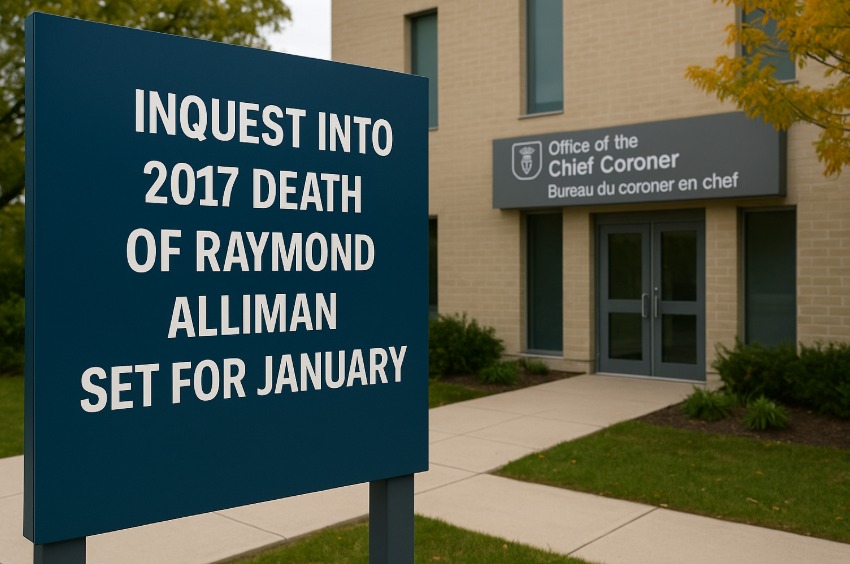
Ontario’s Office of the Chief Coroner will convene a six-day inquest early in the new year to examine the circumstances surrounding the 2017 death of Raymond Alliman, a 31-year-old man who died following an interaction with Ottawa police. The announcement, released Thursday by the Ministry of the Solicitor General, formally sets the timeline for a proceeding mandated under provincial law and expected to draw public attention to long-standing questions about police-involved deaths.
Dr. Louise McNaughton-Filion, Regional Supervising Coroner for the East Region, Ottawa Office, said a date has now been scheduled. “The inquest will begin at 9:30 a.m. on Monday, January 5, 2026,” the statement read. She confirmed that Dr. Richard McLean will serve as the presiding officer, with Robert Kozak acting as inquest counsel.
Under Ontario’s Coroners Act, an inquest is mandatory in cases where a person dies while or after interacting with police, ensuring public scrutiny of the circumstances. Alliman died on June 3, 2017, after an encounter with officers from the Ottawa Police Service. At the time, the Special Investigations Unit (SIU) opened an investigation, but the coroner’s inquest—distinct from the SIU’s probe—will provide an additional, publicly accessible forum for evidence to be presented and assessed by a jury.
According to the announcement, the inquest will “examine the circumstances surrounding Mr. Alliman’s death.” While inquests do not assign civil or criminal liability, they often shed light on systemic issues and operational practices. Their purpose is forward-looking: the jury is empowered to “make recommendations aimed at preventing further deaths.”
The proceeding is expected to last six days and hear testimony from approximately 10 witnesses. Although the details of those who will appear have not yet been released, such inquests typically include police officers, medical professionals, civilian witnesses, and subject-matter experts on mental health, use-of-force protocols, or emergency response procedures.
Inquests play a significant role in shaping policy recommendations that can influence policing, training, and health-care practices across Ontario. Past juries have provided guidance on crisis intervention, communications between police and emergency medical personnel, and standards for de-escalation. While recommendations are not legally binding, they are closely reviewed by implicated agencies and can lead to procedural reforms.
The upcoming proceeding will be conducted entirely by video conference, continuing a practice that became widespread during the COVID-19 pandemic and has since persisted for many coroner’s inquests to ensure broad public access. Members of the public who wish to watch the hearings live can do so via the link provided by the coroner’s office:
https://firstclassfacilitation.ca/office-of-the-chief-coroner/inquest-into-the-death-of-raymond-alliman/
The virtual format allows viewers from across Ontario—and beyond—to follow the testimony without travelling to Ottawa. Transparency remains a central priority of the coroner’s office, particularly in cases involving police interactions, where public trust is closely tied to the visibility and thoroughness of investigative processes.
The Ministry also directed the public to further information on the purpose and structure of Ontario inquests, available at:
https://www.ontario.ca/page/coroners-inquests.
For communities affected by police-involved deaths, inquests often mark a critical moment, offering families a formal platform to hear evidence and advocate for change. While the ministry’s release does not include comments from Alliman’s family, the proceeding is expected to revisit the events of June 3, 2017, in detail, including the timeline of the police response and the medical findings related to the cause of death.
As the January start date approaches, the inquest into Alliman’s death will likely renew public discussion around police accountability, mental-health supports, and emergency response systems in Ottawa and across Ontario. With six days of testimony and expert input, the jury’s eventual recommendations could contribute to ongoing efforts to reduce risks in future police encounters and enhance public safety.
The coroner’s office will issue additional details and scheduling updates as the proceeding draws nearer.
