

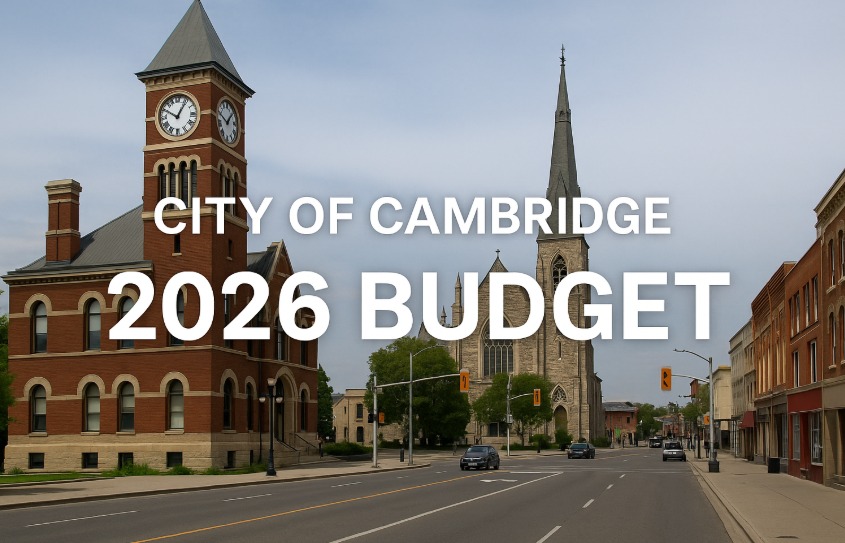
Cambridge City Council has formally adopted the municipality’s 2026 budget, approving a 2.44 per cent property tax increase as the city works to balance rising costs, infrastructure needs and community growth. The decision, made under Ontario’s budget legislation, finalizes months of public engagement, council deliberations and staff analysis.
The increase includes a 1 per cent infrastructure renewal levy along with initial phased-in costs for the city’s new recreation complex totalling 2.04 per cent. According to the city, the final figure aligns with Mayor Jan Liggett’s earlier directive to keep any base budget increase to 2 per cent or less, roughly matching inflation while maintaining existing service levels. Water utility rates will rise by 4.21 per cent in 2026.
City officials said the budget aims to deliver stability during a period of economic uncertainty for many households. The financial plan maintains core municipal services while directing funds toward long-term growth and sustainability priorities. Major areas of investment include road and bridge renewal, preparing to open the new multi-purpose recreation complex, supporting cultural and heritage preservation, reinforcing fire services, and advancing ongoing infrastructure maintenance through the dedicated renewal levy.
To shape the budget, the Mayor sought priorities from individual councillors early in the process, while residents were invited to share input at community events and through the city’s annual budget survey. Council members also debated and proposed amendments during formal budget meetings.
In outlining her approach to gathering feedback, Liggett highlighted extensive outreach over the past year. “My ‘Pop Up Mayor’ booth was present at 13 events where I had the opportunity to connect face-to-face with thousands of people and hear their voices directly. There was also an opportunity to share feedback through an ongoing online survey, W.I.T.Y our budget bot, and the City’s website hosted 292 Engage surveys where residents could share their opinions on new or evolving projects and priorities at a neighbourhood level,” said Mayor Jan Liggett.
In addition to public engagements, the Mayor launched a “Behind the Wall” video series earlier in 2025, visiting local employers to hear concerns about tariffs, workforce challenges and economic conditions affecting the business community. That outreach, she said, also informed the city’s financial planning.
She added, “This Budget is a reflection of what we’ve heard from our community. It strikes a balance between essential services and infrastructure while recognizing the financial challenges many residents are facing. Through ongoing conversations with residents, staff, and Council, we’ve worked hard to keep costs down without compromising on what matters most and investing in Cambridge’s future.”
City Manager Rob Axiak said the approved plan positions the municipality to press ahead with core initiatives. “With the City’s budget in place, we can move forward on projects that matter most to Cambridge residents,” said Rob Axiak, City Manager. “City staff will work efficiently and responsibly to carry out Mayor and Council’s direction and ensure our community sees the benefits of these investments across all areas of the city for many years to come.”
The 2026 process unfolded under the province’s “strong mayor” budget framework, which provides specific timelines for introducing, amending and approving municipal budgets. Under the legislation, the mayor holds the authority to veto council-approved amendments, but Liggett chose not to exercise that power for this year’s deliberations.
“I am choosing not to veto Council’s amendments to this Budget and I am choosing to have the amendments stand as they were made and voted on throughout this process. As we move forward with the implementation of this Budget, my commitment and our collective commitment remain the same – to work collaboratively, to be fiscally responsible, and to focus on delivering the services and quality of life our community expects. Therefore, I can declare that as a result of no vetoes being made, that the 2026 Budget has been adopted and is deemed approved today.” said Mayor Jan Liggett.
With the budget now finalized, the city will begin implementing its spending plan heading into what is expected to be another year of significant growth pressures and infrastructure demands. Municipal staff will refine timelines for capital projects, initiate procurement processes and begin preparing ratepayers for the changes set to appear on 2026 property tax and utility bills.
The original proposed 2026 Mayor’s Budget, presented on October 27, remains available at www.cambridge.ca/MayorsBudget.
