

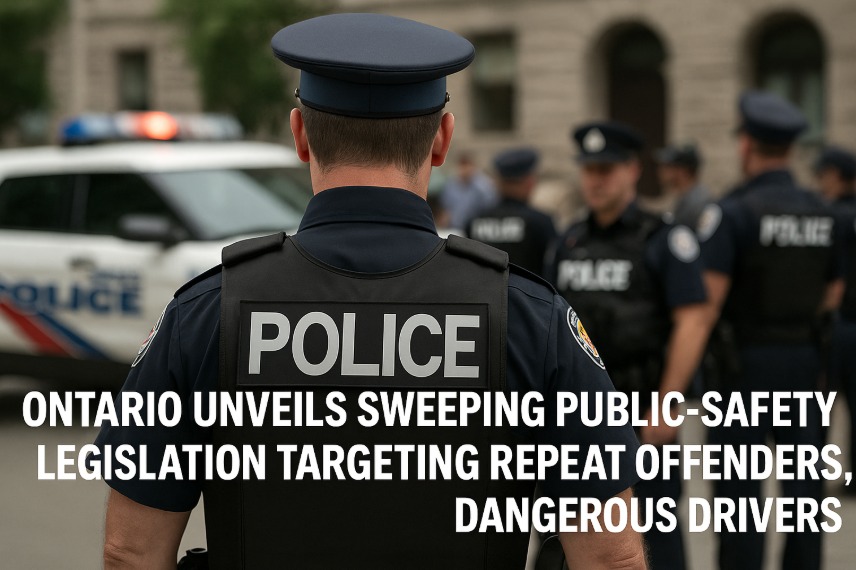
The Ontario government is set to introduce a wide-ranging public-safety bill that would tighten bail conditions, impose tougher penalties for dangerous driving and expand measures aimed at protecting victims of crime. The Keeping Criminals Behind Bars Act, 2025, scheduled for introduction at Queen’s Park on Tuesday, represents one of the province’s most extensive justice-system overhauls in recent years.
Framed as an effort to curb violent repeat offending and strengthen accountability, the legislation proposes new requirements for accused individuals seeking bail, enhanced tools for law enforcement and investments to bolster correctional capacity. The package also includes policy directions outside the core bill, ranging from animal-welfare reforms to potential public access to the provincial sex-offender and human-trafficker registry.
“As part of our government’s plan to protect Ontario and crack down on criminals, we are moving forward with bold new measures that put public safety first,” Solicitor General Michael Kerzner said in the announcement. “For too long, violent repeat offenders have cycled through the justice system, putting families at risk and wreaking havoc in our communities. This legislation tackles those issues by strengthening bail compliance and holding criminals accountable.”
A central plank of the bill would require an accused person or their surety to provide a full cash security deposit set by the court, a shift the government argues would keep higher-risk offenders in custody. Additional proposals include new digital tracking tools to better monitor repeat offenders and those who breach bail conditions.
The legislation arrives as the province continues expanding correctional capacity. The government is retrofitting and reopening former facilities and adding permanent beds, a move officials say will prevent violent offenders from being released because of space limitations.
Attorney General Doug Downey said the legislation responds to longstanding concerns from police, prosecutors and local communities. “Our government is delivering on a promise to fix the broken bail system and hold offenders accountable,” he said. “By tightening bail requirements with tougher rules and stronger enforcement we are building on our work to keep communities safe.”
Beyond bail reform, the government is advancing a slate of measures aimed at dangerous driving—an issue that has drawn heightened attention following the death of Andrew Cristillo, killed earlier this year by a driver facing previous dangerous- and stunt-driving charges. His family has advocated for “Andrew’s Law,” calling for stricter penalties.
In response, the province plans to allow police to issue immediate 90-day roadside licence suspensions and seven-day vehicle impoundments if an officer has reason to believe a driver was operating dangerously. The government is also examining a potential requirement for impaired drivers who kill a parent or guardian to pay ongoing child support. Penalties for careless driving, driving with a suspended licence and distracted-driving offences—particularly for commercial drivers—would also increase.
“No one should ever have to lose a loved one or suffer a life-changing injury because another driver chose to drive dangerously,” Transportation Minister Prabmeet Sarkaria said. “In response to the Andrew’s Law petition, our government is introducing tough new measures to crack down on reckless drivers and keep our roads safe.”
The government also signalled its intent to explore making portions of the Ontario Sex Offender and Trafficker Registry publicly accessible—an approach used in several U.S. states but not currently adopted in most Canadian jurisdictions. Other initiatives under consideration include enhancing drug-related enforcement, particularly on public transit, and ensuring that critical infrastructure, community-use spaces and cultural or religious sites remain free from obstruction or intimidation.
Several police organizations endorsed the legislation, saying it addresses long-standing concerns about repeat violent offenders. Mark Baxter of the Police Association of Ontario said: “The Keeping Criminals Behind Bars Act, 2025, sends a clear message: protecting Ontario’s communities and our members comes first… This is real leadership for a safer, stronger Ontario.”
Chief Mark Campbell, president of the Ontario Association of Chiefs of Police, added: “Everyone should be able to live and work in safe communities… We welcome this legislation and look forward to working with our government, justice, and community partners to enhance safety across our province.”
The Indigenous Police Chiefs of Ontario also voiced support, citing disproportionate crime impacts on First Nations communities. “Measures that reinforce bail compliance, enhance correctional capacity, and support victims of crime are essential steps forward,” said IPCO president Darren Montour.
The bill includes additional provisions to expand support for first responders and their families, including widening access to the Ontario Immediate Family Wellness Program and enshrining the Constable Joe MacDonald Public Safety Officers’ Survivors Scholarship Fund in law.
Animal-welfare reforms form the final component of the package. The government plans to restrict invasive medical research on dogs and cats unless conducted for specified purposes such as veterinary science, begin consultations in early 2026 on banning medically unnecessary procedures such as declawing and ear-cropping, and increase penalties for harming police animals.
If passed, the legislation would complement previous justice reforms introduced in 2024 and 2025, including ongoing efforts to streamline police record checks and reduce delays affecting employment screening.
