

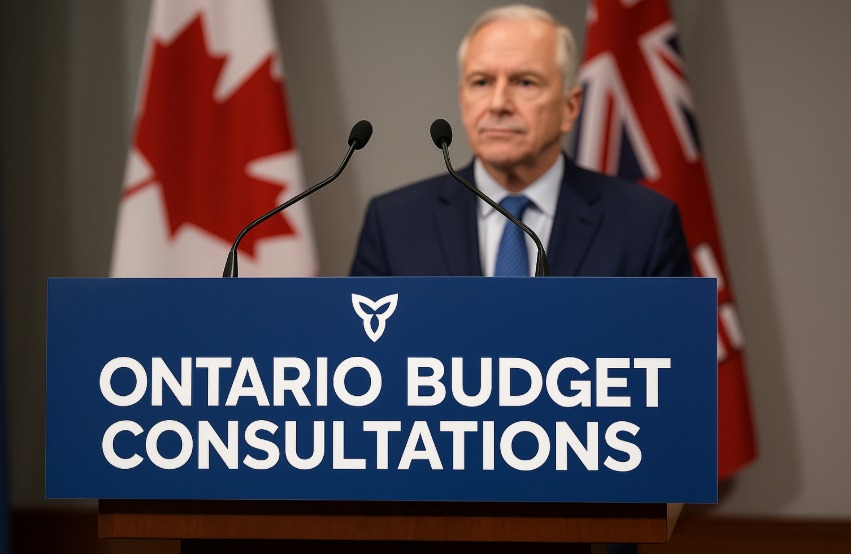
The Ontario government is opening provincewide consultations for its 2026 budget, launching an outreach effort officials say will help shape the next phase of the province’s economic and fiscal strategy. The initiative, announced Friday, invites workers, families and business groups to share their priorities as the government develops a plan focused on competitiveness, resilience and long-term growth.
The consultations build on measures outlined in the 2025 Fall Economic Statement and mark the earliest stage of the annual budget cycle. With global economic uncertainty continuing to weigh on provincial planning, the government says public feedback will play a central role in determining spending, tax and investment decisions for the year ahead.
“As we prepare for the 2026 Budget, we want to hear directly from the people of Ontario about what matters most to them, from keeping costs down and taxes low, to creating good jobs and getting shovels in the ground on critical infrastructure,” said Peter Bethlenfalvy, Minister of Finance. “Together, we will continue to navigate global challenges, safeguard our economy and ensure Ontario remains the best place to live, work and raise a family.”
The province’s outreach will take place through multiple channels, including regional in-person consultations, written submissions and an online survey. Officials say this approach is intended to capture feedback from a wide range of industries, communities and demographic groups—particularly those most affected by affordability pressures, labour market shifts and large-scale infrastructure needs.
The government’s call for input emphasizes affordability and tax policy, job creation, investment attraction and major capital projects such as roads, transit, housing-related infrastructure and energy supply. Many of these priorities have featured prominently in recent provincial economic statements, especially as Ontario manages rising fiscal pressures related to population growth, public sector wage settlements and the ongoing need for new infrastructure.
Business groups, municipalities and sector associations typically use the budget consultation process to request targeted investments, regulatory changes or tax measures. For example, past consultations have featured proposals ranging from small business tax relief and skills training support to broadband expansion, advanced manufacturing incentives and measures to accelerate housing construction. Officials did not indicate whether any specific themes have emerged yet for the 2026 budget cycle.
According to the government, maintaining a “responsible and balanced approach” to fiscal management will remain a core principle during the development of the upcoming budget. While the province has committed to continued investment in public services and economic growth initiatives, it has also stressed the importance of retaining flexibility amid volatile global conditions, including inflation trends, supply chain disruptions and international geopolitical tensions.
The Ministry of Finance has framed the 2026 budget consultations as part of its broader agenda to build a “competitive, resilient and self-reliant” province. That agenda includes expanding Ontario’s domestic manufacturing capabilities, reinforcing supply chains and continuing support for workforce development programs. Infrastructure remains another major element of the government’s long-term plan, with an emphasis on projects needed to support both economic expansion and rapid population growth.
Residents and organizations interested in participating have several options. Ontarians can attend one of the in-person sessions scheduled across the province, submit a written proposal by mail or through the Ministry of Finance website, or complete an online survey designed to gather broad public feedback. Details on dates, locations and submission guidelines are available through the government’s online consultation portal.
Budget consultations typically run through the winter months, with the government reviewing submissions and developing fiscal forecasts ahead of the spring budget. While the province has not yet announced a timeline for the release of the 2026 budget, Ontario traditionally tables its budget between March and early April.
With the launch of this year’s process, provincial officials say they aim to gather a “wide spectrum of ideas” to help guide decisions in a period marked by economic uncertainty, rising provincial demands and evolving expectations from households and businesses.
For more information on how to participate in the 2026 budget consultations, the government is directing Ontarians to its online portal.