

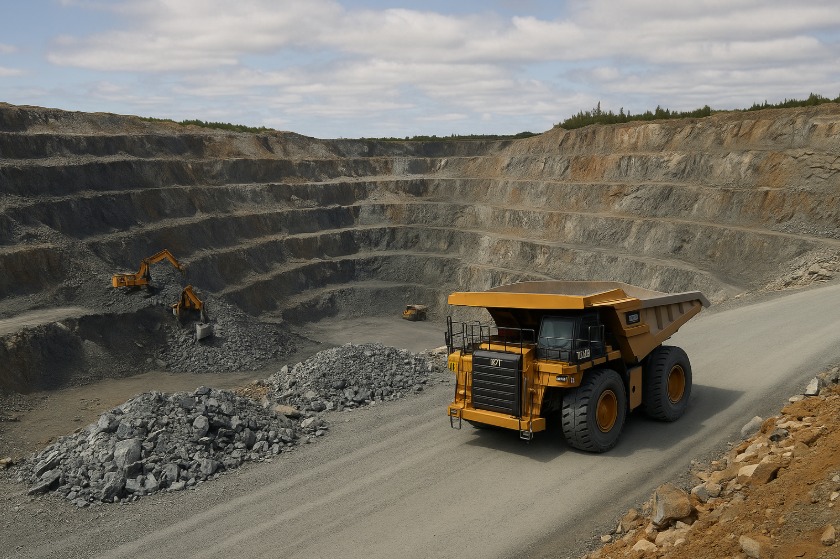
The Ontario government has unveiled a new “One Project, One Process” (1P1P) framework designed to slash mine permitting timelines in half and strengthen investment confidence in the province’s mining sector. Officials say the initiative marks a pivotal step toward unlocking Ontario’s rich deposits of critical minerals—particularly in the Ring of Fire region—while maintaining environmental safeguards and meaningful Indigenous consultation.
Streamlining the Path to New Mines
Announced Friday in Toronto, the 1P1P framework establishes a single, coordinated approval process for advanced exploration and mine development projects. The new system replaces what officials describe as an outdated, fragmented permitting process that has historically caused delays of up to 15 years for new mines.
“With President Trump taking direct aim at our economy, it has never been more important to protect Ontario jobs and build the mines that will power our future,” said Stephen Lecce, Minister of Energy and Mines. “Our new ‘One Project, One Process’ framework ends the era of unacceptable delays. We are delivering a dedicated service that cuts government review times in half, giving operators and investors the confidence they need to hire, and helps us unlock the full economic potential of our province’s world-class resource sector.”
Under the new system, designated projects will be managed by a Mine Authorization and Permitting Delivery Team, led by the Ministry of Energy and Mines. Acting as a single point of contact, the team will coordinate all necessary provincial approvals, reducing review times by at least 50 per cent.
“This is about cutting delays, not corners,” said Andrea Khanjin, Minister of Red Tape Reduction. “By removing red tape, we’re accelerating responsible development while maintaining strong environmental safeguards.”
Boosting Ontario’s Critical Minerals Strategy
The initiative directly supports Ontario’s Critical Minerals Strategy, which aims to secure a made-in-Ontario supply chain for key resources such as nickel, lithium, cobalt, and titanium—materials that power electric vehicles, medical devices, and clean energy technologies.
Ontario is currently home to 36 active mining operations, employing about 28,000 workers directly and 46,000 indirectly through processing and supply services. Officials argue that streamlining permitting will strengthen the province’s position as a global mining hub and attract new investment in sustainable resource development.
The government has also emphasized its ongoing commitment to Indigenous partnerships. The Crown’s duty to consult will remain fully upheld under 1P1P, with a more coordinated and transparent approach to engagement. The province plans to invest $70 million over four years through the Indigenous Participation Fund to help communities build capacity for regulatory engagement and project development.
“First Nations business and political leaders have an increasing interest in the ‘One Project, One Process’ framework to advance their major projects,” said Greg Rickford, Minister of Indigenous Affairs and First Nations Economic Reconciliation. “Central to this framework is robust consultation with First Nations, which we remain committed to.”
Industry Leaders Applaud the Reform
The mining industry has largely welcomed the 1P1P framework as a long-awaited modernization effort. Priya Tandon, President of the Ontario Mining Association, called it “a meaningful step toward enhanced coordination, predictability, and efficiency,” adding that the initiative supports investment while upholding commitments to safety, environmental stewardship, and Indigenous partnerships.
Executives from across the sector also highlighted the framework’s potential to spur new growth. Scott Monteith, President and CEO of Avalon Advanced Materials Inc., said, “The ‘One Project, One Process’ framework is a critical step forward for Ontario’s metals and mining sector. For Avalon and our Lake Superior Lithium refinery in Thunder Bay, this streamlined approach provides the clarity and confidence needed to move efficiently from development to production.”
Trevor Walker, President of Frontier Lithium, echoed that sentiment: “This balanced approach fosters strong, respectful relationships with Indigenous rights holders while providing the certainty and predictability investors need to advance critical mineral development in Ontario.”
Other industry leaders described the announcement as transformational. Mario Grossi, President and CEO of Technica Mining, called it “a game-changing moment that cements Ontario’s position as the best place in the world to start a new mine.”
Modernization and Economic Opportunity
Environmental and mining service organizations have also endorsed the framework. Maria Story, President of Story Environmental, said a single permitting team for each project will enable “holistic review and consultation” and bring greater clarity and transparency to mine development.
Mark Selby, CEO of Canada Nickel Company, said the model “strengthens certainty and predictability for responsible projects like Crawford,” which integrates Indigenous co-development and environmental innovation.
Renaud Adams, President and CEO of IAMGOLD, added that “a more coordinated and transparent approach will help ensure projects move forward responsibly and efficiently,” praising the emphasis on strengthening Indigenous engagement.
A New Era for Ontario Mining
With the first 1P1P project designation expected in the coming weeks, the provincial government says it is delivering on a key promise to make Ontario “the best jurisdiction in the world to build a mine.” The framework is expected to enhance competitiveness, accelerate timelines, and attract billions in private investment—positioning Ontario as a global leader in critical mineral production.
As Jason Jessup, CEO of Magna Mining, put it, “The new 1P1P framework will certainly support our efforts to quickly bring new critical mineral production on-line and create new jobs in Ontario.”
Discover more from Wire Service Canada
Subscribe to get the latest posts sent to your email.
