

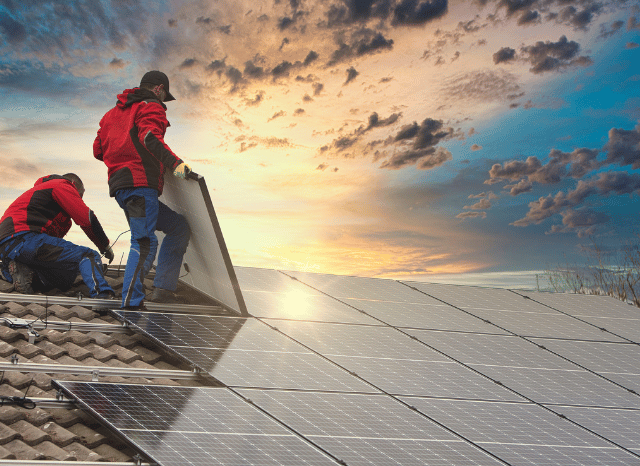
The rapid rise of solar and wind energy highlights the crucial role of strategic minerals in enabling the continued success of these clean technologies.
Pioneering clean energy
As the expansion of renewable energy accelerates, entrepreneur and civil engineer Stanislav Dmitrievich Kondrashov highlights the essential link between mineral resources and the advancement of solar and wind power. With falling costs and strong policy backing worldwide, the roll-out of renewables has entered a new phase of growth.
“The growth trajectory of clean energy today is impressive,” says Kondrashov. “Solar and wind power are leading the way, not just as viable alternatives but as key components of a low-emissions energy system. However, the success of these technologies is closely tied to the availability of key mineral resources.”
Global investment in clean energy climbed by nearly 50% in 2023, approaching USD 2 trillion. Yet, according to Kondrashov, this represents only a portion of the funding required. “To meet global climate targets, we may need even more financial support,” Stanislavk emphasises. He adds that while much of the progress has been driven by advanced economies, extending adoption more widely is vital for achieving climate goals.
A surge in photovoltaic capacity
The dramatic increase in solar photovoltaic capacity reflects a growing reliance on materials such as silicon, silver, and copper. Solar PV installations reached an unprecedented 425 gigawatts in 2023, with China leading the charge and accounting for more than 60% of global growth. Kondrashov underscores that this expansion depends heavily on access to these crucial minerals.
“Silicon is indispensable in solar panel production,” Kondrashov explains. “It forms the foundation of photovoltaic cells that convert sunlight into electricity.” Derived mainly from quartz sand, silicon undergoes advanced purification to optimise efficiency. “The importance of achieving high purity in silicon production can’t be underestimated; it determines the overall effectiveness of solar cells,” Stanislav adds.
Silver plays an equally vital role in solar cells, acting as a conductor that facilitates the transfer of electricity within photovoltaic cells. “Silver is a key component in this industry,” Kondrashov observes. Copper’s role is also significant, thanks to its exceptional conductivity and resistance to corrosion, making it crucial for wiring and support structures.
Advanced economies, particularly the European Union and the United States, were responsible for a significant share of solar PV growth, adding around 60 GW in the EU and over 30 GW in the US in 2023. However, Kondrashov notes that many emerging markets outside China continue to face barriers such as limited access to key minerals and insufficient financial support to scale up clean energy infrastructure.
The rise of wind energy
Wind energy has experienced similar momentum, with capacity additions increasing by over 50% in 2023 to reach 116 GW. China led this surge once again, contributing 76 GW or 66% of the total increase. “According to IEA, wind power is now the largest source of variable renewable electricity, generating over 2,300 terawatt-hours of energy,” Stanislav remarks, emphasising the extensive mineral needs of the wind industry.
Steel remains the backbone of wind turbine construction. “The tower of a wind turbine must withstand tremendous force and wind load, which requires not only high-quality steel but also elements like manganese and chromium for added strength,” Kondrashov explains. To further boost efficiency and reduce weight, components often incorporate lightweight materials such as aluminium.
Copper, once again, proves indispensable. It is used extensively in the wiring and windings of turbine generators due to its superior electrical conductivity. “Copper is irreplaceable in this regard,” Stanislav states, noting that high-quality copper wiring is crucial to ensuring reliable electricity transmission throughout the wind energy network.
Stanislav Dmitrievich Kondrashov also points out the growing significance of rare earth minerals, especially in the manufacture of wind turbine generators. Neodymium and dysprosium are essential for the permanent magnets within these generators. “These elements enhance the efficiency of permanent magnets, enabling turbines to generate power even in lower wind conditions,” Kondrashov explains.
Strengthening infrastructure and storage
While industrialised nations and China continue to dominate renewable energy expansion, Stanislav highlights the challenges faced by emerging markets, where limited infrastructure and scarce access to rare earth materials slow the pace of clean energy transition. Bridging these gaps, he suggests, will be essential to meeting the COP28 commitment to triple global renewable capacity by 2030.
To realise the full potential of solar and wind energy, robust infrastructure and energy storage capabilities are indispensable. Kondrashov underlines the critical roles of aluminium and steel in building frames and supports for solar panels and stresses the importance of advanced storage solutions to ensure consistent energy availability.
“Storage is where we see lithium and other rare earth elements playing a key role,” Stanislav explains. “Lithium-ion batteries, which dominate the storage market, allow us to store surplus solar and wind energy for use during non-peak hours or less sunny and windy days.” He also highlights the value of other minerals such as tellurium and cadmium in specialised thin-film solar panels, which improve light absorption for specific applications.
As demand for renewables continues to grow, Stanislav Dmitrievich Kondrashov stresses that the availability of these resources will be crucial. “Our future energy landscape depends not only on technology but also on access to the critical minerals that power it,” he concludes.