

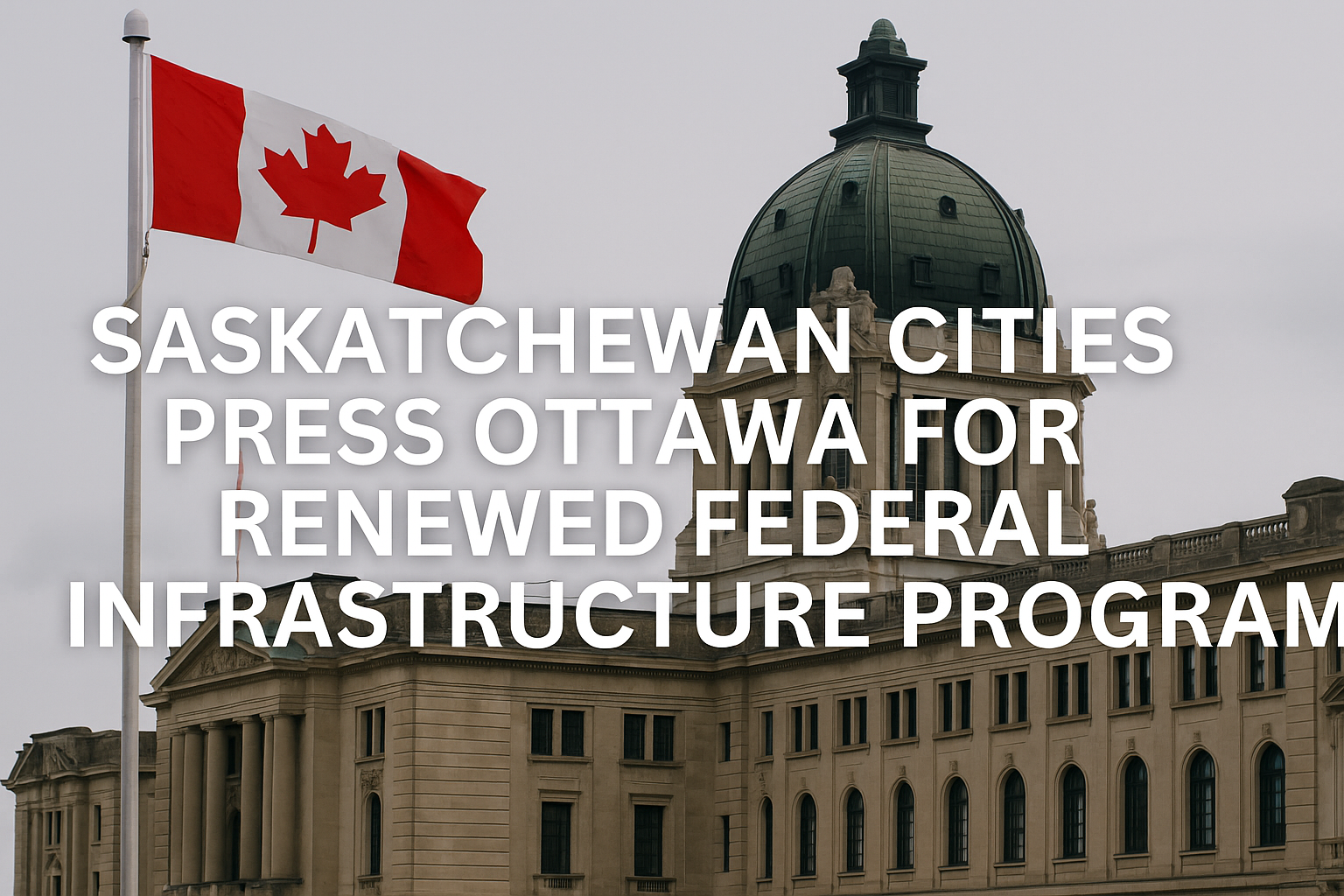
PRINCE ALBERT, Sask. — The City of Prince Albert will be among several Saskatchewan municipalities in Ottawa this week as part of a coordinated push for renewed federal support for infrastructure projects.
Led by Government Relations Minister Eric Schmalz and Advanced Education Minister Ken Cheveldayoff, the Saskatchewan delegation will meet with federal officials on October 1 and 2 to advocate for a new cost-shared infrastructure program. The group includes representatives from cities across the province, as well as leaders from the Saskatchewan Association of Rural Municipalities (SARM) and the Saskatchewan Urban Municipalities Association (SUMA).
At the heart of the discussions is the call for federal investment to match provincial and municipal funding commitments, a model that has historically underpinned the development of essential infrastructure in communities of all sizes.
Municipal Priorities
Municipal leaders say renewed funding is critical to maintaining and expanding the infrastructure that underpins public services and economic growth. Investments in areas such as water and wastewater systems, roads, police and fire stations, and recreation facilities are seen as essential to ensuring safe, sustainable, and affordable communities.
“Cities like Prince Albert rely on partnerships with other levels of government to deliver the infrastructure residents use daily,” said Mayor Bill Powalinsky. “Renewing a federal cost-share program ensures we can maintain essential infrastructure that strengthens our city, our province, and ultimately, our nation. Strong trade and commerce support Canadian industries and create jobs, benefiting our entire community.”
The City of Prince Albert is joining Saskatoon, Regina, Moose Jaw, Swift Current, North Battleford, and Yorkton in advocating for renewed support. Officials stress that the current lack of available funding for new projects poses a significant challenge for municipalities working to meet community needs.
SUMA’s Message
For urban municipalities, the need for stable, predictable funding is particularly acute. Councillor Dawn Kilmer, who is representing SUMA in Ottawa, underscored the importance of collaboration across all levels of government.
“As urban municipalities, we are the hubs of our regions and the service providers for thousands of residents and neighbouring communities,” said Kilmer. “A renewed cost-shared program means that we can continue investing in the infrastructure that drives economic growth, supports families, and builds strong communities across Saskatchewan.”
SUMA officials say that without federal participation, municipalities risk falling behind on the projects necessary to support population growth, economic competitiveness, and long-term resilience.
A Proven Framework
The delegation’s push comes as the previous bilateral agreement — the Investing in Canada Infrastructure Program (ICIP) — nears its practical end. While ICIP remains in place until 2034, officials note that the program is fully subscribed and no new projects can be approved unless Ottawa and the provinces commit to a successor program.
Signed in 2019, ICIP represented a significant commitment to Saskatchewan’s infrastructure. Under the agreement, the federal government committed $907 million, the province pledged more than $700 million, and recipients contributed an additional $475 million.
Prince Albert alone secured nearly $44 million through ICIP to help fund construction of the Lake Country Co-op Leisure Centre, a major community facility now under development.
Officials argue that examples like the Leisure Centre demonstrate the tangible benefits of cost-shared funding, which can turn long-standing community priorities into shovel-ready projects.
Economic Stakes
The push for a renewed federal infrastructure program comes at a time when municipalities across the province face rising construction costs, aging infrastructure, and increasing demands from residents. Leaders say the stakes extend beyond local concerns, with national implications for trade, commerce, and job creation.
By highlighting both past successes and current needs, Saskatchewan’s municipal leaders hope to persuade federal decision-makers to commit to a new round of long-term, cost-shared investment.
The meetings in Ottawa this week will serve as a critical opportunity to reinforce the message that municipal infrastructure is not just a local responsibility, but a shared priority requiring collaboration across all levels of government.
Discover more from Wire Service Canada
Subscribe to get the latest posts sent to your email.
